Walmart Connect Partners with Yahoo DSP, Magnite to Expand Retail Media Reach

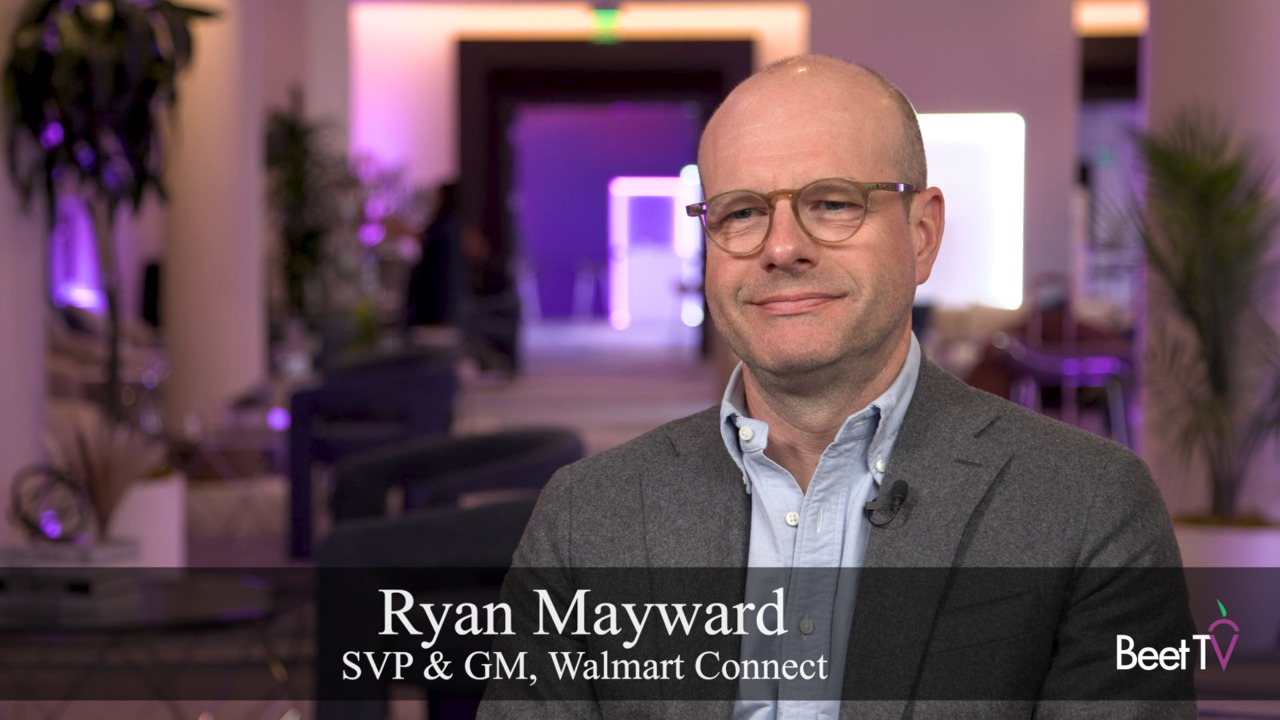
Walmart Connect is expanding the reach of its retail media business beyond its own platforms, allowing advertisers to access Walmart audiences through a new partnership with Yahoo DSP and Magnite. The move aims to simplify programmatic buying while extending Walmart’s commerce data into connected television and other offsite media environments.

The initiative, announced this week by Ryan Mayward, general manager and senior vice president of Walmart Connect, allows advertisers to activate Walmart audiences and access closed-loop measurement through demand-side platforms they already use rather than requiring them to buy exclusively through Walmart’s own tools.

Walmart Connect’s retail media data will be enabled on the supply side through Magnite and Yahoo DSP is the first certified DSP to access the inventory..

“Today, we are announcing a more flexible approach to buying offsite retail media, making Walmart Connect’s audiences and measurement more accessible across the media landscape,” Mayward wrote in a company blog post.

The announcement comes as Walmart’s advertising business continues to grow faster than the retailer’s core operations.

In its fiscal first quarter, Walmart reported global advertising revenue rose 37% from a year earlier, with growth across all segments. Walmart U.S. advertising revenue increased 36%, significantly outpacing the company’s overall revenue growth of 7.3% to $177.8 billion.

In this video interview from CES in Las Vegas earlier this year, Mayward shares details about its retail media strategy with Beet.TV. This video was previously published.

Retail media moves beyond closed ecosystems

Retail media networks have become one of the fastest-growing segments of digital advertising, but marketers have often faced operational hurdles when trying to use retailer data outside of the retailer’s own properties.

Walmart’s latest effort seeks to address that challenge by allowing advertisers to use Walmart audience data within existing programmatic workflows while maintaining Walmart-controlled data governance and measurement capabilities. According to the company, Magnite’s technology will support audience decisioning across multiple demand-side platforms while preserving access to Walmart’s first-party data.

The company said the approach can help advertisers connect media exposure directly to sales outcomes at Walmart stores and online. Walmart cited internal data showing that offsite display campaigns delivered a median 52% rate of new-to-brand customers in 2025.

“Advertisers are looking for simpler ways to activate high-quality data across their programmatic investments,” Adam Roodman, general manager of Yahoo DSP, said in a statement included in the blog.

Connecting shopper marketing and national media

The expansion also reflects a broader trend in advertising as retailers, media companies and technology platforms seek to bridge the gap between brand-building campaigns and sales measurement.

Walmart said making its audiences, signals and measurement tools available across more buying environments can help advertisers evaluate performance from awareness through conversion while expanding the role of connected television in commerce-focused advertising.

Mayward framed the effort as a way to help advertisers navigate a fragmented media landscape while improving efficiency.

“At Walmart Connect, we’re bringing the precision of retail data for audience targeting and measurement into advertisers’ existing media mix, making it easier to extend reach, build consideration and measure performance without adding operational complexity,” he wrote. “The result is a more streamlined experience that helps advertisers use media spend more efficiently.”

The initiative is currently operating in a closed proof-of-concept phase and is expected to become more broadly available at a later date, according to Walmart.
Posted in Uncategorized

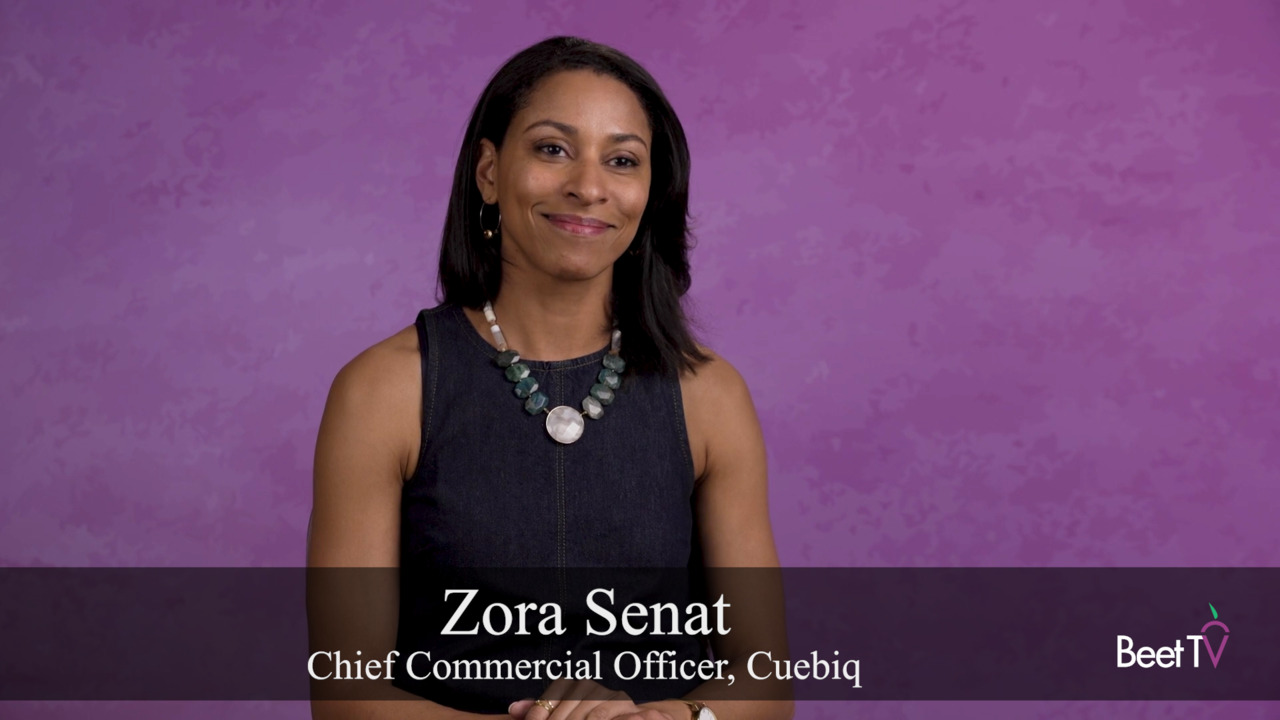
Cuebiq’s Zora Senat: Do Media Publishers Know What Ads Will Actually Resonate With Their Targeted Audiences?

MIAMI — Media companies have invested heavily in identity infrastructure and first-party data capabilities to reach specific consumers at precise moments, but many still lack insights about which creative messages will connect with those carefully targeted audiences.

“Media publishers right now have an enormous opportunity to take advantage of the data that they have in-house,” Zora Senat, chief commercial officer at Cuebiq, told Beet.TV contributor David Kaplan at POSSIBLE. “They know precisely how to target a specific consumer in a specific place at a specific time, but what they don’t know is what sort of advertisement will resonate with that consumer.”

This gap represents where behavioral intelligence becomes critical for media company differentiation beyond targeting capabilities alone.

Marketers gain strategic business influence

Behavioral intelligence applications extend far beyond advertising optimization as marketers assume broader organizational roles that inform sales strategy, packaging decisions, store operations, business continuity planning, and site selection.

“Marketers are taking on a more strategic role across the business. They understand the value of first party data, combining it with unique and differentiated insights,” Senat said. “Marketers have a seat at the table in terms of informing the strategies of everything that surrounds advertising, not just the ad spend.”

This elevation requires sophisticated data combinations that support strategic decision-making across multiple business functions.

Transaction data completes location insights

Cuebiq’s partnership with Affinity Solutions combines location tracking from 10 million daily active users with transaction data from 3,000 financial institutions covering 95 million adult consumers, enabling attribution beyond store visits to actual purchase behavior.

“With Affinity Solutions, we have access to information at the card level. We join that information with our panel and then we’re able to say, ‘This person walked into your store, but they also made a purchase or they walked into your store and made an incremental amount of purchase,’“ Senat said.

This combination addresses client demands for complete funnel measurement using deterministic data rather than modeled approaches.

Outcomes need measurement frameworks

Different stakeholders prioritize varying success metrics, from store visits to sales lift to brand awareness, requiring measurement systems built on clean, composable data that adapts to diverse business objectives.

“One advertiser cares about in-store visits and another one might care more about sales lift and brand awareness,” Senat said. “Having good quality data at the foundation that can be configurable to the use case, configurable to the business that you’re trying to make an impact with” becomes essential.

Cuebiq’s deterministic device-level relationships provide up to 100 pings per device daily, creating high-velocity datasets for various outcome configurations.

Brand affinity insights drive differentiation

Publishers can enhance targeting precision by incorporating behavioral data that reveals consumer brand preferences and purchase agnosticism, enabling more strategic advertisement selection beyond demographic and timing optimization.

“We can tell you exactly what brands consumers have an affinity toward or which consumers are a little bit more agnostic between certain brands,” Senat said. “That’s the type of information that every advertiser’s going to want to capitalize on.”

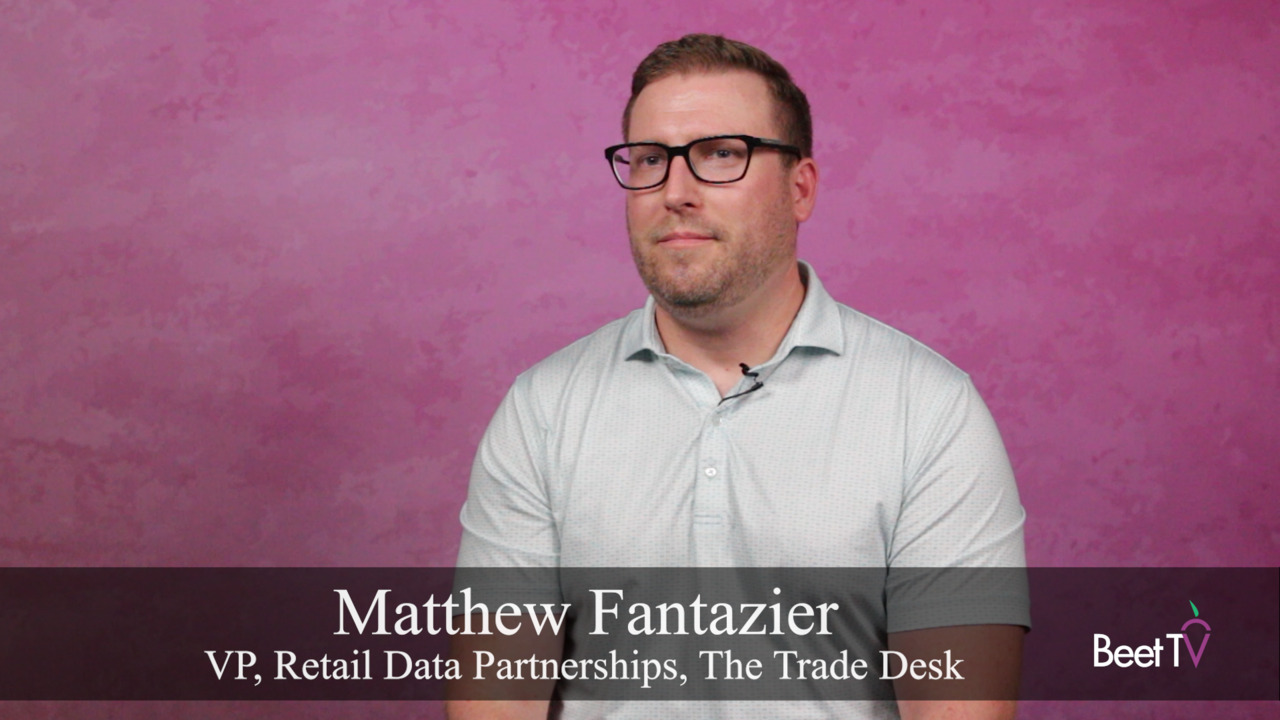
For The Trade Desk, Travel Data Is the ‘Why’ Behind Retail’s ‘What’

When you search for a flight to Barcelona, you’re not just planning a vacation. You are broadcasting intent – about your income, tastes, upcoming spending, and emotional state. That signal, argues one executive, is among the richest data a marketer can get.

Travel data, combined with retail purchase signals, can form what he calls “a complete picture of a consumer’s intent”.

“Travel is such a powerful media moment because it is telling you more about a person’s intent and where really their mindset is,” said Matthew Fantazier, VP of retail data partnerships at The Trade Desk, in this video interview with Beet.TV. “What they’re feeling in the moment, what they’re excited about – it tells you a little bit more about where their heart is.”

Retail tells you what; travel tells you why

The distinction Fantazier draws: data reveals purchasing behavior, while travel data illuminates the context behind it. A consumer buying sunscreen in January means something different if they’ve just booked a Caribbean cruise than if they’re simply restocking a bathroom cabinet.

“When brought together, it creates a really complete and powerful picture of what the consumer is looking to achieve in that moment and how to best message them,” he said.

The Trade Desk’s role, as Fantazier described it, is to serve as the connective tissue. “The Trade Desk really comes into this ecosystem by pairing this first-party travel data with premium inventory, measurement, identity to really stitch together this picture for an advertiser to be able to activate against this data in a meaningful way,” he said.

Following the journey, not just the destination

What makes travel data particularly compelling for advertisers, Fantazier argued, is its longitudinal nature. Unlike a single e-commerce transaction, a trip unfolds across multiple touchpoints – research, flight booking, hotel selection, activity planning – each one generating a fresh signal and a fresh opportunity.

“Travel is a real journey,” he said. “We know that people are researching, they are booking a flight, then maybe they book a hotel or other items. So there’s really a moment to create influence with a consumer because you don’t just have one shot to connect with them.”

That sequential engagement is the key to what Fantazier called “in-the-moment storytelling” – the ability to tailor messages as consumer intent evolves, rather than relying on a static audience segment. “You are really following them along that journey,” he said. “You get a more complete picture of what they’re intending to do, so you can more tailor that message to their mindset and really create a meaningful message to that person based upon what we know about them.”

Commerce media’s expanding orbit

The conversation took place as part of Beet.TV’s “Flight to Cannes” Leadership Series, presented by Kinective Media by United Airlines – itself a signal of how seriously travel companies are positioning themselves as media and data businesses.

United Airlines’ Kinective Media unit is among a growing class of travel-based retail media networks seeking to monetize first-party data.

The Trade Desk has been expanding its commerce media infrastructure more broadly. In April 2025, the company partnered with Pacvue and Skai to enable unified activation and measurement across more than 250 commerce media partners – a move designed to give advertisers a more coherent view of performance across fragmented retail channels.

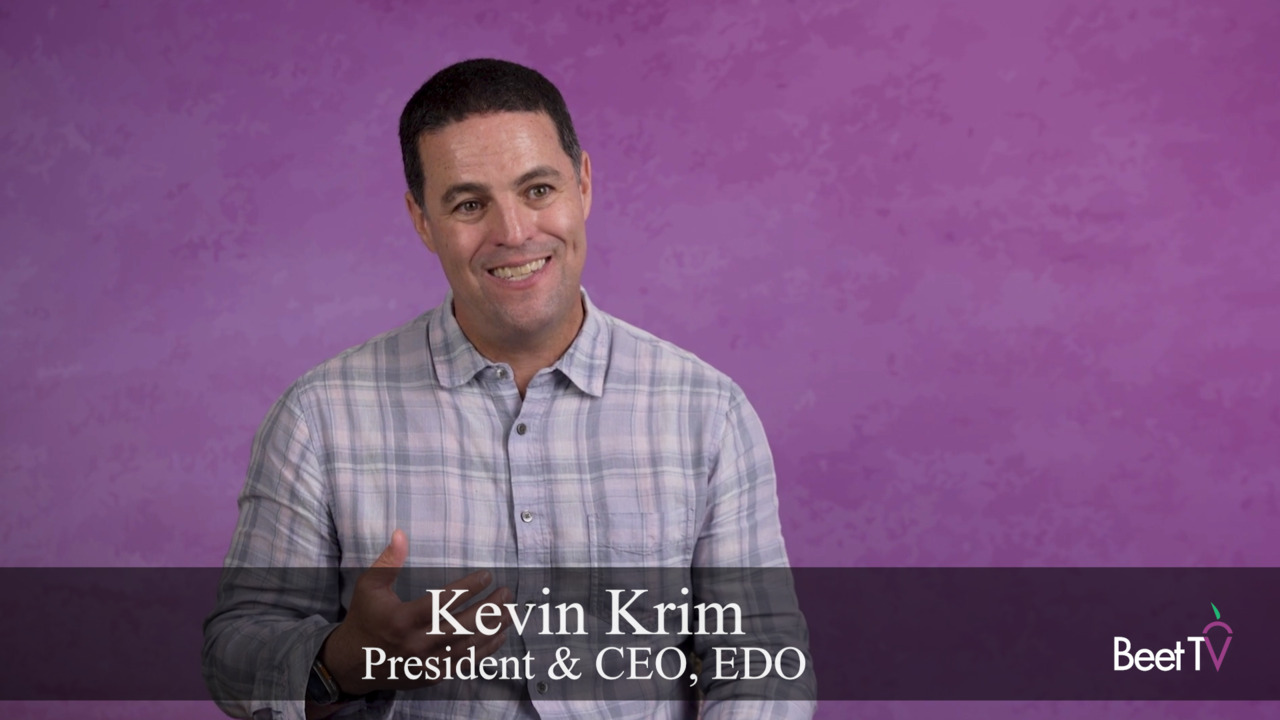
TV Measurement Needs Maslow’s Hierarchy, More AI, Fewer Dashboard Hostages: EDO CEO Kevin Krim

MIAMI – At the POSSIBLE conference, Kevin Krim, president and chief executive of media-measurement firm EDO Inc., arrived with a message that probably startled at least a few ad executives wandering Miami Beach meeting halls in search of cold brew and attribution models: the future of TV measurement apparently runs through Maslow’s hierarchy of needs.

Yes, that Maslow. The pyramid from Psych 101.

Speaking with Beet.TV contributor David Kaplan, Krim compared the evolution of TV measurement and AI-enabled advertising tools to the climb from basic survival toward “self-actualization,” which isn’t usually a phrase heard near a retail media cocktail reception.

“In our industry, AI can help us move up that pyramid,” Krim said. “Get the basic needs solved so much more easily and readily, and give us back more time, and in some cases, more money, to pursue those higher order needs.”

This may be the first time in advertising history that “share of voice metrics” and “human fulfillment” have appeared in the same sentence without irony.

Krim said EDO is trying to accelerate that climb through ChatEDO, the company’s LLM-powered interface that gives marketers quicker access to TV intelligence data. Or, put differently, fewer people trapped in dashboard purgatory exporting CSV files until midnight.

TV wants credit for more than ‘awareness’

Krim spent much of the interview making the case that television deserves to stop being treated like the decorative throw pillow of the media mix.

“TV is a brand and demand medium,” he said, arguing that TV advertising now drives measurable consumer behaviors including searches, website visits, app usage and even interactions with AI chatbots after viewers see ads.

That matters because the industry has spent years worshipping at the altar of closed-loop attribution from search and social platforms while TV sat in the corner muttering, “I helped, too.”

According to Krim, the data increasingly supports television’s role deeper into the funnel.

“What we’ve revealed by watching the customer journey and seeing the behaviors that are triggered by exposure to TV,” he said, is that viewers often move directly into action after exposure to ads.

Sports continue printing money for everyone involved

Krim also weighed in on why live sports rights continue costing approximately the GDP of a small island nation.

“Live sports and other live events are really the engine that drives this ecosystem,” he said.

According to EDO’s data, engagement rates for ads in live sports programming are “significantly higher” on a per-person basis compared with other types of content.

Which helps explain why media companies continue backing armored trucks full of cash up to leagues for rights packages while executives publicly insist they remain “disciplined allocators of capital.”

Krim said sports create uniquely engaged audiences who care not only about the game itself but also the ads surrounding it. In media terms, that is basically the Super Bowl’s entire business model.

AI creative means more ads, not fewer humans

On the creative side, Krim took a relatively balanced position amid the current AI gold rush, where every software vendor now promises to “unlock storytelling at scale,” usually while generating six-fingered consumers holding melted hamburgers.

“The human will stay at the center of creativity,” Krim said. “Taste and judgment are just unique human traits.”

Still, he argued AI dramatically lowers production costs and allows marketers to generate far more creative variations than before.

“The idea that we need one or two perfect creatives for a campaign, were really based on a scarcity mindset,” he said.

Krim’s broader point was that marketers should stop obsessing over a single perfect ad and instead let performance data determine which creative executions work best for different audiences and campaign moments.

In other words, the future of advertising may involve fewer “big swing” creative bets and more machine-assisted Darwinism for 15-second spots.

ChatEDO tries to rescue marketers from dashboard captivity

Krim also detailed the scale of EDO’s data infrastructure, which includes 375 million ad airings and 2.6 million creatives collected over roughly a decade.

Before ChatEDO, extracting insights often required specialized power users navigating complicated dashboards while the rest of the organization waited helplessly nearby asking Slack questions like digital Oliver Twists begging for another pivot table.

“What ChatEDO does is put that powerful database at the fingertips of users,” Krim said, allowing marketers to ask simple or complex questions and get answers “in 15, 30 seconds instead of minutes or hours.”

That speed, he argued, frees agencies, brands and networks to focus less on hunting for data and more on optimization and business outcomes.

Or, in Maslow terms, finally escaping the bottom of the pyramid where ad ops teams survive entirely on caffeine and screenshots.

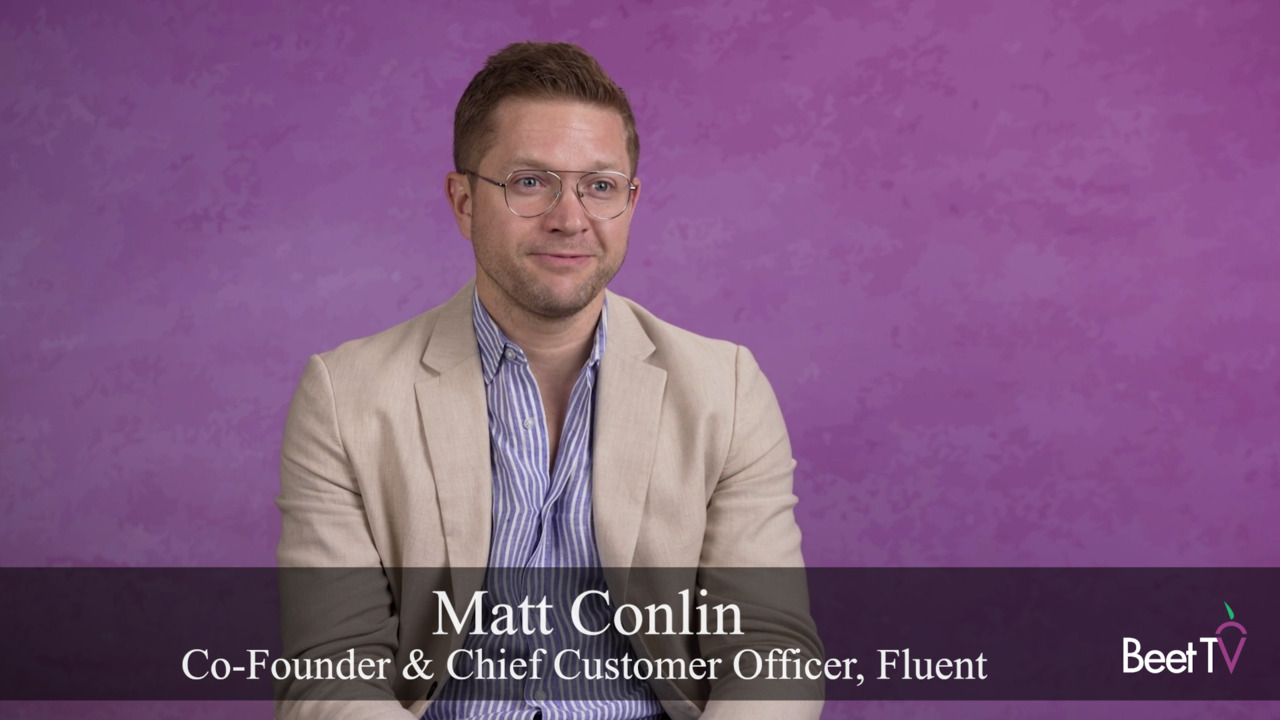
Fluent’s Matt Conlin: Programmatic Infrastructure Hasn’t Caught Up to Post-Transaction Performance

MIAMI — Post-transaction advertising delivers measurably stronger results than traditional display, but the programmatic infrastructure built to serve the open web may be holding marketers back from realizing its full potential.

“The unique thing about post-transaction is high-impact inventory, and it’s brand safe because a real person just made a purchase, which drives incredibly strong performance and click-through rates,” Matt Conlin, co-founder & CCO of Fluent, told Beet.TV contributor David Kaplan at POSSIBLE. Fluent sees 2.5% click-through rates from post-transaction placements, compared to the 0.25% CTR typical of traditional display. “Programmatic was built on the open web where there were a lot of display ads cluttering a publisher’s webpage. Programmatic was not built to support that type of performance.”

This infrastructure mismatch explains why post-transaction inventory remains largely outside programmatic ecosystems despite delivering perfornace comparable to branded search.

Commerce media reaches third growth phase

After maximizing endemic advertiser onsite inventory and expanding offsite audience targeting, commerce media enters phase three through new ad verticals and surface area that go beyond traditional placement strategies.

“As both of those first two phases of growth have started to plateau, the next natural stage are what are the other types of ad verticals we can introduce to our shoppers to enrich the experience?” Conlin said.

New opportunities include order return pages, summary pages, loyalty sections, and in-store experiences — moments when purchase intent is high and consumer attention is still fully engaged. That post-transaction window, when a shopper’s excitement and trust are at their peak, is where Fluent believes the most underutilized value in commerce media sits.

Personalization requires privacy balance

Effective commerce advertising depends on relevance — but relevance requires data, and data requires trust. The challenge is building personalized ad experiences on shopper insights while maintaining privacy compliance and delivering the conversion signals advertisers need to close the loop.

“How do we create the most relevant and personalized ad experience possible based on what we know about a shopper? And how do we do that in a privacy safe way that respects privacy but also delivers the personalization that shoppers have come to demand?” Conlin said.

Data flows bidirectionally, with retailer insights informing advertiser targeting while conversion feedback enriches commerce partner’ understanding of their own customers.

Prioritize customer experience

Success in commerce media’s next phase won’t just come from innovation — it will come from knowing what not to compromise.

“The winners are ultimately those that preserve the best experience possible for the shoppers, keep their customers loyal and coming back time and time again, while also introducing appropriate ways for brands to participate in that customer journey,” Conlin said. “Those that are focused on driving GMV while also creating rich customer experiences.”

Sustainable growth, in Conlin’s view, means treating shopper loyalty as the asset worth protecting — not a variable to optimize against.

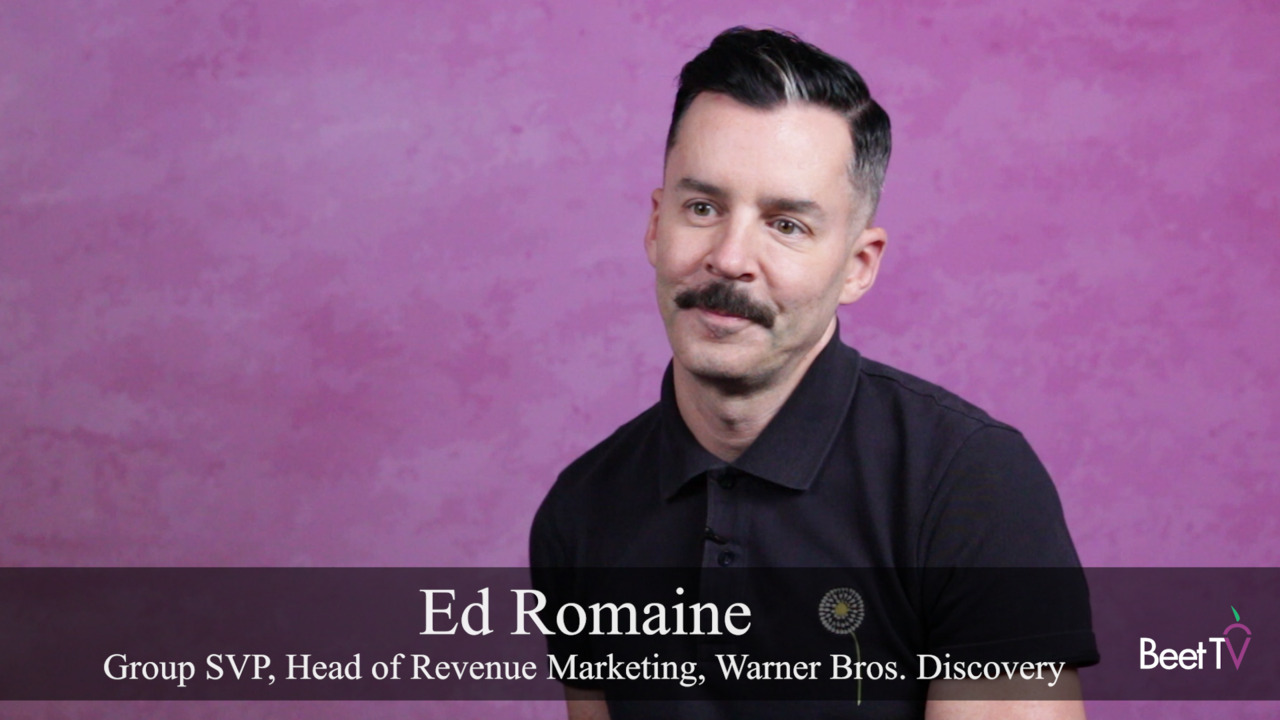
Warner Bros. Discovery Gives Advertisers Real-Time Campaign Controls With New Dashboard

The days of waiting until a campaign ends to find out whether it worked may soon be over.

Warner Bros. Discovery has unveiled a real-time measurement and attribution dashboard that lets marketers monitor and optimize campaigns while they’re still running – a shift from the traditional post-campaign reporting model that has long frustrated brands seeking agility.

“For the first time, we are giving clients the capability of looking at their campaigns while they’re running in flight and optimizing them with our third-party partners,” said Ed Romaine, group svp and head of revenue marketing at Warner Bros. Discovery, in this video interview with Beet.TV.

From passive viewing to active participation

The dashboard was among several announcements WBD made during the upfronts, including a cross-platform advertising suite called “Unbreakable” designed to engage fans across linear television, digital, and social platforms simultaneously.

The concept emerged from data showing that brands running messages across both TNT Sports linear broadcasts and Bleacher Report’s digital and social platforms saw an average 70% brand lift. “The idea with Unbreakable is that a brand can show up in the right way for a fan wherever they happen to be consuming our content,” Romaine said.

The framework operates around four pillars:

  1. Pulse captures real-time fan energy through features like live polls appearing simultaneously on linear broadcasts and Bleacher Report.
  2. Engage encourages debate among fans.
  3. Reward offers exclusive access to experiences.
  4. Highlight brings fans to the forefront during live game action.

“All of these things are able to be sponsored and brought to you by a brand,” Romaine said. “But at the core is the viewer and the actual fan experience.”

Interactive formats show early promise

WBD’s push into interactive advertising formats is already yielding measurable results. The company’s “Moments” product, which places brands within specific scenes across its content library, has generated a 19% increase in viewer engagement on average.

Shoppable formats are proving particularly effective, with the company reporting a 13% jump in purchase intent. The newly introduced shoppable pause ad builds on an existing product that had already achieved a 15% increase in mobile scans and an average return on ad spend of 2.5.

“The reason that we decided to include the pause feature as part of the shoppable product is that we wanted a captive audience,” Romaine said. “The pause enables us to increase that efficacy even further by letting people actually look at the product that’s in front of them and decide if they want to purchase it or not.”

AI-powered creative optimization on the horizon

Artificial intelligence is reshaping how WBD approaches ad creative. Dynamic creative capabilities now allow the company to adjust what an ad looks and feels like in real-time, making messages more contextually relevant to the content surrounding them.

The company is developing what it calls “agentic experiences” that will let brands specify their desired outcomes and have the system automatically optimize creative placement. “When the viewer is looking at a specific scene and there’s the perfect intent to show that brand in the most suitable surrounding, that’s how the creative will inform itself,” Romaine said.

The Unbreakable suite is also set to expand beyond sports in the coming months. Romaine pointed to home competition programming as a natural extension, where similar interactive experiences could populate across WBD’s home and design websites, social platforms, and television episodes. “We want to make the experience for our brand partners as turnkey as possible,” he said, “which is why we introduced those products at the upfront.”

Crossmedia’s AI Is Built to Free Planners From Excel Hell

For many in the media planning and buying world, the daily work remains full of manual processes and disconnected spreadsheets.

But, as artificial intelligence continues its march across the industry, some are seeing an opportunity to rewire that legacy system. The goal is to create an integrated ecosystem that automates the grunt work, freeing up human talent to focus on innovation and higher-level strategy for clients.

That is the approach at independent agency Crossmedia, which has spent the last 18 months building its own modular operating system to streamline the entire media investment process. The system is designed to reduce the “enormous amount of time and manpower” spent on manual tasks, said Kaitlyn Mcinnis, executive director, integrated investment lead at Crossmedia, in this video interview with Beet.TV.

Building a learning loop

At the core of the agency’s effort is a platform called XMOS, led by the company’s CTO, Jess Lewis. The system works by ingesting a client brief and then pulling from a wide array of data sources, including first-party data, multi-touch attribution and marketing mix models, and competitive intelligence to generate a recommended plan, according to Mcinnis.

“It’s doing our reach frequency curves, channel allocations. And of course, there’s human application to that,” Mcinnis said. “So we’re going in, we’re reviewing those, we can change them, modify them. And essentially it’s pulling away all of that manual lift on our teams.”

Crucially, the system is designed as a closed loop. It tracks campaign performance data from the marketplace and feeds it back into the model, creating a cycle of continuous improvement. “Ultimately when we go into marketplace, it’s then grabbing the performance of it and feeding it back into the module operating system,” she added. “So the next time that we’re brief from our clients, it’s pulling from past performance, so it’s iterating and evolving over time.”

Beyond efficiency to innovation

The primary target for this automation is what Mcinnis described as a “fragmented environment” where planners, buyers, and performance teams all operate in separate spreadsheets. This makes even simple historical queries a significant challenge. “When clients come in and they’re like, ‘Hey, what is my spend in my performance of the last five years?’ It takes an enormous amount of time and manpower to run around,” she explained.

The IAB projects US ad spending growth will accelerate through 2026, largely fuelled by the transition of AI from pilot programs to core operations. This includes the rise of so-called “agentic” AI systems, like a proof-of-concept unveiled by NBCUniversal to plan and optimize TV campaigns, which automates tasks that once took days.

For Mcinnis, the ultimate benefit extends beyond simple efficiency gains. “What AI is doing for us is it’s decreasing the manpower so that we can have the actual strategic mindset to pause and think about what we’re putting together,” she said. It provides the “time and space to be able to innovate and put together really great recommendations and optimizations for our clients.”

Human governance is paramount

Despite the emphasis on automation, Mcinnis insisted that human judgment remains an indispensable part of the process, particularly when it comes to final approval. The potential for AI to produce flawed or biased outputs means a human backstop is non-negotiable.

“Humans have to be at the forefront in the final governance and sign off,” she stated. “And that’s because AI can hallucinate. It has biases and as humans, we are accountable for our clients’ investments. And ultimately we’re accountable and responsible for what hits consumers.”

Mcinnis believes independent agencies are well-positioned to maintain this balance, tying it to a people-first culture. She argued that indies have an advantage in an era of rapid technological change. “Culture isn’t being lost here and I do think that Indies do have a leg up on that right now because we’re paying attention to that people-first mentality,” she said, citing her company’s founding pillars of “trust, reason and the pursuit of happiness.”

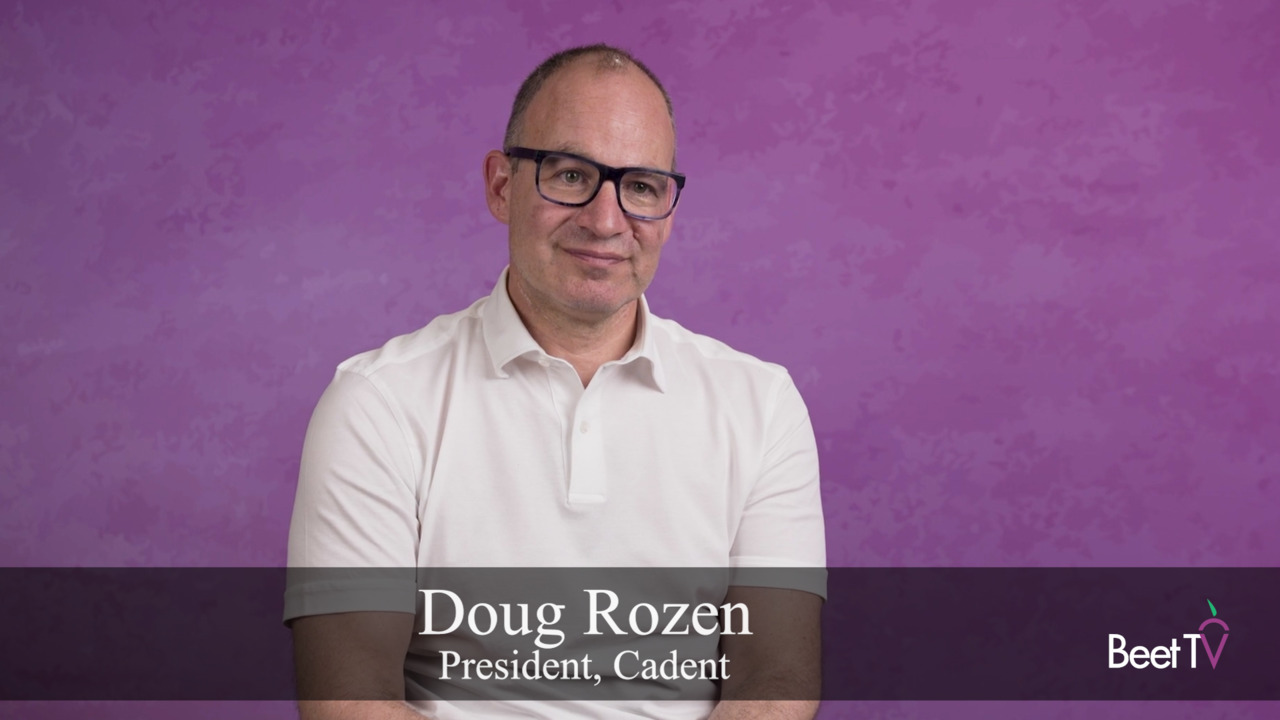
Beet@20: Doug Rozen of Cadent Warns AI Won’t Replace You, but AI Experts Might

As Beet.TV marks 20 years and roughly 11,000 interviews chronicling the twists, turns and identity crises of the media business, Doug Rozen, president of predictive advertising company Cadent, has a message for advertisers everywhere: consumers are exhausted, your frequency cap is probably broken and nobody wants to see the same streaming ad four times in a single episode.

Speaking with Beet.TV founder Andy Plesser, Rozen reflected on how the industry has spent decades chasing the next shiny object while also trying not to make advertising unbearable for normal human beings.

“If you look at all of what’s transpired over the last couple of decades, advertising is trying to find the best way to get to a customer,” Rozen said. “The best way to get a customer engaged.”

That search has produced a cycle of excitement followed immediately by operational headaches, existential dread and multiple conference discussions about “friction.”

“We are so fascinated, always kids in the candy store, to try to understand what’s next, be it AI today or storytelling yesterday or mobile before that,” Rozen said. “But then with that comes all this friction in trying to understand how do we take advantage of that and not make advertising worse for the consumer.”

Cadent operates a predictive advertising platform that uses artificial intelligence to help brands reach audiences across streaming, television and digital media. Its AI-native platform processes about 200 billion impression opportunities daily, connecting advertisers with more than 125 million households and 1.8 billion devices through partnerships with publishers including DirecTV Advertising, Dish Media and LG Ad Solutions.

Connection versus convergence

Rozen said the industry has confused “connection” with “convergence,” which sounds like the title of a futuristic Cannes Lions panel moderated by someone wearing very expensive sneakers.

“A lot of people talk about being converged, but they’re actually just connected,” he said.

Simply stitching together platforms and data pipes isn’t enough if the result still feels like digital harassment with better reporting dashboards.

“I do this because I think advertising is amazing,” he said. “I love it as a consumer, I love it as a professional.”

The problem, he added, is the current consumer experience often inspires less admiration than a desperate search for the skip button.

“If you think about the average consumer watching a single episode of some streaming show, they see the same ad four times, then they get hounded across the internet, then they see it again that night on their television,” Rozen said. “They’re actually saying, ‘Make it stop.’”

Somewhere in America, a family watching a pharmaceutical commercial for the seventh consecutive time nodded in solidarity.

AI isn’t taking your job. The AI person might

Like nearly every advertising executive in 2026, Rozen also addressed artificial intelligence, though he skipped the usual “AI will unlock human creativity at scale” bingo-card language and offered a more practical warning.

“Don’t be concerned about AI taking your job,” he said. “Be concerned about somebody that knows AI taking your job.”

Rozen urged younger professionals to get comfortable using the technology directly instead of treating it like a mysterious force floating around LinkedIn posts written at 11:43 p.m.

“You gotta get your hands dirty,” he said. “You gotta use the technology, you gotta be familiar with the technology.”

He also argued AI should eliminate repetitive work rather than eliminate critical thinking, a notable departure from the industry’s longstanding tradition of forcing junior employees to spend six hours inside spreadsheets while senior executives discuss “innovation” over espresso martinis.

“How do you take the robot out of the human?” Rozen said. “The tools and tech are to make the mundane easier and automated so I can spend more time being strategic and more time thinking critically.”

Curiosity becomes the differentiator

For Rozen, the winners in advertising’s next era will not simply be the people willing to grind through endless workflows. They’ll be the people curious enough to adapt while everyone else is still formatting PowerPoint charts at midnight.

“The future is gonna be those who are curious are going to find themselves standing apart from those who can just work hard or have a good idea,” he said.

That sentiment fits neatly into Beet.TV’s own two-decade evolution from early digital-video pioneer to one of advertising’s living historical archives. Across 11,000 interviews, the technology keeps changing, the jargon keeps mutating and every year someone announces a revolutionary new way to target audiences.

But as Rozen suggested, the real breakthrough may simply be showing consumers fewer terrible ads.

Butler/Till’s Gina Whelehan: Healthcare Marketers Must Adapt to AI Impact on Patient Search Behavior

MIAMI — Large language models and prompt-driven searches are transforming how consumers seek health information, but many healthcare marketers haven’t adjusted content strategies to appear in these new discovery environments.

“The way in which we search for content today is just evolving. When you think about how folks are leaning into LLMs and prompts to get really important information about maybe what they’re experiencing or what they just heard from their doctor, that’s creating an incredible opportunity for brands,” Gina Whelehan, group director for Strategy & Partnerships at Butler/Till, told Beet.TV contributor David Kaplan at POSSIBLE. “Marketers need to be really mindful about how they show up, that they actually show up in that content even.”

Healthcare professional workflows are also evolving through AI integration, requiring marketers to understand changing time allocation and interaction patterns within trusted systems.

Moments-based messaging

Healthcare marketing precision requires broader thinking beyond traditional demographic and prescription targeting toward understanding patient journey moments and contextual messaging delivery.

“Gone are the days where we have to be on target, so we’re very specific about demographics and prescriptions. We need to think more broadly about the places and spaces that these folks are in and when certain messaging is hitting them,” Whelehan said.

Upfront audience strategies must account for different patient journey stages and enable segmentation within larger audiences for customized reach and timing approaches.

Signal-based targeting replaces identity dependence

Privacy limitations drive healthcare marketers toward owned data strategies using prescription writing and diagnosis behaviors to create targeted healthcare professional (HCP) lists, while publishers provide content emotion and context signals within bidstreams.

“There’s such rich data that brands have access to in terms of understanding writing behaviors and diagnosis behaviors. They can take that type of owned data and turn it into target lists,” Whelehan said.

Publishers and data partners now release content-specific information about emotional context and consumer consumption patterns that enable meaningful engagement beyond traditional identity-specific targeting approaches.

Programmatic centralization

Complex patient journeys require programmatic-first approaches that centralize campaign data across publishers and inventory sources, enabling path-to-conversion analysis and optimization insights.

“A programmatic first approach allows us to access really important data, really important inventory so that we can centralize campaigns and activations,” Whelehan said. “Bridging all of that together in a centralized space allows us to see more from a path to conversion, which things work best together to drive a specific conversion.”

Custom marketplace curation becomes essential for healthcare-specific inventory and data aggregation within centralized optimization environments.

Speed creates opportunities

AI acceleration enables faster insight action and performance optimization while supporting modular content creation based on real-time signals and triggers for stronger brand performance.

Healthcare professional workflow changes within trusted systems require marketers to understand evolving time allocation patterns and adjust messaging strategies accordingly as AI integration continues developing.

“The speed in which things can get done is creating a lot of opportunity for us to take action faster on insights and performance,” Whelehan said. “It’s allowing us to get more creative, building out modular content based on real-time insights and signals and triggers.”

Travel Intent Data Is the New Airport Lounge for Advertisers: Yahoo DSP’s Emily Ray

If the advertising industry needed another excuse to obsess over travel data before Cannes Lions, Yahoo DSP’s Emily Ray just handed the industry a boarding pass. In an interview with Beet.TV contributor David Kaplan ahead of next month’s “Flight to Cannes” with Kinective Media by United Airlines, Ray described travel signals as one of the richest sources of consumer intent available to marketers today.

Or, translated from adtech into plain English: if someone Googles “best beach hotels in July” at 1 a.m., the entire internet suddenly wants to sell them sunscreen, premium credit cards and probably a linen shirt that costs more than airfare.

“We’re seeing travel moments show up in many different ways,” Ray said. “I would say that travel is the biggest form of intent that we see across the board on Yahoo.”

The platform sees consumers move through a compressed travel-planning cycle, with many summer travel searches now occurring in May and June even when trips happen in July, she said. That shrinking window has turned travel marketers into the digital equivalent of gate agents frantically calling final boarding.

“That window of time has condensed over the years,” Ray said. “With that condensed timeframe, it becomes that much more important for marketers to be able to reach the consumer at specific points in the journey in a very personalized way.”

Following travelers from search to suitcase

Ray outlined how Yahoo combines first-party data, real-time signals and its identity graph to help advertisers target consumers across devices and media channels. The pitch is classic omnichannel logic: the traveler searching flights on a phone is also watching connected TV, walking past digital billboards and probably scrolling their social networks somewhere in between.

“We have a wealth of first-party data,” Ray said. “We also have access to real-time signals. We also have a very strong identity graph that we use in combination in order to reach high-intent travelers.”

Naturally, the industry solution to this complexity is another identifier. Yahoo’s answer is Yahoo ConnectID, which Ray described as a proprietary identifier built from authenticated data that helps advertisers maintain continuity across channels. Because apparently the only thing traveling more than consumers this summer is their data trail.

Ray said the goal is to create advertising experiences that feel useful instead of intrusive. In adtech, this is roughly equivalent to a hotel guest hoping housekeeping knocks before entering.

“We work really closely with our advertisers to ensure that we are creating a seamless journey for the consumer so that they don’t necessarily feel the advertising,” Ray said.

Travel data escapes the travel category

One of the more revealing moments in the interview came when Ray described how non-travel brands are increasingly using travel behavior for targeting.

“We’re also seeing some really interesting use cases for non-travel brands using travel data,” Ray said.

Ray also noted that B2B marketers are increasingly targeting business travelers, since few audiences scream “premium enterprise software buyer” quite like somebody speed-walking through Terminal C while wearing loafers and texting from an airline lounge.

Throughout the conversation, Ray repeatedly returned to the idea that timing and personalization matter more than broad demographic targeting. Showing travelers ads that match where they are in the journey is more effective than serving irrelevant promotions after the trip is already underway.

“If I am searching for a vacation destination, I’m going to be more apt to convert on an ad that’s showing me places that are more relevant to my search,” Ray said.

EssilorLuxottica’s Caroline Proto: Is There More to TV And Digital Video Than Driving Upper Funnel Awareness?

MIAMI — Television and digital video face persistent categorization as great for brand affinity and awareness, not so great for generating clearly measurable outcomes. But that dynamic may be changing.

“TV and digital video are always bucketed in that upper funnel awareness driver. We’ve spent a lot of time finding ways to make that into a story that shows that it is truly a full funnel business driver,” Caroline Proto, senior director of Global Media at eyewear and eyecare brand EssilorLuxottica, told Beet.TV contributor David Kaplan at POSSIBLE. “The biggest one for us has been investing in third party measurement partners that are able to tie that exposure into these large format video platforms into actual business outcomes.”

This validation becomes essential for defending media investments during economic volatility when finance teams demand irrefutable proof of performance.

Building executive trust

Independent measurement creates stronger credibility with leadership and financial teams compared to platform-provided analytics, establishing level playing field evaluation across media partners.

“We don’t want partners to grade their own homework. When we’re able to use a third party measurement partner that is able to grade all partners on an even playing field and create this deduplicated picture of the role that it’s playing in our media mix, it really just creates a stronger level of trust,” Proto said.

This approach provides irrefutable evidence that satisfies finance team scrutiny and executive leadership demands for accountability.

Offline data reveals last-touch limitations

Integrating brick-and-mortar behavioral data with TV and CTV measurement exposes attribution model weaknesses that undervalue large-format video’s contribution to retail-driven businesses.

“In today’s digital landscape, attribution models or digital ad servers rely on last touch. When we’re thinking about last touch, those will never pop. They’ll never have a strong ROI,” Proto said.

Offline measurement partners enable feedback loops that prove video format effectiveness while informing targeting parameters for streaming TV, online video, and data-driven linear campaigns.

Terms finance teams can understand

Economic volatility intensifies media budget scrutiny, making real-world outcome measurement essential for defending marketing mix investments through metrics finance teams understand.

“Having real world measurement that is validated by a third party partner, we are just stopping the gaps of them being able to say, ‘Well, we don’t trust this or we don’t believe it,’“ Proto said.

Credit card transaction data connecting ad exposure to store visits and purchases creates easier defense conversations than standard media metrics that invite skepticism.

AI enables real-time optimization

Machine learning integration transforms static campaign approaches into dynamic optimization systems that identify and target consumers similar to those driven to stores by media exposure.

“We’ve now found solutions and partners that we are able to take that transaction and traffic data, feed it into the machine and then start finding audiences that look exactly like the consumers that we’ve seen were driven to store from our media,” Proto said.

This evolution from linear TV’s historical inflexibility toward reactive, intelligent, and personalized brand experiences enables rapid market response without manual intervention requirements.

“If you think about linear TV 10 years ago, it was almost like buying print. You committed to what you were going to buy, there’s nothing you can do,” Proto said. “To be able to have these optimization levers is making brands able to be more reactive, more intelligent, and also more personalized.”

TV’s ‘Front Door’ Now Comes With Deterministic Data and a Side of AI: Roku’s Lauren Benedict

MIAMI – At the Possible conference for marketers, Lauren Benedict, vice president of global ad sales and partnerships at streaming pioneer Roku, delivered a message that probably made half the adtech ecosystem nod thoughtfully while the other half quietly updated their pitch decks to include the phrase “front door to the viewer experience.”

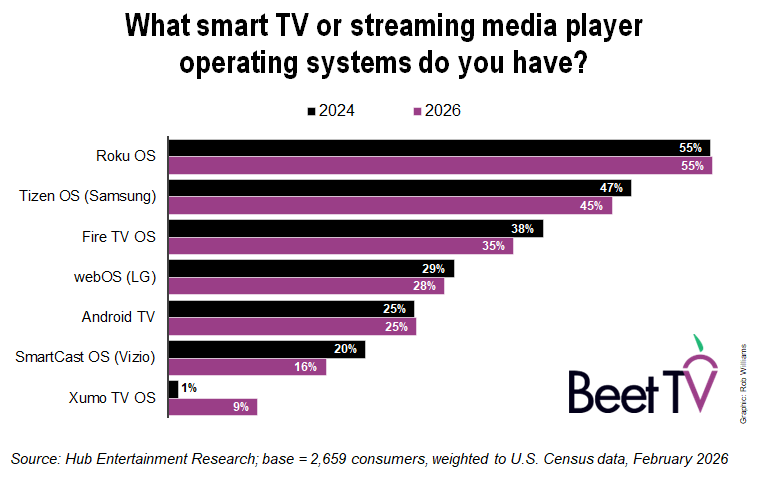
Smart TV streaming OS

Roku, whose advertising revenue jumped 27% from a year earlier to about $613 million in the first quarter, is making a strong case that the streaming wars aren’t any longer just about content libraries and celebrity cameos. They’re increasingly about who owns the first screen viewers see before they settle into three straight hours of sitcom nostalgia and prestige murder dramas.

“The linear and streaming TV worlds are really starting to come together,” Benedict told Beet.TV contributor Rob Williams. “The beautiful part about Roku is we are the front door to the viewer experience.”

That “front door” now sees massive traffic. Benedict said 50% of all streaming happens on Roku’s platform, with 125 million people a day coming through its interface to find something to watch, or more realistically, spend 18 minutes debating what to watch.

Hits, habits and the eternal search for attention

Benedict described Roku’s strategy as balancing the giant cultural moments with everyday viewing rituals.

“All those big media moments that attract audiences at scale, we love those moments,” she said. “But it’s also that everyday viewing behavior and habits.”

In other words, Roku wants advertisers to know it can deliver both the season finale everyone tweets about and the Tuesday-night comfort-comedy binge that nobody admits they’re still watching.

For marketers trying to balance brand storytelling with measurable performance, Benedict argued Roku sits in a uniquely powerful spot because it sees what viewers are actually doing across streaming environments.

“We’ve got a ton of data that we sit on at Roku,” she said, noting the company recently surpassed 100 million homes globally.

That milestone matters because, unlike the old days of television measurement, Roku says its audience data comes from authenticated viewers and deterministic signals instead of statistical guesswork, séance rituals or media buyers staring at Nielsen spreadsheets while whispering “please let the CPMs stabilize.”

Retail media crashes the streaming party

Naturally, no advertising interview in 2026 would be complete without retail media entering the conversation like an overcaffeinated keynote speaker who just discovered APIs.

Benedict highlighted Roku Curate, a new offering combining Roku’s first-party data with retail media partners including Instacart, Best Buy, Kroger and Fandango.

“It really does allow for brands to access these audiences at scale,” she said. “It’s not only about precision in terms of who they’re reaching but essentially building business outcomes and really moving CTV into a performance platform.”

In other words, connected TV isn’t satisfied any longer with being the glamorous awareness machine sitting at the grown-ups’ table. It now wants credit for actual purchases, too.

The industry’s latest obsession with “full funnel” advertising was everywhere at Possible, where nearly every booth, panel and cocktail conversation eventually circled back to proving outcomes. Roku appears eager to position itself as both Hollywood and math class.

AI arrives to make everybody a TV producer

Then came the mandatory AI portion of the interview, though to Benedict’s credit, it sounded less like a science-fiction trailer and more like a practical explanation of how smaller advertisers might finally afford polished TV creative.

“The part that I get so excited about is really how AI is showing up in creative,” she said.

Benedict pointed to Roku Ads Manager and its partnership with Spaceback, which helps small and midsize businesses turn existing assets into 15- and 30-second TV spots.

That means the local mattress store that once produced commercials resembling a hostage video can now generate reasonably slick connected-TV ads with AI assistance and real-time optimization.

“We’re also able to use AI to optimize and test and understand what offers are resonating and optimize in real time,” Benedict said.

Somewhere, a regional furniture chain just became a performance marketer.

The ‘one, two, threes’ of modern TV

Asked what a modern TV buy actually looks like, Benedict broke Roku’s vision into what she called the “one, two, threes of modern TV.”

The first piece is the Roku operating system itself, which she described as “that front door to TV where we capture consumer attention.”

Second is the Roku Channel, which she said ranks as the No. 2 ad-supported streaming platform by viewing time.

Third is Roku’s broader ecosystem of data, identity and interoperability with outside partners.

“It really is bringing together all the data and the signal, and being an open and interoperable partner in this space,” Benedict said.

That may not sound quite as romantic as the golden age of television, but in today’s media business, interoperability is apparently the new prestige drama.

CTV Emerges as Performance Channel Amid Shift to Lower-Funnel Ad Buying: Roku

DeepIntent’s Natalie Mancuso: Healthcare CTV Drives Better Performance than General Online Video

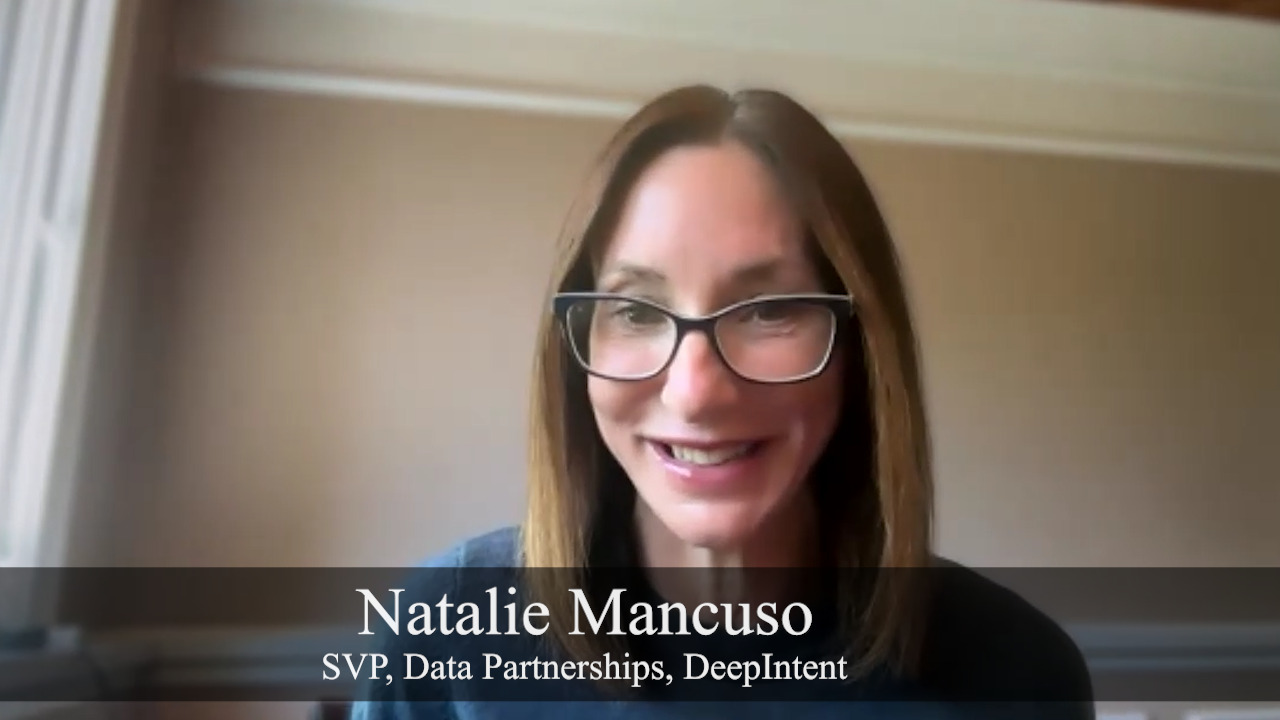
Not all digital video yields equal results. Case in point: DeepIntent’s Natalie Mancuso points to internal findings that connected TV advertising in healthcare generates twice the new-to-brand prescription rate compared to online video alone when combined with sequential messaging and clinical conversion tracking rather than traditional click-through metrics.

“We see CTV drive two times higher new-to-brand prescriptions than online video alone,” Natalie Mancuso, svp, data partnerships at DeepIntent, told Beet.TV editorial director Lisa Granatstein. “We also have some ongoing statistics that really support a two and a half times higher rate than within display.”

DeepIntent resolves CTV and digital exposure to individual patients using identifiers including NPIs, HIMs, IP device, and household signals rather than modeling lookalike audiences for pharmaceutical targeting.

Three-step patient journey handoff

Successful healthcare advertising follows sequential progression from CTV opener through digital carriers to endemic environments, with each touchpoint advancing patient action rather than repeating identical messaging.

“We really think about this as being a bit of a three-step handoff. You’ve got CTV as an opener, you’ve got these digital carriers and then endemic bundles,” Mancuso said. “CTV completion rates are nearly double online video.”

Digital serves as a carrier for next best actions including “talk to your doctor” messaging and savings cards that move patients forward through treatment consideration phases.

Household-level frequency management

Relevant messaging without overwhelming patients requires household-level frequency capping rather than device-level limits, sequential creative storytelling, and suppression of converted patients who achieve desired objectives.

“A family of four shouldn’t be hitting their frequency cap independently. Second touch isn’t the same as that first touch,” Mancuso said. “Once a script is filled, we stop spending against the person and really shift into another phase of that journey.”

This approach includes channel rotation from CTV through online video to audio to prevent frequency burn while maintaining message progression.

NPI-level deterministic measurement

Clinical conversion tracking operates at physician NPI level to determine whether advertisements drive actual prescription behavior or patient requests for therapy, providing deterministic rather than modeled insights.

“Did a physician actually take an action as a result of seeing an advertisement as a result of a patient coming in and requesting therapy?” Mancuso said. “Having this be a deterministic and not a model insight for our brands is really something that’s important in closing the loop.”

Script lift measurement compares exposed versus control groups to identify behavioral changes including faster diagnosis, specialist referrals, or new treatment adoption patterns.

Concurrent campaign strategy

Smart brands run cohesive sequential campaigns targeting both healthcare providers and patients simultaneously rather than separately, recognizing that prescription decisions require willing prescriber and patient request alignment.

“You can’t just speak to the HCP or the patient. That is a conversation of many and ensuring that they are running concurrently these types of campaigns,” Mancuso said. “I have to have a willing prescriber met with a patient request.”

Success requires budgeting the patient journey rather than individual channels while establishing script lift measurement before campaign launch.

“Planning is one consolidated campaign, ensuring that you’re setting up script lift measurement before that first impression,” Mancuso said. “What are you trying to achieve as opposed to a retrospective analysis?”

For Pharma Advertising, an Authentic Human Touch Is Still the Best Medicine

MIAMI — The pharmaceutical industry has long been considered a laggard in digital advertising innovation, hamstrung by regulatory hurdles and lengthy compliance approvals. But that gap is finally closing as programmatic capabilities mature and creative strategies become more sophisticated.

The shift represents a fundamental change in how pharma marketers approach campaigns, moving away from siloed thinking where data, creative, and measurement operated independently. Instead, the industry is embracing a unified framework that weaves these elements together from the outset.

“Starting with data first, making sure you understand the audience, is key to driving the best performance,” said Francis D’Hondt, svp of addressable health at Kinesso, in this video interview with Beet.TV. “It’s important to sort of weave that creative framework into what you’re trying to do from a targeting and measurement perspective, instead of thinking it as three separate components of the media plan.”

Authenticity drives creative personalization

The push for more personalized pharma advertising is being driven by a recognition that underserved communities have historically been poorly represented in healthcare marketing. D’Hondt sees this as both an ethical imperative and a performance opportunity.

“There are a lot of underserved communities that are impacted by conditions in different ways from others,” D’Hondt said. “The way that marketing has been served to those communities, the way that creatives look, the way that they kind of see the representations of patients has not always been that same sort of proportion to how the impact is driven.”

Dynamic creative optimization allows pharma brands to serve different versions of ads that speak to patients at various stages of their healthcare journey, from early symptom discovery to considering treatment switches. “Having multiple creatives and more dynamic decisioning behind that really makes it go a lot further,” D’Hondt said.

AI accelerates while humans maintain oversight

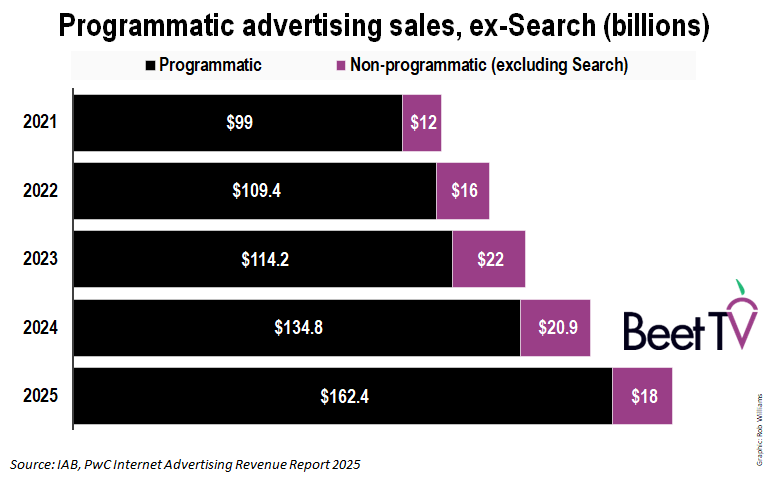
Artificial intelligence is transforming programmatic advertising across industries, with US programmatic ad spending projected to surpass $200 billion in 2026, according to eMarketer. But in pharma, where compliance requirements can delay campaigns by months, the promise of AI-driven acceleration is particularly appealing.

D’Hondt envisions a near future where AI can speed up the privacy approvals that currently frustrate pharma marketers. “Speeding that up is going to be so impactful to what we can bring to market,” D’Hondt said. “We can’t do that without a level of human oversight and sort of final approval to make sure that it fits in what compliance guidelines are.”

The balance between automation and human judgment remains critical in a category where regulatory missteps carry significant consequences. AI can accelerate creative versioning and partner vetting, but the final sign-off requires human expertise.

Emerging channels drive measurable outcomes

Kinesso specializes in programmatic advertising and marketing technology services, with platforms and tools to optimize the marketing lifecycle, from planning and strategy to activation and measurement.

Connected TV and audio are proving to be fertile ground for pharma innovation, with interactive units and pause ads creating new opportunities for patient engagement. The industry’s shift toward digital is accelerating rapidly, with nearly 80% of healthcare and pharma media ad spending expected to be digital by 2026, up from 64% in 2022.

“We’re seeing a lot of creative assets in CTV specifically, whether you want to talk about an interactive unit, pause ads, things that are driving a little bit more interactivity to the patients,” D’Hondt said.

Kinesso’s parent company IPG has been consolidating its data and technology resources, with the company’s Acxiom data spine now integrated more closely with its addressable media capabilities. D’Hondt emphasized the importance of long-term measurement planning, noting that 2027 planning will begin soon after upfronts.

Contextual Ads Have Finally Graduated from ‘Cookie Backup Plan’ Status: Seedtag’s Tina Iannacchino

As publishers scramble to survive collapsing referral traffic, disappearing cookies and the growing reality that AI search engines increasingly answer questions without sending readers anywhere, Tina Iannacchino of Seedtag says the industry may still be underestimating one of digital advertising’s oldest tools: contextual targeting.

“In my opinion, what publishers are still underestimating about the value of contextual today is,” Iannacchino said, pausing briefly before delivering the part that probably made several adtech decks immediately obsolete, “modern contextual is still being viewed as a safety net for cookie loss.”

That framing, she argued, badly undersells what contextual targeting has become.

“It’s really moved beyond that to a lot more intelligent approaches, like neurocontextual,” she said at the Beet.TV AI Media Summit with Horizon Media in New York.

Which means, apparently, we have now entered the era where your article about grilling techniques may emotionally resemble luxury travel content on a neurological level. Advertising has become therapy-adjacent.

Iannacchino, who is vice president of publisher partnerships for North America at Seedtag, said the company is pushing publishers to think beyond keyword matching and basic page categorization.

“By moving beyond basic keyword search and functionality, publishers can actually drive a lot more value from their inventory than they could historically,” she said.

NeuroX enters the chat, wearing a lab coat

Seedtag recently launched NeuroX, which the company describes as a Neuro-Contextual Exchange built on its proprietary AI technology called Liz. The platform is designed to make impressions across Seedtag’s network of more than 30,000 publishers and broadcasters addressable through emotional and intent-based contextual analysis.

In simpler terms, the company wants advertisers to target not just content categories but the emotional tone and mindset surrounding them.

The launch represents Seedtag’s latest attempt to position contextual advertising as something more sophisticated than “sports article equals beer ad.”

Iannacchino said NeuroX applies neuroscience principles to contextual targeting in real time.

“What that means is we’re actually marrying neuroscience principles to traditional contextual targeting to actually decode human interest, emotion and intent in real time,” she said.

Naturally, this sounds slightly like something a supercomputer would say moments before asking humanity to remain calm.

Still, Iannacchino tied the pitch directly to publisher economics.

“We’re gonna help publishers really invest in the quality of their inventory,” she said, adding that Seedtag hopes to reward premium journalism while giving brands greater confidence that media spending is effective. “We hope to empower brands to feel more comfortable and secure that every dollar they spend is not going to waste.”

In adtech, this may qualify as emotional support contextual targeting.

Publishers face the AI traffic apocalypse

The conversation then turned toward the increasingly uncomfortable reality facing publishers: AI-powered search engines and large language models are answering users’ questions directly, often without sending traffic back to the original source.

Or, as publishers call it, “the thing keeping everyone awake at 2 a.m.”

David Kaplan of Beet.TV noted that referral traffic declines are becoming a growing concern as search behavior changes. Iannacchino didn’t exactly disagree.

“That’s part of daily conversations, especially where I sit at Seedtag,” she said. “It’s something that’s unavoidable, unfortunately, at this point.”

Her assessment of the publishing business was refreshingly blunt. “Publishers, in my opinion, have to do a lot more with a lot less,” she said.

Seedtag’s response is to help publishers create more monetization opportunities around the audiences and environments they still control. Iannacchino said neurocontextual targeting can help publishers identify valuable moments and improve monetization efficiency even as traffic patterns shift beneath them.

“By working with someone like a Seedtag, we can actually help empower them to have more moments of monetization,” she said. “Ideally, neurocontextual can help ’em empower this moment.”

Which, in fairness, sounds much more hopeful than “good luck surviving the AI search apocalypse.”

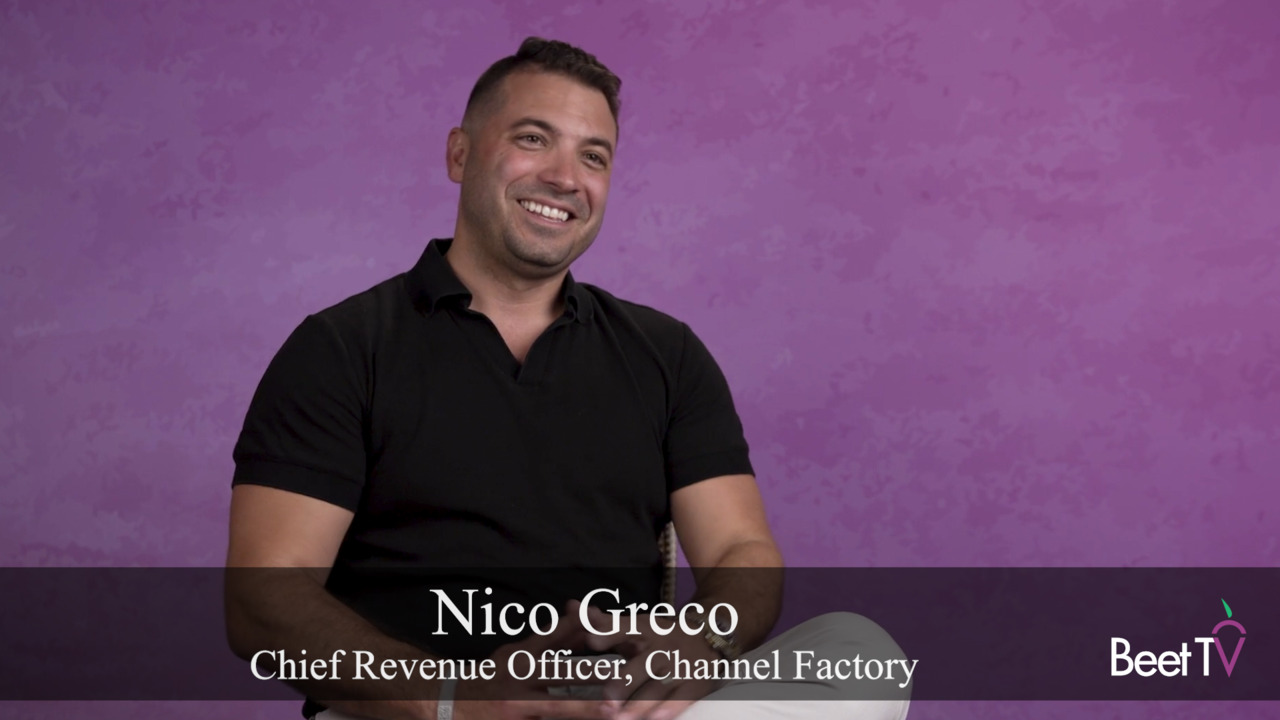
Channel Factory’s Nico Greco: Brand Safety Rules were ‘Designed for Human Authors,’ not AI-Generated Content

MIAMI — Traditional brand safety guidelines fail against artificial intelligence-generated content because existing tools and platforms cannot handle the volume and sophistication of machine-created material flooding digital environments.

“Brand safety rules, guidelines, everything that’s been broken out, has been designed for human authors. It’s all been designed for human creators,” Nico Greco, Channel Factory’s CRO, told Beet.TV contributor David Kaplan at POSSIBLE. “Now that there is this entire new influx coming in of AI generated content, none of these tools or anything was ever set up or established and designed to handle that level of inventory, that level of content.”

This reality forces brands to abandon existing safety frameworks and develop custom approaches that align with specific brand values rather than generic industry standards.

Suitability creates brand value beyond safety

Brand suitability has evolved from defensive positioning focused on avoiding wrong placements toward strategic advantage that drives performance through contextually appropriate environments.

“Being in front of the right places is actually not just about not being in front of the wrong places. It goes deeper than that and it really creates brand value,” Greco said. “If you can eliminate what is completely irrelevant, it’s going to give you more opportunity, more budget, more opportunity to really do what you wanted to do in the first place.”

This shift transforms safety from cost center toward revenue driver through improved campaign effectiveness.

Programmatic efficiency ignores brand identity

Algorithm optimization for efficiency metrics like cost and click-through rates overlooks brand values and identity considerations, requiring marketers to define deeper brand positioning before deploying automated systems.

“Any tool, platform, partner that I’m working with is always going to focus on that one thing, but there’s more to that. No brand is just a click-through rate,” Greco said. “We have to go deeper than that and understand what else matters to that brand. What is the right place? What’s the right environment?”

Better inputs from brand marketing strategy drive superior outputs across all automated optimization systems.

Signal quality determines AI success

Before implementing agentic AI systems, CMOs must establish proper signal foundations and brand identity frameworks because artificial intelligence learns from initial inputs to shape future decision-making patterns.

“You have to find the best signals before you can do anything else. If you have the proper signals in place, it’s going to train the AI models to continue to build and develop the way you want them to,” Greco said.

Poor signal quality creates compounding problems as AI systems learn incorrect patterns that widen strategic gaps over time.

“If you don’t have the right signals in place, “Greco said, “you’re going to be training all of your future AI tools on the wrong information and that’s going to learn and continue to build and create almost a wider strategy gap across the board.”

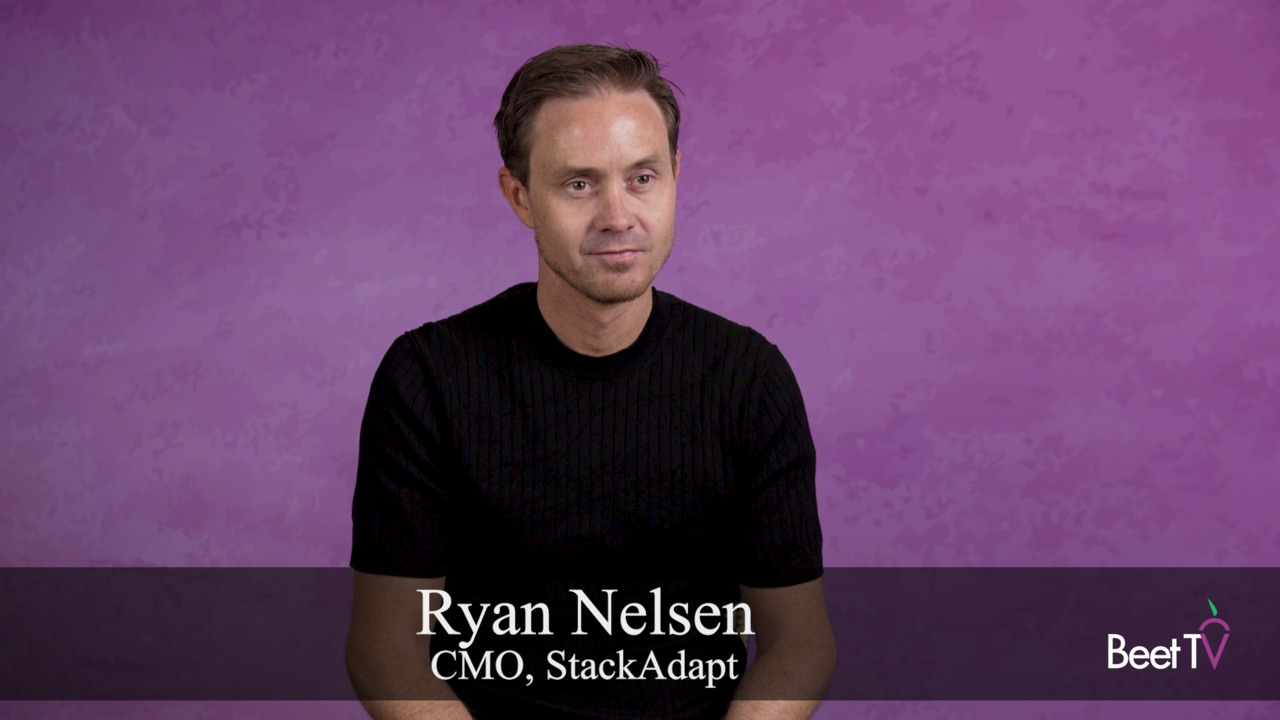
Brand vs. Performance Is a False Choice, Says StackAdapt’s CMO

MIAMI — The pressure on marketers to show results has never been more intense – but chasing short-term performance at the expense of brand building is a trap, according to one ad-tech executive who lives both sides of that tension every day.

Ryan Nelsen, chief marketing officer at StackAdapt, argues that the traditional separation of brand and performance marketing is collapsing, and that connected TV is one of the key channels forcing that reckoning. At StackAdapt, he said, campaigns split roughly 50/50 between what would traditionally be classified as brand versus performance – but increasingly, that distinction is blurring.

“I see those worlds colliding,” said Nelsen, CMO at StackAdapt, in this video interview with Beet.TV.

Deposits and withdrawals

The best brands, he argued, behave like responsible account holders – consistently adding value before asking for anything in return.

“The best brands are consistently making deposits into your experience, into the value of your life,” Nelsen said. “Those that are consistently taking or withdrawing from that – I think consumers notice that.”

As streaming platforms give advertisers more precise targeting tools, the temptation to push hard toward direct response is real. But Nelsen suggested that brands using CTV primarily to drive straight to a product risk hollowing out the emotional equity that makes advertising work in the first place.

The 30% conversion lift hiding in plain sight

One of the more concrete data points Nelsen offered concerns the sequencing of CTV and display advertising. StackAdapt, which runs both formats on its platform, has observed a consistent pattern across thousands of campaigns: following a CTV buy with a display campaign lifts conversions by around 30%.

“When you see something in real life on TV, you see that validation, and then you have a really, really easy way to follow up on that through a display campaign,” Nelsen said. “Timing really, really matters.”

That finding aligns with broader industry momentum around full-funnel CTV strategies. U.S. CTV ad spending is projected to reach $29.29 billion in 2026, up from $21.16 billion in 2024, according to eMarketer, as advertisers increasingly treat the channel as more than a reach vehicle. The sequencing Nelsen described suggests the value of CTV may be as much about priming subsequent touchpoints as it is about the impression itself.

AI as orchestration layer, not oracle

On artificial intelligence, Nelsen was enthusiastic but precise about where he sees genuine near-term value — and where he thinks marketers risk making a mistake.

“The impact that AI is having right now is on AI orchestration,” he said. “We can use AI to replace systems and process, and we certainly should be. What we shouldn’t be using AI for is to replace our point of view as marketers.”

The distinction matters. Much of the current AI conversation in advertising centers on creative generation and audience targeting, but Nelsen pointed to a more foundational problem: disconnected data.

His argument is that AI’s most immediate and practical contribution is stitching together fragmented systems into something approaching end-to-end media orchestration – not replacing human judgment, but giving it better infrastructure to operate on.

“I feel like the internet’s been created over again with AI,” he said. “We’re in the first inning of this.”

Publicis Buys LiveRamp in $2.5 Billion Push Into AI-Driven Advertising

Publicis Groupe agreed to acquire LiveRamp in an all-cash transaction valued at roughly $2.5 billion, giving the French advertising giant a larger foothold in the fast-changing market for data collaboration and AI-powered marketing technology.

The deal values LiveRamp at $38.50 a share, about 30% above the company’s closing stock price on May 15, before the acquisition was announced. The transaction is expected to close by the end of 2026, subject to shareholder approval and regulatory review.

LiveRamp has increasingly emphasized AI-related products and interoperability between advertising platforms, retailers, publishers and marketers.

Earlier this year, Beet.TV interviewed LiveRamp CEO Scott Howe at the IAB Annual Leadership Meeting, where executives across the media and advertising industries discussed how AI, interoperable systems and trusted data partnerships are reshaping the economics of media buying and marketing performance.

At that time, he said success in using artificial intelligence depends on strong first-party data signals combined with consumer permission to operate reputably as the world shifts from recognition-based to permission-based systems.

The acquisition reflects the increasing value that major holding companies are placing on identity technology, audience measurement and first-party data tools as advertisers adapt to stricter privacy rules and the fading role of third-party cookies. Companies that can help brands connect data across platforms while maintaining consumer privacy have become increasingly strategic targets in the advertising ecosystem.

Revenue rises 9% from year earlier

Separately, LiveRamp reported fiscal fourth-quarter revenue of $206 million, up 9% from a year earlier, while full-year revenue climbed to $813 million. Annual recurring revenue increased 8% and operating cash flow reached a record $168 million for fiscal 2026.

LiveRamp recently introduced AI-agent capabilities designed to automate data collaboration workflows between partners. The company also announced support for NVIDIA AI infrastructure to speed up processing inside its clean-room environment.

Scott Howe said the agreement with Publicis reflects the strategic role LiveRamp believes it plays in the emerging AI-driven advertising market.

LiveRamp ended fiscal 2026 with 133 customers generating more than $1 million in annualized subscription revenue, compared with 128 a year earlier. Subscription net retention was 107%.

The company said it will not issue financial guidance or hold its previously scheduled earnings conference call because of the pending transaction.

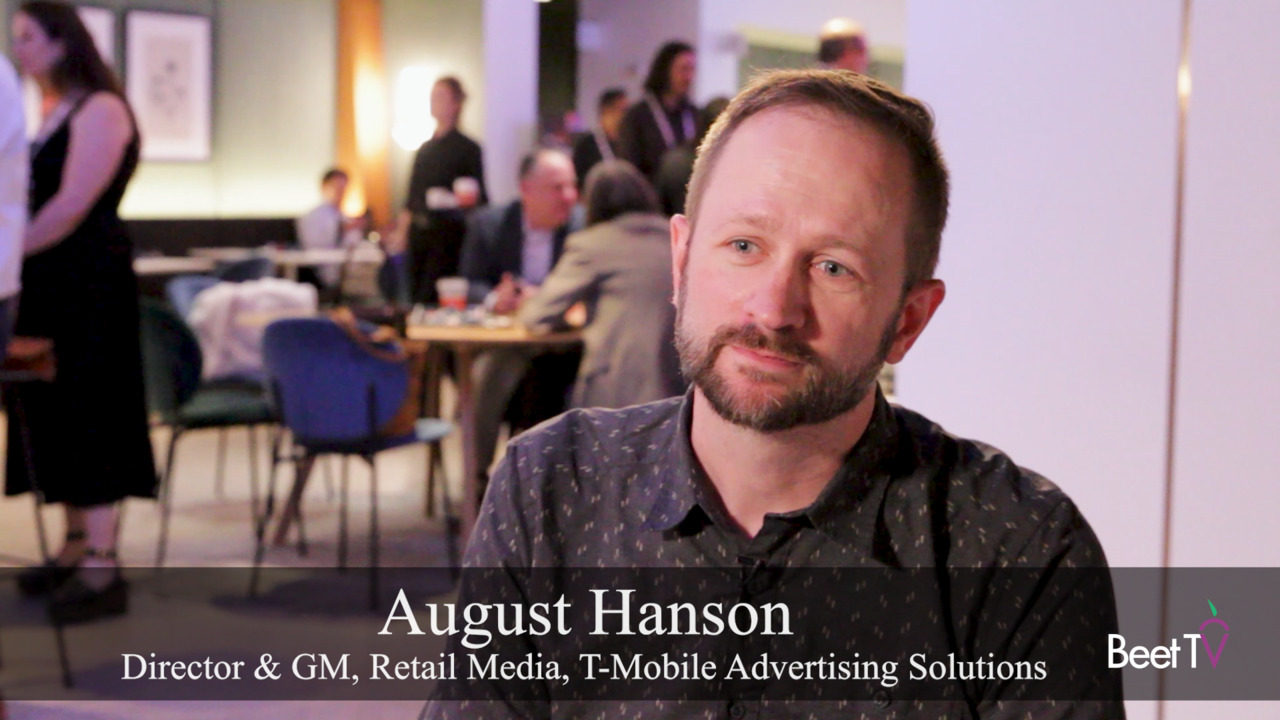
T-Mobile Bets Edge Computing Will Transform In-Store Retail Media

The majority of retail transactions still happen inside physical stores, but are the media environments within those spaces connected to the sophisticated targeting capabilities available online?

T-Mobile Advertising Solutions is now positioning itself as a bridge between the two worlds, offering retailers a turnkey system to transform their stores into “addressable media environments.”

“I think in-store media plays an important role in the customer experience,” said August Hanson, director and GM of retail media at T-Mobile Advertising Solutions, in this video interview with Beet.TV at the IAB Connected Commerce Summit. “It gives brands and retailers an opportunity to reach customers at that point of purchase.”

Running 10,000 stores as a proving ground

The company operates its own retail footprint. With 10,000 T-Mobile stores already running in-store media, Hanson argued the company understands both retailer pain points and advertiser expectations from direct experience.

The technical backbone relies on the Vistar Media platform, acquired by T-Mobile in 2023, combined with connected media players containing SIM cards that link to T-Mobile’s network. But Hanson emphasized that technology alone does not solve the problem.

“We also offer a full-stack solution where we provide end-to-end for implementation and operations,” he said. “That includes planning for go-to-market, network configuration, retail construction. We have measurement, creative services, break-fix maintenance.”

Proving the screens actually work

The persistent challenge for in-store media has been measurement. Unlike digital advertising, where clicks and conversions can be tracked precisely, proving that a screen in aisle five influenced a purchase requires more elaborate methodology.

T-Mobile uses a matched-pair approach, dividing stores into test and control groups with similar characteristics. The system combines verified impression data with point-of-sale information, then applies linear regression modeling to identify sales lift.

“We bring that back to our brands and help them understand what content is driving increased purchase behavior,” Hanson said. The approach reflects broader industry efforts to bring digital-style accountability to physical retail environments, a prerequisite for convincing brands to shift budgets toward in-store channels.

Omnichannel ambitions beyond the store

Hanson positioned in-store media as one component of a larger omnichannel strategy rather than a standalone channel. The goal is connecting retail media inside stores with online advertising, offsite campaigns and what he called “near-store” digital out-of-home placements.

“Our goal is to have an omnichannel experience where retail media in-store is not a one-off channel off to the side, but part of a bigger set of solutions or media channels that brands can use to reach customers,” he said. “I think it’s absolutely important that those pieces are working together.”

The U.S. retail media market is projected to reach $52.2 billion by 2026, according to eMarketer, accounting for roughly 20% of total digital ad spending. That growth has intensified competition among technology providers seeking to help retailers capture advertising dollars.

Edge computing as the next frontier

Hanson identified edge computing as the technology he is watching most closely. The concept involves pushing decision-making to individual screens rather than relying on centralized servers, enabling real-time optimization based on local conditions.

“Think of a screen inside of a store that understands where it is and has localization rules for it, whether that’s specific to the community or to the customers in that store,” he said.

Such systems could automatically adjust copy, color and creative templates based on real-time sales data, optimizing content without human intervention. “It can make decisions around different creative templates to determine what’s the best and use real-time sales data to optimize that,” Hanson said.

Your Airport Ride Is Now a Loyalty Program With Wheels: Lyft’s Jordan Glassberg

The humble rideshare trip has officially entered its luxury-era branding arc. According to Jordan Glassberg, vice president of partnerships and loyalty at Lyft, your ride to the airport is no longer just a ride. It is a “travel ribbon.” Your dinner reservation is a “moment.” Your Lyft account is becoming a loyalty wallet with tires.

And somewhere in the middle of all this, media buyers are being asked to think deeply about whether a consumer headed to a steakhouse should see an ad for wine, luggage or perhaps existential fulfillment itself.

Speaking with Beet.TV Editorial Director Lisa Granatstein ahead of Beet.TV’s “Flight to Cannes” with Kinective Media by United Airlines, Glassberg laid out Lyft’s expanding vision for travel, commerce and advertising.

“Lyft shows up, I would say, differently for every ride,” Glassberg said. “An everyday ride could be a ride to work, an everyday ride could be a ride to brunch with friends on a Sunday.”

Lyft wants to distinguish between casual transportation and what he called “high-stakes travel instances,” especially airport rides where being late can mean missing a flight.

“And the worst-case scenario, if you’re too late, you could potentially miss your flight,” he said. “So, that’s something that we’re super thoughtful of.”

MileagePlus meets mileage-plus-more-marketing

A major part of that strategy is Lyft’s partnership with United Airlines® MileagePlus®. Customers can already link their Lyft and MileagePlus accounts to earn airline miles on rides. Now, they can also use those miles to pay for rides, creating what Glassberg called an “earn-and-burn activity” inside the ecosystem.

Translation: the ride to the airport can now be funded by your airline loyalty currency.

Glassberg framed the partnership as part of a larger push toward utility-driven commerce instead of random ad bombardment.

“I think showing up in a way that is additive to that moment, not just an add, but actually giving the customer utility, that’s a huge way that we’re looking to show up,” he said.

To be fair, this is a more elegant pitch than the traditional advertising model, which often boils down to: “You searched for loafers once, so now every device you own will be haunted by loafers until the end of time.”

The ‘travel ribbon’ enters the chat

Glassberg also argued consumers don’t think about travel in disconnected silos.

“A customer doesn’t think of, ‘I have my rideshare ride, and then I have my flight, and then I have my hotel,’” he said. “They think of that whole travel arc. They think of the travel ribbon on the day of travel.”

Somewhere, a PowerPoint designer just added “travel ribbon” to a slide with glowing gradients and a stock photo of someone laughing alone in an airport lounge.

Still, the concept reflects a growing push across travel media and loyalty programs to stitch together fragmented parts of the consumer journey. Lyft says it is working with airline, hotel and food delivery partners to make those experiences more seamless.

Lyft Ads wants to know where you’re going

Glassberg also discussed the company’s growing ad business, Lyft Ads, which aims to move beyond awareness campaigns toward measurable outcomes.

“We’re no longer just paying for impressions or awareness,” he said. “We’re really thinking about kind of the full funnel of it all.”

The pitch to marketers is simple enough: Lyft knows not only what consumers may be watching, but potentially where they are headed. That could include airports, concerts or “that hard-to-get reservation” Glassberg referenced repeatedly like a man determined to remind Cannes attendees he absolutely knows people at Carbone.

“Being able to know where that person’s going, have a captive audience, and then being able to potentially shape the outcome or the next action,” he said, “I think that’s really powerful.”

For media buyers, that kind of location-driven intent data sounds like performance marketing gold. For consumers, it is yet another reminder that the apps know everything now, including apparently whether your Saturday night dinner reservation required three weeks of pleading on Resy.