
Nexxen Names Chance Johnson as President Amid Adtech Platform’s Next Growth Phase

Nexxen has promoted Chance Johnson to president as the advertising technology company seeks to accelerate growth around its unified platform, proprietary data and connected TV capabilities.

Johnson, previously Nexxen’s chief commercial officer, will focus on strengthening relationships with strategic clients and partners. Based in New York, he will work closely with Chief Executive Officer Ofer Druker.

The company also named Kara Puccinelli chief commercial officer, succeeding Johnson in that role, and Kenneth Suh chief business officer.

“The Nexxen team has been hard at work developing a unified platform with proprietary data and exclusive media at its core, and we have crossed the threshold where its value only compounds,” Druker said in announcing the appointments.

Johnson said his new role will center on translating Nexxen’s technology and data investments into deeper commercial relationships.

“I have had a front row seat to Nexxen’s deliberate and unwavering efforts in platform unification, product innovation, strategic partnership and brand maturation,” Johnson said. “As President, my focus is simple: create partnerships and enhance relationships, so our clients can capitalize on the advantages we provide.”

A case for convergence

Johnson’s promotion puts him in charge of advancing a strategy he outlined last year during a conversation with Beet.TV contributor David Kaplan at the Beet Retreat LA in Rancho Palos Verdes, California.

Then serving as chief commercial officer, Johnson argued that convergence in advertising technology was becoming necessary as marketers and publishers grappled with fragmented supply paths, competing incentives and growing operational complexity.

His argument was that bringing demand, supply and data closer together can improve transparency and align incentives, provided that convergence is handled responsibly. Nexxen has sought to do that by unifying its demand-side and supply-side platforms around a common data layer.

That strategy is taking on greater importance as marketers look for more control over their data and clearer connections between advertising spending and business results.

First-party data needs somewhere to go

Johnson also cautioned at the Beet Retreat against treating first-party data as a cure-all.

Brands increasingly want ownership and control of their customer information, but collecting data is only part of the challenge. It also needs to work across platforms and channels.

Interoperability is critical, Johnson said, while the cost and complexity of managing data, governance and compliance can overwhelm companies that try to handle everything internally.

“Most brands simply don’t have the bandwidth,” he said.

Johnson advocated a hybrid model in which brands maintain control of their first-party data while using technology partners to ingest, enrich and activate it at greater scale.

SSPs have to earn their keep

Johnson also rejected the characterization of supply-side platforms as mere middlemen. But he acknowledged that SSPs need to provide more than what he called “generic pipes.”

He said platforms can justify their role by improving transparency, enriching publisher signals, bringing incremental demand and increasing the portion of advertisers’ spending that reaches working media.

That ties into a broader industry push toward supply-path optimization. Johnson said the advertising business had made progress in rooting out low-quality inventory, including made-for-advertising sites, but warned that optimization efforts can become too focused on obtaining the cheapest impression.

“We should be asking whether an impression drives positive results,” Johnson said, rather than focusing primarily on where it appeared or how little it cost.

AI shifts the focus toward outcomes

Johnson also pointed to artificial intelligence and better measurement as tools for shifting the industry from correlation toward incrementality, or determining whether an advertisement actually caused a change in consumer behavior.

Predictive AI can make optimization decisions at a speed no human media team could match, he said. That could leave marketers with more time for strategy and creative work instead of wrestling with the machinery behind campaign execution.

“That’s a positive result for the people doing the work and for the businesses they’re trying to grow,” Johnson said.

Nexxen’s latest management changes suggest that those themes are moving from industry discussion to commercial strategy. Puccinelli will lead the company’s enterprise business, including its omnichannel demand-side platform, Discovery audience intelligence offering and TV Intelligence targeting and measurement business.

Suh will continue to oversee Nexxen’s exchange and media business, with an emphasis on connected TV and newer offerings including Nexxen TV Home Screen.

For Johnson, meanwhile, the promotion gives him a broader mandate to sell the idea he was making the case for at the Beet Retreat last year: that in an increasingly complicated advertising market, connecting the pieces may be more valuable than adding another one.
Posted in Uncategorized

Katie Daleo of DoorDash: Commerce Media Finds Its Moment

CANNES, France — Consumer packaged goods marketers have spent decades figuring out who their customers are. DoorDash would also like them to consider a more immediate question: What are those customers doing right now, and do they urgently need cough medicine or a pint of ice cream?

Katie Daleo, general manager of consumer packaged goods ads at DoorDash, said commerce media is increasingly moving beyond demographic targeting to focus on the occasions and intentions that drive purchases.

In an interview with Beet.TV contributor David Kaplan at the Cannes Lions International Festival of Creativity, Daleo described how DoorDash is using its purchase data, advertising formats and artificial intelligence to help brands reach consumers closer to the moment they decide to buy something.

The moment may matter as much as the demographic

Daleo, who came from a brand-management background, said traditional audience segmentation remains important. Brands still need to understand whom they serve, how people use their products and what job those products perform.

“I don’t think that ever goes away, right?” Daleo said. “That’s very much like the soul of a brand.”

But a commerce platform can see another valuable signal: what someone is trying to accomplish at a particular moment.

DoorDash has 56 million monthly active users, Daleo said. A brand’s traditional demographic target might represent only a fraction of those consumers, even though plenty of people outside that group could still buy its products.

That makes purchase intent especially useful. A parent looking for over-the-counter medicine when a child wakes up sick at 3 a.m. presents one kind of occasion. Someone hunting for ice cream at 10 p.m. presents another, presumably less medically urgent one.

DoorDash wants advertisers to understand those moments alongside demographics and consumer profiles. The company continues to invest in behavioral targeting while helping brands study how customers find their products and move toward a purchase.

Think globally, sell ice cream locally

Kaplan asked how global brands can balance scale with local relevance across DoorDash, Wolt and Deliveroo.

Daleo said the answer begins with finding consumer behaviors that cross borders.

“Kids wake up at 3 AM with fevers in the US as well as France,” she said. “People like ice cream at 10 PM, you know, regardless of where you live.”

Human civilization may have its differences, but apparently late-night dessert cravings are one of the remaining pillars of international unity.

“The execution needs to be local,” Daleo said, citing creative, messaging and media mix.

Brands tend to lean more heavily into lower-funnel advertising in the U.S., while using more upper- and mid-funnel tactics overseas, she said. The challenge is to find a common consumer truth that can support a global strategy while adapting the execution to individual markets.

AI gets a job cleaning up the complexity

No advertising conversation at Cannes would be complete without asking about AI, possibly under penalty of losing one’s festival credentials.

“Awesome, can’t get away that question on AI,” Daleo joked when Kaplan raised the subject.

For DoorDash, however, the practical application is fairly straightforward.

“AI needs to strip out that complexity,” Daleo said.

That complexity is considerable. Brands may be managing hundreds of campaigns across DoorDash and other platforms. DoorDash offers auto bidding for sponsored-product campaigns, allowing advertisers to turn over some optimization work to the platform.

But advertisers don’t necessarily want an algorithm handed the car keys without knowing where it plans to drive.

Daleo said brands asked for more visibility into how campaigns were being optimized. DoorDash responded by adding controls including minimum return-on-ad-spend targets and the ability to optimize for clicks or sales.

The company has taken a similar approach with Smart Campaigns for restaurants, which personalize promotional offers based on which ones are expected to perform best.

Daleo said there’s plenty of interest in AI among advertising partners, but also “a little bit of skepticism or unease.” That means automation needs to simplify campaign management without stripping marketers of the control they still want.

Commerce media moves up the funnel

Kaplan also asked why delivery platforms, which were originally built to move products, increasingly are being discussed alongside premium media properties.

Daleo pointed to three factors: audiences, advertising formats and data.

DoorDash’s 56 million monthly active users give advertisers significant reach. More than half are DashPass subscribers, Daleo said, and those customers make purchases on the platform about nine or 10 times a month.

The company also offers formats designed to reach consumers at multiple stages of the purchase journey, from advertising on the DoorDash homepage and store pages through post-checkout opportunities on DoubleDash.

Most important, Daleo said, is the data connecting those interactions.

DoorDash has invested in understanding how its CPG advertising products work together, not merely to produce an immediate sale but to generate longer-term value for brands.

For advertisers, that’s the larger promise of commerce media. It isn’t simply knowing that someone saw an ad. It’s getting closer to knowing what happened afterward.

And sometimes what happened afterward was ice cream at 10 p.m. No judgment. The data has already seen everything.

Posted in Uncategorized

Consumer Brands Must Relish Their Cultural Moments: Kraft Heinz’s Jon Stimmel

CANNES, France – Kraft Heinz has more than 70 brands and products in almost every American pantry. Apparently, that still isn’t enough real estate.

The food giant is looking beyond the refrigerator door as it tries to plant Heinz, Oscar Mayer and other brands more firmly in sports, entertainment and social media. The strategy calls for showing up in cultural moments where consumers are already paying attention rather than interrupting them with yet another ad.

“We have 96% penetration in anyone’s pantry, so we’re everywhere,” Jon Stimmel, vice president of media, sports and entertainment at Kraft Heinz, told Beet.TV contributor David Kaplan during an interview at the Cannes Lions International Festival of Creativity.

But ubiquity presents its own marketing challenge. Consumers may know what Kraft Heinz products taste like without necessarily having much of an idea what the brands stand for.

“We want to make sure that we are in that moment,” Stimmel said. That means being “fast to market, quick to take on cultural relevance” while harnessing consumer passions around sports and entertainment.

In other words, ketchup would like a larger role in your life.

Football becomes a bigger part of the menu

Sports has emerged as a major part of that strategy. Kraft Heinz entered an NFL partnership this year for the first time, giving the company a way to connect multiple brands with one of the biggest audiences in U.S. media.

“We know that’s a passion audience, a very scaled audience, and we want to be there in relevant moments,” Stimmel said.

One of those came during the NFL Draft. Heinz used the 57th pick to unveil its “Mr. 57” campaign with former NFL star Devin Hester, turning a number already synonymous with the ketchup brand into a football marketing opportunity.

The company now is looking toward the fall season, when football provides plenty of occasions for consumers to eat foods that conveniently require condiments.

Kraft Heinz wants its brands involved in “tailgate moments, shopping moments” and the broader experience of watching football, Stimmel said.

Making sure the wiener isn’t a one-off

Kaplan noted that marketers now operate in what amounts to a permanent state of media fragmentation, with audiences scattered across streaming, social platforms, traditional television and live events.

For Kraft Heinz, one answer is consistency. Stimmel said the company wants to create recurring properties rather than chase a collection of disconnected marketing stunts.

“If we’re doing a Heinz Red Zone or things like that, we want to make sure that we’re consistently doing that year in and year out, avoiding the one-offs,” he said.

Few Kraft Heinz properties illustrate that approach better than the Wienie 500, an Oscar Mayer promotion staged with Indianapolis Motor Speedway before Memorial Day.

The spectacle, which involves the brand’s Wienermobiles racing at the famed track, returned for its second year and is expected back again next year. Stimmel described it as “a race inside of a race.”

Sometimes the advertising industry spends years developing new technology to capture consumer attention. Sometimes you race giant hot dogs around Indianapolis.

Fans responded positively, Stimmel said, while Fox worked with Kraft Heinz to integrate the promotion into the broader event.

Creators earn a bigger spot in the mix

Social media also has become an increasingly important part of Kraft Heinz’s marketing strategy as consumer attention spreads across more platforms.

The company works with creators and influencers who already have audiences and can find credible ways to bring its brands into their content.

“We recognize the power of these social platforms, and obviously the followings that occur,” Stimmel said.

More importantly for anyone responsible for explaining a marketing budget, the investments appear to be measurable. Stimmel said Kraft Heinz has seen positive results from creators and influencers in its marketing mix modeling.

The channel has consequently become a cornerstone of the company’s media mix, he said.

Sponsorships have to do more than show up

Kaplan asked Stimmel how Kraft Heinz distinguishes partnerships that can build lasting brand equity from those that merely produce a burst of visibility.

For Stimmel, the starting point is determining what the company wants a sponsorship to accomplish over time.

“Everything we look at, we look at what is the long-term goal of what we are trying to do,” he said.

That also means resisting the temptation to treat sponsorship as little more than logo placement. Kraft Heinz wants its brands to feel connected to the experience rather than interrupting it.

“We’re actually showing up in ways that are completely connected to that moment,” Stimmel said.

Ideally, that connection survives after the game, race or social post is over and follows consumers to the store or an online shopping cart.

The goal, Stimmel said, is for consumers to make an “inspired connection immediately” that elevates Kraft Heinz brands over competitors.

For a company already occupying 96% of pantries, finding that remaining 4% may require a few more football games, creators and racing Wienermobiles.

Butler/Till’s Amanda DeVito: Pharma Brands Are ‘In a Conversation They Didn’t Start’

Patients arrive at medical appointments having already formed beliefs through TikTok rabbit holes, Reddit threads, and AI-generated health information — a behavioral shift that requires pharmaceutical brands to reshape how they think about the entire funnel, from upstream awareness through clinical conversion.

“The patient is no longer a passive recipient of any sort of information. They’re showing up having already formed some sort of a belief. And with AI, I feel even more empowered to believe that belief,” Amanda DeVito, CMO of Butler/Till, told Beet.TV contributor David Kaplan. “The brand is now in a conversation it didn’t start. The real question becomes how are you shaping that pre-conversation to the best of your ability?”

This dynamic intensifies pressure on both DTC and HCP marketing strategies, requiring credibility-building rather than awareness alone.

Independence enables structural problem-solving

Independent agencies build teams, technology stacks, and processes around specific client problems rather than routing decisions through layered organizational structures or protecting proprietary platforms built for standardization at scale.

“The independence piece means that we can really build the team, we can build the tech stack, we can build the process around the actual problem. We’re really just solving the problem. And that’s not a philosophical advantage anymore. That is actually a structural one,” DeVito said.

This structural flexibility becomes critical in complex categories like healthcare and emerging technology that resist standardized playbooks.

Speed reduces time between insight and action

Redefining speed away from simply moving faster toward shortening decision cycles between recognizing market signals and executing meaningful responses creates sustainable competitive advantage without sacrificing strategic discipline.

“Speed is really reducing the time between insight and action. The question I tend to ask is how long does it take an organization to actually recognize a market signal and turn it into a meaningful response?” DeVito said. “The goal is really responsiveness, not recklessness.”

In healthcare particularly, where regulatory changes can shift campaign parameters overnight, independent agencies convene decision-makers same-day rather than routing through legal, compliance, and regional oversight layers.

Silos contradict patient experience

Separate budgets, goals, and teams for brand awareness and performance conversion create organizational structures that contradict how patients actually experience healthcare marketing — as a single continuous journey rather than discrete siloed touchpoints.

“Patients don’t experience any of our marketing in those silos. They experience the experience, and that experience is the brand, and that experience is the launch,” DeVito said.

Measurement architecture designed around connected KPIs — linking early funnel signals to late funnel executions — naturally breaks down those silos more effectively than organizational mandates alone.

Leadership alignment preconditions conversion

Executives who understand brand affinity as a prerequisite for conversion rather than a soft metric separate from performance create the conditions for collapsing traditional upper and lower funnel distinctions.

“Brand investment rarely shows up in next quarter’s numbers. The brands that do really well have executives who really understand that affinity is a precondition for conversion. It’s not soft, it’s actually sequencing,” DeVito said. “The brands and the leadership alignment that always kind of had that in their DNA tend to be really, really exceptional at collapsing typical brand marketing and performance upper funnel with these lower funnel conversions.”

Pause for Effect: Philo Bets on User-Initiated Ads as CTV’s Attention Antidote

AMENIA, NY — When a viewer hits pause, they’re making a deliberate choice. That moment of intentionality, it turns out, is exactly what advertisers have been missing in the relentless scroll of streaming video.

Philo, the virtual pay-TV and FAST platform, has built a growing business case around that single gesture. The company claims to be the first publisher to bring pause ads to market simultaneously via both programmatic and direct channels, and the results have been compelling enough to shape its broader ad product roadmap going forward.

“We really waited until there was sort of a critical mass in the industry and it felt like everyone was starting to coalesce around being able to deliver on pause ads programmatically,” said Aulden Kaye Yi, head of advertising partnerships at Philo, in this video interview with Beet.TV.

Programmatic from day one

The strategic patience paid off. Rather than launching pause ads as a bespoke, high-touch product, Philo engineered them to be standardized and scalable from the start, lowering the barrier for advertisers of all sizes.

“Advertisers can bring literally a JPEG or a static MP4 and get going,” Yi said. The simplicity is deliberate. By removing the custom implementation overhead that often accompanies new ad formats, Philo was able to broaden the pool of participating advertisers and scale inventory faster than a direct-only approach would have allowed.

Philo also has a structural quirk that amplifies pause ad inventory. As a virtual MVPD that incorporates FAST channels, the platform has enabled viewers to pause linear FAST streams, something Yi described as unique in the market. “That’s just created another moment and opportunity for audiences to pause and engage and also a broader sort of inventory pool for pause for us,” Yi said.

The attention economy argument

The format’s appeal isn’t just operational. It sits at the center of a broader industry debate about attention versus exposure, a conversation that has grown louder as streaming measurement evolves beyond simple impression counts.

Research Yi cited from Wunderkind found that pause ads generate nearly twice the attention of traditional video ads. That multiplier matters when brands are trying to demonstrate outcomes, not just reach. “It’s not only the impression but really the quality of that impression,” Yi said, adding that the halo effect of high-attention formats extends across the full funnel, from brand awareness and affinity through to lower-funnel conversion metrics.

Unlike a mid-roll ad that interrupts viewing, a pause ad arrives at a moment the viewer themselves created. Yi pointed to QR codes as a practical example of why that timing matters: “In a regular video stream, by the time you’ve realized that you need to get your phone, the moment has passed. Pause creates a moment of consideration.”

Audience signals and what comes next

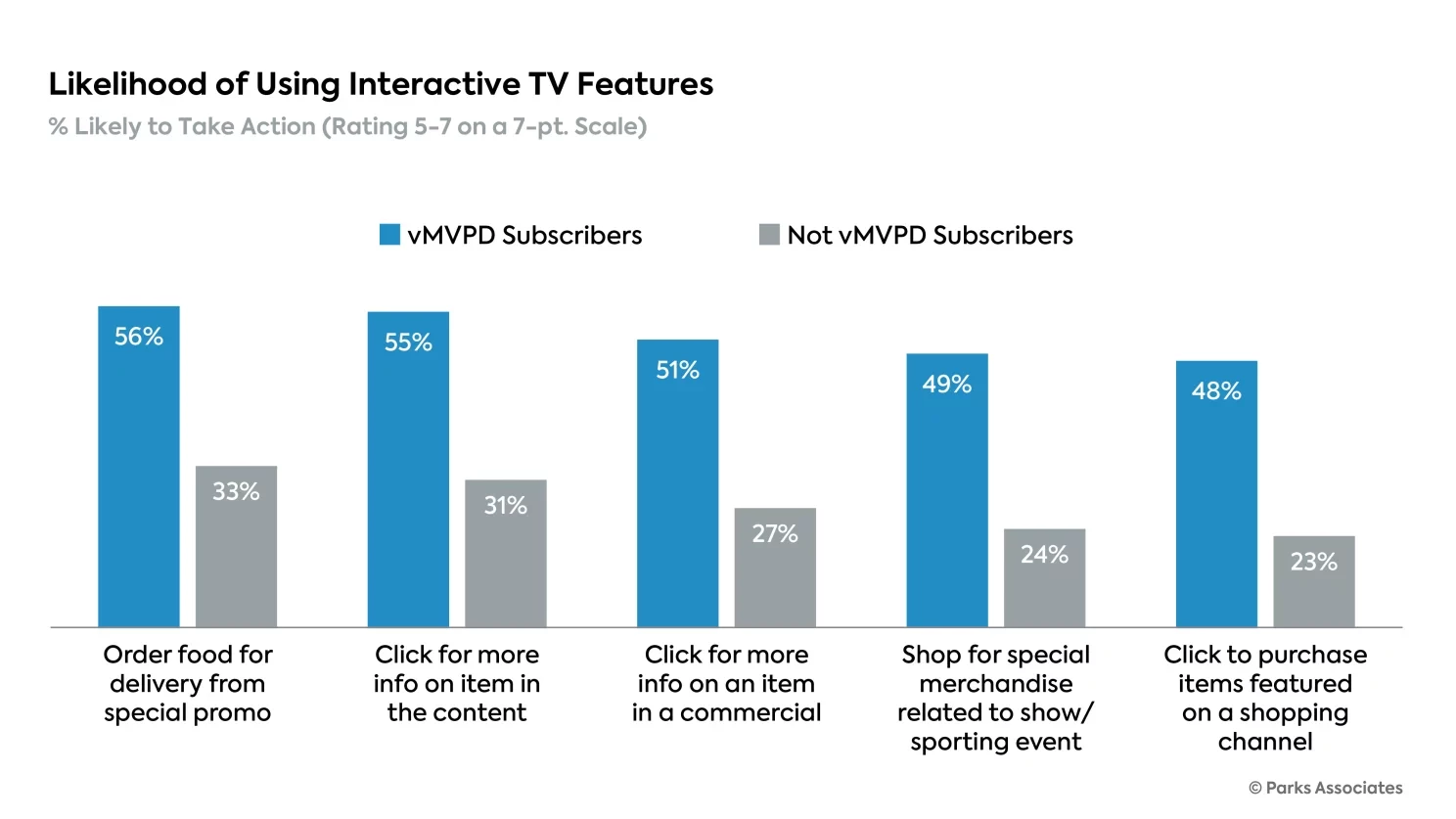
Philo’s confidence in the format is also grounded in audience research. A study the company conducted with Parks Associates found that virtual MVPD subscribers skew more digitally savvy and are more receptive to innovative ad formats than the average streaming viewer. Lifestyle content audiences, which make up a significant portion of Philo’s programming mix, also index higher for e-commerce intent.

That audience profile dovetails with eMarketer research Yi referenced, which found that more than 60% of viewers prefer seeing a pause ad to a blank or frozen screen, a preference that grows stronger among younger demographics

“(It’s) kind of a unique thing for audiences to, you know, ask for more advertising,” Yi noted. “I don’t think that comes up necessarily all the time.”

Posted in Uncategorized

PHYND Expands Cloud Gaming Beta to Amazon Fire TV

PHYND is expanding its push to turn the television into a gaming platform, launching its free, ad-supported cloud gaming service on Amazon Fire TV devices in the United States.

The beta launch gives Fire TV users access to PHYND’s catalog of games without buying a console, individual games or a subscription. The service is available on several Fire TV streaming devices and Amazon Ember smart TVs.

The expansion comes less than two months after Beet.TV caught up with PHYND founder and CEO André Swanston at the Cannes Lions International Festival of Creativity in June. Speaking with Beet.TV Editorial Director Lisa Granatstein, Swanston described a vision in which connected televisions evolve from passive entertainment screens into interactive platforms for gaming and advertising.

“I think what’s exciting for brands right now is that television is becoming interactive and more engaged and that presents new opportunities for brands to engage with consumers,” Swanston told Beet.TV at Cannes.

Fire TV broadens the addressable screen

PHYND’s Fire TV rollout extends that strategy beyond smart TVs to streaming media players that consumers can plug into existing television sets.

The service is available on supported Fire TV Stick and Fire TV Cube devices as well as Amazon’s Ember television lineup. Players can download the PHYND app from the Amazon Appstore, then use a compatible game controller or a smartphone-based virtual controller.

“PHYND was built on the belief that everyone should have access to great games, regardless of the hardware they own,” Swanston said in announcing the expansion. “Launching across Fire TV devices dramatically expands our ability to reach customers wherever they are.”

PHYND said compatible devices include the Fire TV Stick 4K, Fire TV Stick 4K Max, Fire TV Stick 4K Plus and third-generation Fire TV Cube. The service also supports Amazon Ember 2-Series, 4-Series, QLED Series and Mini-LED Series televisions.

Gaming without the console

The Fire TV launch advances a key part of the strategy Swanston outlined to Beet.TV at Cannes: eliminating the hardware and upfront costs that have traditionally limited access to premium gaming.

Swanston said in June that only about one-third of television households worldwide have a gaming console. PHYND sees the much larger installed base of connected televisions and streaming devices as an opportunity to reach people who might play games but don’t want to spend hundreds of dollars on dedicated hardware.

“Whether it’s seeing an ad, whether it’s giving you a reward or sponsored experience, we’re helping you access this game for free,” Swanston told Beet.TV.

PHYND also argues that its free-to-play model can give game developers and publishers another distribution channel outside traditional console and PC ecosystems. Advertising provides a way to subsidize access while potentially creating new sources of revenue for game makers.

Familiar games come to the big screen

PHYND’s launch catalog includes games from independent studios and publishers including Microids, Tate Multimedia, Fishing Cactus and Plug In Digital.

Titles include Smurfs Kart, Who Wants to Be a Millionaire?, Garfield Lasagna Party, Agatha Christie: Death on the Nile, Agatha Christie: Murder on the Orient Express, Space Adventure Cobra – The Awakening, UFO Robot Grendizer, Voodolls, Boiling Bolt and Redout: Solar Challenge.

The recognizable titles are important to PHYND’s pitch to advertisers. At Cannes, Swanston said one of the company’s goals is convincing marketers that gaming can provide the kind of premium content environment they already seek across streaming television.

PHYND is also trying to avoid inserting ads directly into gameplay. Swanston told Beet.TV that the company is focusing on formats such as pre-roll advertising and sponsored rewards that can help finance free access without interrupting players in the middle of a game.

“What you don’t want is for a brand to be considered intrusive or ruining the vibe,” Swanston said at Cannes.

From Cannes pitch to Fire TV rollout

When Beet.TV spoke with Swanston in June, PHYND had already launched on Samsung smart TVs and he identified Amazon Fire TV and LG as part of the company’s expansion plans.

The Fire TV beta now checks off another piece of that roadmap and potentially puts PHYND in front of consumers who don’t own one of its supported smart TVs.

For advertisers, the larger bet is that cloud gaming can follow a trajectory similar to connected TV advertising. Swanston, who previously founded connected TV data and advertising company Tru Optik, remembers when marketers regarded CTV as an experimental channel with questions about scale, targeting and measurement.

PHYND is betting that gaming on the television is approaching a similar transition. And with its arrival on Fire TV, more living-room screens are getting something they didn’t previously need: a Start button.

Posted in Uncategorized

AI Agents are Coming for Adtech’s Tedious Work, Not the Upfronts: Magnite’s Paige Bilins

AMENIA, N.Y. – Advertising technology has spent decades finding increasingly sophisticated ways to automate buying and selling media. Now artificial intelligence is promising to automate some of the work involved in operating all that automation.

Paige Bilins, senior vice president of product management at Magnite, sees potentially significant changes ahead as AI agents become capable of making decisions and acting on them. But she cautions that much of what the industry currently calls “agentic AI” is still closer to good old-fashioned automation with a shinier name.

“We’re still in very early innings around AI,” Bilins said in an interview with Beet.TV contributor David Kaplan at the Beet Retreat Berkshires.

Agentic AI isn’t just faster automation

Bilins draws an important distinction between AI automation and genuinely agentic systems.

Automation takes an existing task and performs it faster or more efficiently. An AI agent gets considerably more freedom. It can receive an open-ended question, determine what information it needs, choose an approach and potentially take action on its own.

“I think agentic AI is really around a contained software system that’s allowed to work semi-autonomously,” Bilins said.

That autonomy is where things get interesting for advertising. An agent might eventually sift through proprietary data and supply signals, determine how to optimize toward different objectives and make adjustments without waiting for humans to analyze every report.

For anyone who has spent a career staring at advertising dashboards, this may sound less like technological disruption and more like an overdue workplace benefit.

Still, Bilins said the industry isn’t there yet. Many applications currently described as agentic AI involve pulling and analyzing reports or troubleshooting deals. True autonomous decision-making at scale remains further away.

“There’s a lot of infrastructure that needs to be put in place,” she said.

That includes reliable data, governance that determines what agents can and can’t do and enough transparency to understand their decisions. Systems also need to be auditable so buyers and sellers can develop confidence in allowing agents to do more over time.

Soon everyone gets an agent

Another complication is that there won’t necessarily be one AI agent politely running the advertising marketplace.

Buyers may have their agents. Sellers may have theirs. Each could arrive armed with different data, algorithms and KPIs while trying to optimize for different outcomes. After decades of humans disagreeing about what constitutes a successful campaign, machines may finally get their opportunity to disagree at computational speed.

“The beauty of it is because of the lower barrier to entry, you can have your own agent that optimizes for your particular outcomes,” Bilins said.

The beauty can quickly become complexity. If agents on both sides of a transaction are pursuing different goals, the industry needs governance and transparency around what each system is trying to accomplish.

It also needs common technical protocols.

“If all of the agents are trying to speak a completely different language, then it’s gonna be a mess to try to work with all the different partners in the ecosystem,” Bilins said.

That helps explain Magnite’s emphasis on openness and interoperability rather than betting everything on a single proprietary AI environment.

Adtech needs an AI common language

Bilins said trying to predict which AI technology ultimately wins is especially difficult because the field is moving so quickly. New models and development tools continue to lower the barrier to building software.

Rather than guessing where the technology lands, Magnite aims to support leading protocols, different models and standardized tools that can work across agents.

That approach also lets individual companies keep the data, algorithms and other intellectual property that make their systems distinctive.

“You should be able to bring your secret sauce to the table,” Bilins said.

Magnite can provide part of the infrastructure that lets companies put that secret sauce to work without requiring everyone in the marketplace to use the same recipe.

The result, Bilins argues, should be a healthier marketplace in which buyers, sellers and technology providers can develop their own AI capabilities while still communicating with one another.

Tedious work may disappear quietly

Some of AI’s biggest effects on advertising may ultimately seem surprisingly mundane.

Bilins predicts people may look back within a year or two and marvel at how much time they once spent performing tedious tasks that AI handles automatically.

Her analogy is the phone number. People once memorized numbers because they had to. Smartphones made the skill largely unnecessary. AI could make many routine advertising tasks disappear in much the same way.

“Oh my gosh, we spent so much time doing tedious tasks that now we don’t even realize AI is doing for us in the background,” Bilins said, describing how people may view today’s workflows in retrospect. “It’s just part of the way we work.”

That doesn’t mean humans can start clearing out their desks quite yet.

Brand safety is one area where Bilins expects human judgment to remain important. Brands still need to decide how they want to present themselves to consumers and establish the rules that AI systems operate within.

“AI is a machine,” Bilins said. “It does not have emotion or empathy.”

Even AI can’t kill the upfronts

And then there are the upfronts.

After surviving cable fragmentation, streaming, programmatic advertising, cord-cutting and countless predictions of their demise, television’s annual ritual of big negotiations apparently won’t be defeated by artificial intelligence either.

“I also think the upfronts aren’t gonna go away just because of AI,” Bilins said.

AI can help with planning and assist in negotiations. But Bilins expects the biggest deals between major brands and publishers to retain a substantial human component because they involve large commitments and significant risk.

So the machines may analyze the data, optimize campaigns and relieve people of hours of tedious work. They may even negotiate with other machines.

But when billions of advertising dollars are on the table, humans apparently still want another human sitting across from them.

For now, at least, nobody has invented an algorithm capable of replacing the upfront dinner.

Posted in Uncategorized

Criteo’s Sherry Smith: Retail Media’s Evolution From Trade Marketing to Media Signals a New Era

CANNES, France — Retail media has crossed a threshold, shifting from trade marketing budgets toward media buying frameworks that demand publisher-grade capabilities from retailers — a transformation that is redefining how the entire ecosystem operates.

“It is becoming more and more about media and less about trade marketing. And that is an important distinction because when you are thinking more about media, you’re thinking more about how an advertiser wants to buy? How does an agency want to buy?” Sherry Smith, president, retail media at Criteo, told Beet.TV contributor David Kaplan at Cannes Lions. “What do I need within my own organization to make that easy and efficient, not just across my trade, but across media in general?”

This evolution accelerated dramatically in 2020 and continues reshaping retailer operating models as AI-driven discovery fundamentally changes how consumers arrive at purchase decisions.

Conversational discovery replaces keyword search

Consumer shopping behavior is shifting from specific keyword searches toward intent-rich conversational queries that require retailers to serve up organic and paid media responses that address complex, multi-part requests.

“No longer are we searching on a keyword. A consumer saying, ‘Hey, I’m going to Cannes. The weather’s going to be this. Help me find the best attire, but also I want to shop for the end-to-end. What should I pack?’ — that’s a lot within a message,” Smith said. “It is no longer about just personalization. It is such intent personalization as well as awareness around what is that customer really even asking.”

This shift requires retailers to think beyond controlling the shopping experience toward capturing moments wherever consumers land after AI-assisted research.

Albertsons alliance pioneers sponsored products in AI chat

Criteo’s integration with Albertsons Media Collective as the first retailer to bring sponsored products into an AI-powered shopping system demonstrates practical retail media infrastructure built for AI activation rather than retrofitted for it.

“We were already built for AI. We were already built for this technology. It actually is just enabling,” Smith said. “What we are learning right now together is when is the right time to put that sponsored ad unit within there? And then over time, when’s the right time to offer a sponsored prompt and maybe help them on that next part of the journey?”

The partnership combines Albertsons’ deep customer knowledge with Criteo’s media and technology expertise in a test-and-learn framework that prioritizes progress over perfection.

Capturing inbound traffic

Consumers arriving from LLM research come more educated and more decisive than traditional search traffic — creating both opportunity and challenge for retailers whose infrastructure must be prepared to meet them wherever they land.

“Traffic coming in from LLMs — they were coming in much more educated, much more with one in mind. But how do you think about AI in the world now? How do you help them discover what’s next?” Smith posited.

Retailers that move quickly and learn from experimentation will establish advantages as AI-driven discovery continues reshaping purchase journeys across categories.

“Retailers that are jumping in and learning fast or failing fast — fast progress over perfection,” she said..” Let’s go and let’s figure it out.”

Fewer Than 1% of Product Pages Are LLM-Ready: Mirakl’s Meadon

The storefronts of the internet are, by and large, invisible to the AI agents now doing the shopping. That is the blunt assessment of one executive who has run the numbers

The findings are stark: in a survey of 500 product pages, fewer than 1% scored an 80% LLM-readiness rating.

“Consumers, we know, are very willing to research and shop on LLMs,” said Darius Meadon, CMO of Mirakl, in this video interview with Beet.TV. “Businesses have struggled to really understand this new paradigm of how to make their products discoverable and shoppable via LLMs.”

The order of operations problem

Meadon said retailers are mismanaging their AI rollouts. The foundational data infrastructure has to come first, he said. Everything else, the applications, the personalization, the agentic commerce layers, depends on it.

“There’s no order of operation at the moment,” Meadon said. “The order is everything all at once. So I think there’s definitely that strategic, like really making sure you have a clear road map and starting with the big, sometimes unsexy work before we can get to the sexy applications of AI.”

The second misalignment he identified is one of talent. There is a persistent myth, he argued, that AI capability can be democratized across an entire organization. In reality, cutting-edge AI still requires genuine specialists, and the trick is knowing where deep AI expertise is needed versus where existing domain knowledge, the people who already know the products and systems, is the more valuable asset.

“A combination of those two, technical talent and real on-the-ground business knowledge,” he said, “is what’s going to be successful in the future.”

What LLMs actually need to transact

Mirakl is a software company that provides an enterprise-level SaaS platform. It lets retailers, brands, and B2B organizations build and run their own online marketplaces and dropship programs, allowing them to sell third-party products without holding extra stock.

Mirakl’s own GEO Readiness Analyzer, a proprietary tool the company used to assess the submitted URLs of 500 product pages, produced a finding that should concentrate minds across retail. The sub-1% readiness figure points to three systemic deficiencies: weak metadata, insufficient intent data, and an absence of trust signals.

LLMs, Meadon explained, do not weigh all information equally. A product page needs rich descriptive data, color, cut, size, shipping timelines, to enable matching. But it also needs to capture the intent behind a purchase, not just what a product is, but why someone might want it. And then there are the trust cues: reviews on Trustpilot, Reddit discussions, YouTube commentary. “LLMs don’t just look at all information, doesn’t weigh all information as the same,” he said. “So yes, it needs the intent data to match the query to the product.”

The commercial stakes are escalating rapidly. Gartner projects worldwide AI spending will reach $2.59 trillion in 2026, a 47% year-on-year increase, driven heavily by infrastructure investment. For retailers, the implication is that the window to get the foundations right is narrowing as competitors pour capital into the space.

Agentic commerce and the cost of waiting

Mirakl’s response to the readiness gap is a product launched in April 2026 called Agentic Activation, which Meadon described as doing two things:

  1. connecting enterprise retailers directly to LLMs via a continuous data stream.
  2. ensuring product data is formatted and expansive enough not just for discovery but for transaction.

The company has also announced a partnership with J.P. Morgan Payments aimed at enabling secure, seamless transactions within agentic commerce environments.

The product also incorporates what he described as a GEO layer, ensuring that shipping dates, order routing, and logistics metadata are present so that a consumer asking an AI agent for next-day delivery can actually get it.

IAB’s Zoe Soon: Creators are Becoming the Trusted ‘Concierge’ for AI-Era Discovery

Brand investment in creators is growing at twice the rate of digital advertising. But this fundamental shift is about more than money; it’s about how consumers form identities and make purchase decisions.

“The story isn’t that creators are growing. Consumer behavior is changing. For a long time, mass media drove mass culture and we thought advertising led to purchase. What we found is that identity actually leads to purchase,” Zoe Soon, head of Creator and Gaming at IAB, told Beet.TV contributor David Kaplan. “The 20th century was about brands marketing to audiences and demographics. The 21st century is going to be about earning the trust of communities where people’s identities form.”

Soon’s comments come as IAB prepares to launch IAB Global Creator Week, a September 14-18 initiative uniting 17 markets across four continents around creator economy standards, measurement frameworks, and industry best practices. The U.S. centerpiece is IAB CreatorFronts on September 15 in New York — the industry’s first upfront-style marketplace built entirely around the creator economy.

Creators are the new media companies

For the first time in history, individual creators control content, distribution, and audience relationships simultaneously — capabilities that previously required entire media organizations to execute.

“Creators are the future. They are the new media companies,” Soon said. “If you look at Markiplier’s Iron Lung that recently released, that was a $3 million production budget and it brought in $51 million and premiered in 4,100 cinemas. Creators are elevated so much beyond a tactic to the future of media.”

This elevation means creator strategy belongs in the broader media plan rather than siloed within social budgets.

AI amplifies creator trust 

As synthetic content rivals human-made content in volume and quality, consumers will increasingly rely on trusted human voices to navigate overwhelming content abundance — positioning creators as essential discovery guides.

“When content becomes abundant, trust becomes scarce. And where is trust formed within communities that creators convene?” Soon said. “Increasingly consumers are not going to be looking to algorithms to navigate this content and make the recommendations. They’re going to be looking to people they trust and creators will play that almost like a concierge role.”

The historical pattern supports this trajectory — the industrial revolution elevated brands as navigational guides for physical products, the digital revolution elevated platforms, and AI’s content explosion will elevate creators as trusted community curators.

Communities are movements, campaigns are moments

Brands winning the creator opportunity engage creators early as genuine partners rather than distribution channels, embedding themselves in existing cultural conversations rather than manufacturing moments from scratch.

“Brands used to have to place a bid and hope that their campaign would take off and create a viral moment. Brands no longer need to do that. They can find those moments that are already happening within communities that creators are creating and place themselves against those moments,” Soon said. “Campaigns are moments, but communities are movements.”

CreatorFronts build infrastructure for a maturing channel

Just as IAB Playfronts established gaming’s legitimacy as a media channel, IAB CreatorFronts aims to build the buying and selling infrastructure that signals creator media’s arrival as a mainstream planning consideration.

“We’re at the point where brands are no longer asking are creators relevant or do they deserve a place in the plan? We’re at the point of building the infrastructure,” Soon said. “These events are meant to bring together the industry, connect buyers to the companies that are actively building this infrastructure. And just symbolically says to the industry, this channel has arrived.”

IAB Global Creator Week will convene events simultaneously across London, Toronto, Berlin, Dubai, São Paulo, and a dozen additional markets. IAB CEO David Cohen framed the initiative’s ambition in the announcement: “Marketers everywhere understand that the Creator Economy is a powerful component of their go-to-market plans and critical to drive business growth.”

“The age of AI will elevate creators because of the abundance of content,” Soon said. “Consumers are going to be looking to people they trust and creators will play that almost like a concierge role.”

Viant’s Tim Vanderhook: When Nobody’s In The Room ‘Is Not An Impression, It’s An Invoice’

CANNES, France — Connected television measurement has long relied on delivery metrics that ignore whether anyone actually watched the ad — a fundamental flaw that attention data is now exposing, with real financial consequences for advertisers paying for impressions that never landed.

“If an impression gets served in a room where nobody is, it’s not an impression, it’s an invoice,” Tim Vanderhook, CEO of Viant, told Beet.TV correspondent Pooja Midha during a panel session at Cannes Lions. “If people are in the room, their eyes are on screen, you’re able to build that brand memory structure, which is the long-term goal that we’re all looking for.”

Midha, who framed the conversation around CTV’s measurement evolution, pressed Vanderhook on how attention signals translate from interesting data into actual buying decisions — and whether the industry is ready to move past reach and frequency as primary success metrics.

Attention adjusts CPMs in real time

TVision’s camera-based panel technology, acquired by Viant, measures presence in room, co-viewing, demographic composition, and eye-tracking attention at the pod and slot level — data that flows directly into Viant’s DSP to adjust CPMs based on actual audience engagement rather than assumed exposure.

“Peacock might have 80% attention and it’s worth the $35 CPM and premium that comes with a big brand like Peacock. But let’s say you go to another show, a fast channel, and it only has 40% attention. To normalize these numbers between the two, it is what we call the attention adjusted CPM,” Vanderhook said.

Midha noted the significance of optimizing at placement rather than show level — down to individual pods and slots within pods, where first-position ads consistently outperform mid-pod placements despite carrying identical CPMs.

Iris TV enables content-plus-attention activation

Viant’s earlier acquisition of Iris TV provides show-level content classification that programmatic buying historically lacked, enabling the combination of contextual signals with real-time attention data for more precise bidding decisions.

“In programmatic, you don’t actually know what content your ad is showing up against. So Molson Coors — when you show a Coors Light ad, it’s a very different environment in the Kardashians versus NFL football,” Vanderhook said. “The marriage of all of this inside of a DSP is that we can take live real-time data from the panel, know how many people are in the room watching a specific show, and with Iris, we can buy and bid inside of that pod where the numbers are really, really high.”

“Premium” is a blurry concept

Vanderhook challenged conventional assumptions about premium inventory, using the recent Knicks playoff run as illustration — games where large leads drove presence-in-room up while attention collapsed as viewers shifted to their phones.

“Sports being the most premium that you could get into — let’s go back to the recent Knicks run to win the championship. In the playoffs, they were up by 50 points at certain points. Presence in-room skyrockets, attention goes down. You don’t really need to watch the game,” Vanderhook said. “Premium content is going to change in what we determine premium, which is how engaged is the audience with that content?”

Publisher transparency portal addresses supply chain gaps

Viant launched a publisher-facing portal providing sell-side visibility into how inventory signals appear within the DSP — including household ID rates, Iris contextual data, and soon TVision attention scores — addressing a persistent information asymmetry between buyers and sellers.

“We constantly get asked, ‘Why aren’t you buying more from us?’ And we found ourselves doing copy and paste of internal reports and sending them to partners,” Vanderhook said. “We just decided why don’t we make a portal that anyone can sign up and we can register them and they can look at their own data inside of our DSP.”

Buy-side independence and measurement

When Midha pressed him on how Viant answers skeptics who question whether any platform can objectively grade its own inventory performance, Vanderhook pointed to business model alignment as the key differentiator from walled garden competitors.

“We don’t own content and we’re not trying to get a larger share of wallet. The way that an advertiser pays us is a percentage of their spend. We don’t make any more money,” Vanderhook said. “When you’re buy side only, it’s that credibility and trust layer that we have. We don’t really care where it goes. And that’s why we think we’re best positioned to tell the truth to the advertiser on what’s working and what’s not.”

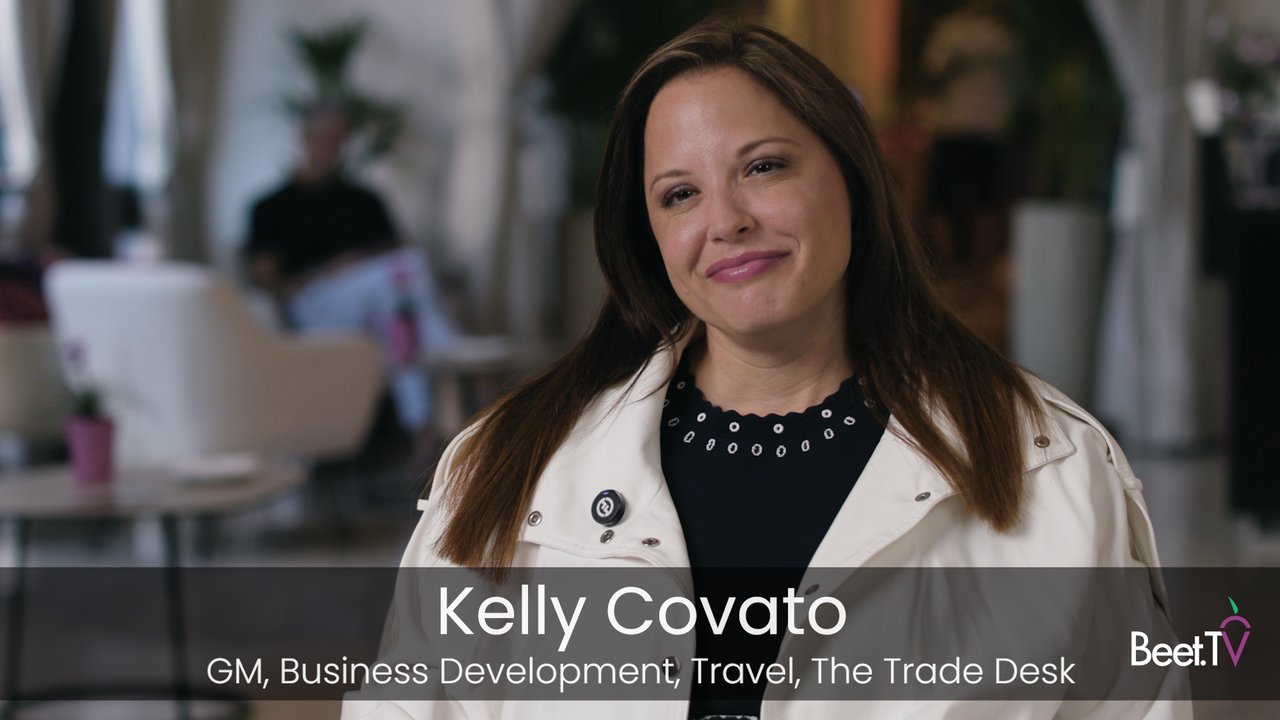
Travel Marketing’s Funnel Is Becoming a 64-Day Loop: The Trade Desk’s Kelly Covato

CANNES, France – Planning a vacation used to involve choosing a destination, buying a ticket and wondering whether the hotel looked anything like the photographs.

Now it can take more than two months, span connected TV, audio, mobile devices and artificial intelligence, and generate enough behavioral data to make buying a plane ticket look like a minor component of the operation.

Kelly Covato, general manager of business development, travel, at The Trade Desk, says the increasingly complicated travel journey is forcing marketers to rethink how they find consumers, measure advertising and use their first-party data.

“So many of the most sophisticated travel brands today are really thinking about a continuous loop in that traveler journey,” Covato said in an interview with Beet.TV contributor David Kaplan at the Cannes Lions International Festival of Creativity.

Research published by The Trade Desk indicates the travel journey can stretch beyond 64 days as consumers move among inspiration, research, price comparisons and booking.

“This traditional funnel that we keep talking about in marketing is becoming more of a loop,” Covato said.

The funnel has missed its flight

The shift matters because consumers don’t politely proceed from awareness to consideration to purchase like obedient little dots in a marketing diagram.

They bounce around.

Someone might see a destination on connected TV, hear something during a podcast, check fares on a phone, forget about the whole thing for four days, panic over hotel prices and eventually book a vacation at midnight.

Covato said sophisticated travel marketers are responding by building strategies around identity rather than individual points in the traditional funnel.

That means recognizing the same traveler across different media and delivering relevant messages throughout the journey.

The Trade Desk’s UID2 identity solution, for example, is designed to help advertisers recognize consumers across the places where they spend their media time.

Covato illustrated the point with her own hypothetical day, moving from watching Netflix on the couch to listening to Mel Robbins during a commute before searching for European travel deals from bed.

Companies investing in identity “to ensure that their messages are relevant” are the ones that are winning, she said.

Your vacation plans are valuable data

Travel companies also have something advertisers increasingly covet: unusually rich first-party data.

A few years ago, Covato said, travel companies largely used that information defensively. They marketed to existing customers, tried to increase bookings or built lookalike audiences to find new travelers.

Now they’re discovering that knowing someone flies first class from Newark, books suites for a family of four and spends two weeks in Europe is potentially useful to companies that don’t own a single airplane or hotel.

“We are now moving to a place where not only is that happening in marketing,” Covato said, “but they’re monetizing it outside of travel.”

Travel and commerce media networks from companies such as United Airlines, Marriott, Expedia and Booking are opening that information to marketers in other categories.

The opportunity goes well beyond figuring out who wants a hotel room.

Travel companies may have insights into income, home location, preferred airport, travel frequency, party size and whether someone prefers first class, economy, luxury hotels or value accommodations.

“This is really rich customer data that can be used to predict the next purchase outside of travel,” Covato said.

Retail media taught advertisers that knowing somebody bought shampoo can be valuable. Travel data potentially tells them somebody is about to spend a week in Italy and may suddenly decide they need luggage, clothes, a credit card and approximately 14 things they didn’t know existed until yesterday.

A booking can unleash another $500

That spending halo makes travel data especially attractive to advertisers.

Covato cited Expedia Ads research showing that consumers spend more than $500 between booking a trip and actually taking it.

They may buy vacation clothes, sign up for a credit card to earn loyalty points or even purchase a vehicle for a family road trip.

Travel data therefore offers marketers signals about purchases that may happen well outside airlines, hotels and booking platforms.

“This data is really valuable to categories even outside of the travel window today,” Covato said.

That helps explain why travel media networks are following the retail media playbook. The difference is that a grocery transaction might reveal someone’s preferred toothpaste. A vacation can reveal considerably more about household finances, lifestyle and purchasing intentions.

CTV gets closer to the booking button

Covato also sees premium media playing a bigger role as travel discovery changes.

Travel marketers are investing in connected television and other storytelling environments while gaining better tools to connect those exposures with business outcomes such as bookings.

That becomes more important if conventional search loses some of its dominance.

Consumers increasingly can ask AI services for travel recommendations rather than typing the name of a hotel, destination or airline into a search engine.

Covato said winning brands will surround consumers with premium storytelling before they begin that discovery process, using connected TV, audio, display and digital out-of-home advertising.

The implication for marketers is significant. If AI increasingly influences which destinations, hotels and travel services consumers consider, building brand awareness before the question gets asked becomes more valuable.

Data becomes the competitive advantage

Measurement completes the picture.

Covato pointed to marketing mix modeling and incrementality testing as ways marketers can understand the business value of advertising throughout the lengthy booking journey.

Rather than asking which ad received the final click, marketers can assess whether exposures across connected TV and other channels actually contributed to bookings.

The travel companies best positioned for the next five years, Covato said, will treat their customer information as something more fundamental than another targeting input.

“The brands that again continue to invest in data as the biggest competitive advantage in their business strategies are ones that are gonna be set up for success,” she said.

For an industry built around getting people from Point A to Point B, travel marketing increasingly looks nothing like a straight line.

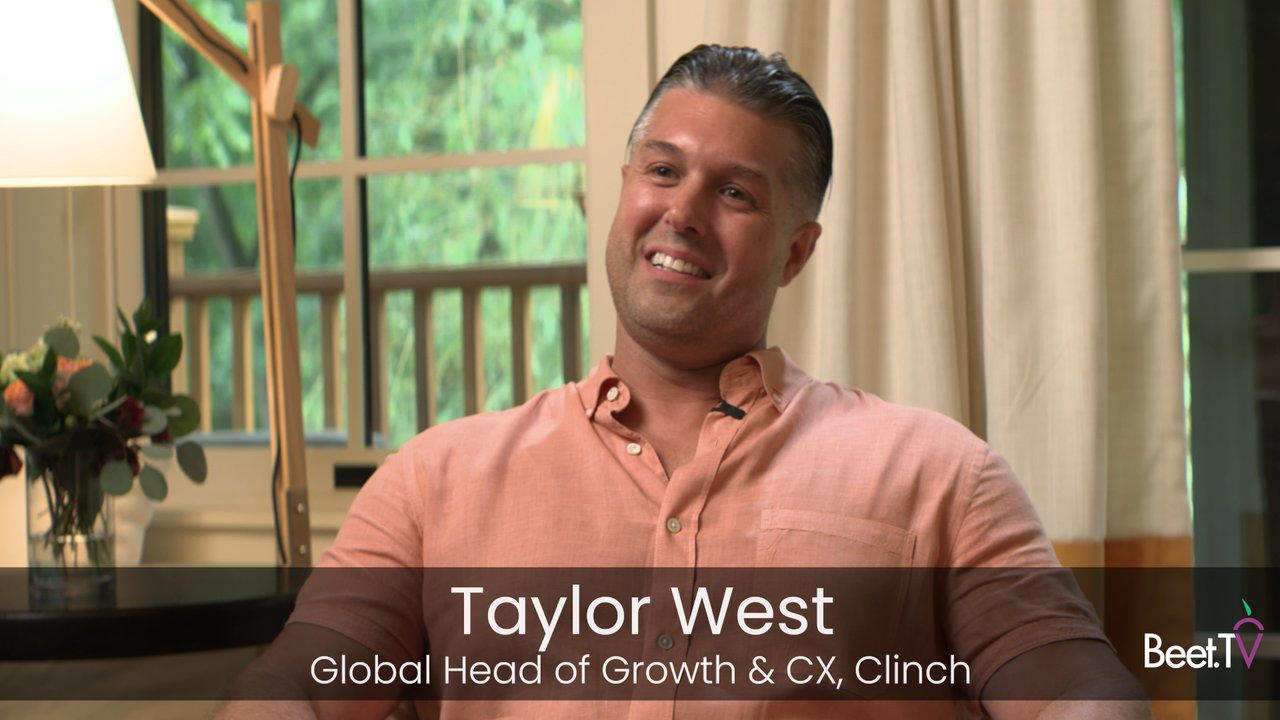
New in Ad-Land: AI Transformation Teams are Reshaping How Brands Organize for the Future

AMENIA, N.Y. – Marketing organizations are changing as artificial intelligence forces a rethinking of how creative, media, and data functions operate together.

The emergence of dedicated “transformation teams” within organizations is one interesting shift in marketing operations. These specialized groups now carry responsibility for identifying AI providers, implementing changes, and ensuring the technology actually delivers on its promise.

“Those groups didn’t exist a couple of years ago, so that’s something where we’re focusing a lot of attention on now,” said Taylor West, global head of growth and CX at Clinch, in this video interview with Beet.TV.

The silos are actually crumbling this time

For years, the advertising industry has talked about breaking down organizational silos. West argues that AI has finally provided the catalyst for genuine structural change that years of strategic initiatives failed to deliver.

“We’ve always talked about, over the last 20 years, everything was built in silos,” West said. “And you talk about, are the silos crumbling? Are they changing? Now they truly are because of the technology.”

The integration imperative extends beyond organizational charts to encompass how brands think about their core marketing functions. According to West, success now requires “both technology and teams that can understand it holistically and activate to truly unlock the potential.” That’s a departure from the specialist-driven models that have dominated marketing operations, where creative, media buying, and data analytics operated as distinct disciplines with limited cross-pollination.

AI is an instrument, not just a tool

The distinction between viewing AI as a tool versus an instrument brings implications for how organizations approach implementation. West emphasized that the human element remains critical despite the technology’s capabilities, pushing back against the notion that automation alone will deliver results.

“People talk about AI being a tool, but it’s really more of an instrument, and it’s only as good as the people that are leveraging it,” West said. “There’s a tremendous potential with what you can unlock with AI, but you also can’t forget the people that are coming in and actually how you capitalize on that to really unlock the benefits.”

Gartner research predicts that, by 2027, a lack of AI literacy will rank among the top three reasons CMOs are replaced at large enterprises. The analyst firm found that while 65% of marketing leaders expect their roles to be disrupted by AI, only 32% believe significant skill changes are needed – a potentially dangerous disconnect.

Governance could determine winners and losers

For CMOs weighing where to direct their AI investments, West offered pointed advice: pay attention to the connective tissue between creative, media, and data rather than focusing exclusively on any single function. The less glamorous work of integration may prove decisive.

“Don’t sleep on the middle,” West said. “It’s the least sexy of all of it, but it’s absolutely critical to the long term success of any organization, be it a brand or agency. You need to have the partners that can actually help you connect all of those pieces.”

Organizations that build compliance considerations into their AI strategies now will avoid costly rebuilds later, West argued. “Make sure that you have a good governance policy in so that you can actually follow through with it and you don’t have to go and start over in the future,” West said. “Laying a solid foundation is truly going to determine the winners and losers.”

Posted in Uncategorized

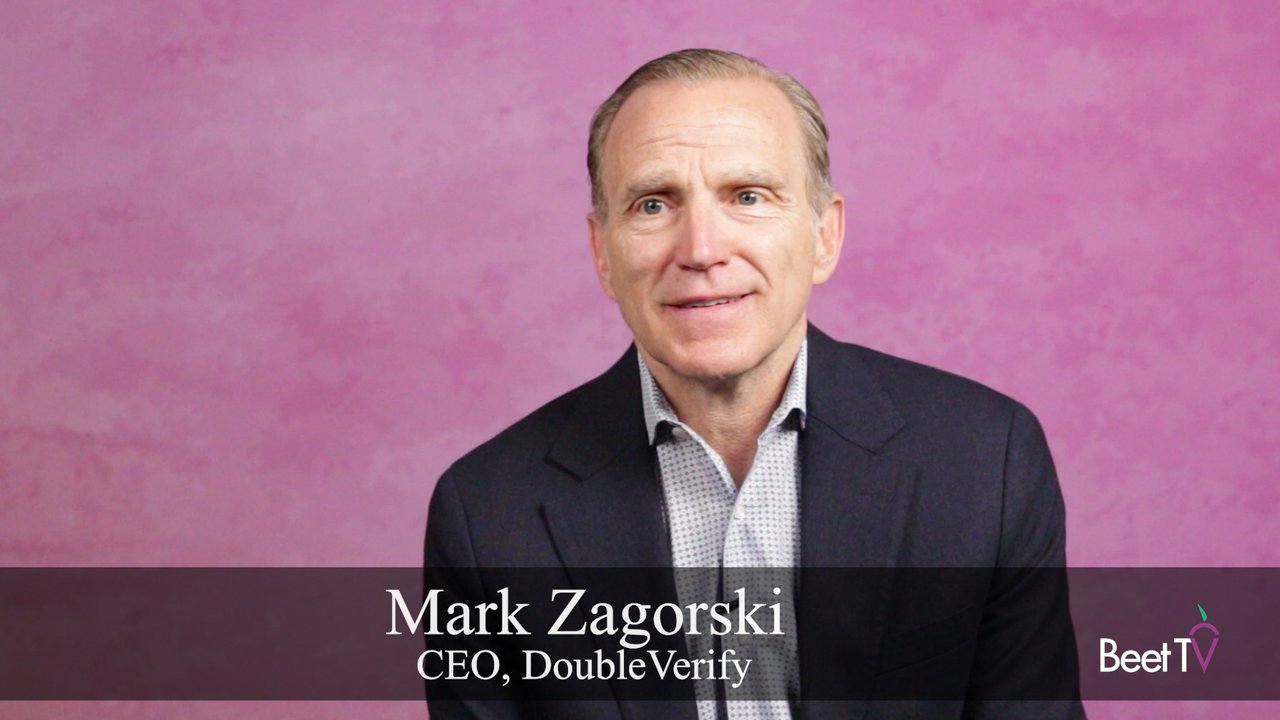
As Nielsen Buys DoubleVerify, Mark Zagorski Looks At Advertising’s Next 20 Years

Nielsen’s $2.15 billion deal to acquire media-measurement firm DoubleVerify comes at a moment when the advertising industry is undergoing another technological upheaval, with artificial intelligence poised to reshape how media is bought, measured and verified.

For Mark Zagorski, chief executive of DoubleVerify, the deal also marks the latest turn in an evolution that has transformed advertising over the past two decades. Nielsen this week agreed to acquire DoubleVerify in cash, with the transaction expected to close by the first quarter of 2027, subject to shareholder and regulatory approvals.

The combination would bring together Nielsen’s audience measurement and media intelligence with DoubleVerify’s technology for verifying media quality, detecting invalid traffic and measuring viewability and brand suitability. DoubleVerify will become privately held while continuing to operate under its existing name and brand.

Twenty years of media reinvention

That changing landscape provides a fitting backdrop for Beet.TV’s 20th anniversary. Through some 11,000 video interviews with industry innovators, Beet.TV has chronicled a media business with a remarkable talent for reinventing itself just as everyone finally figures out how the previous version worked.

Beet.TV has documented the rise of streaming, programmatic advertising, connected TV, social media, retail media and increasingly sophisticated measurement technologies. Now AI is promising another transformation, possibly before anyone has finished updating their LinkedIn profile.

Zagorski sees programmatic advertising as perhaps the biggest technological shift of the past two decades. And he thinks AI is setting the stage for another one.

“I think the biggest change or impact of innovation over the last 20 years has really been programmatic,” Zagorski said in this interview at the Possible conference in Miami last April. “It moved from buying and selling of digital media, from humans to machines that used data, that bid on impressions.”

That shift created what Zagorski described as a marketplace for media unlike anything that had existed before. It also meant that advertisers could suddenly buy enormous quantities of impressions at machine speed, which naturally created another little problem: figuring out what they actually bought.

Measurement had to evolve with it.

Media fragmentation means measurement can’t remain tied to a single platform, Zagorski said. Advertisers also increasingly expect measurement to do something beyond producing another dashboard for somebody to admire during a conference call.

“They want to act on it,” he said.

The newest stage is connecting measurement to business outcomes. In advertising, Zagorski said, the question ultimately becomes whether an ad drove a sale. Measurement has consequently moved from what he called a “static and stagnant metric” toward something active and actionable.

The industry isn’t finished with that transition.

“We’re not in the ninth inning,” Zagorski said, describing the business as midway through connecting measurement with actionability and outcomes. Advertisers are driving the change because they increasingly want to know what happened to their money after it left the building.

Verification gets more sophisticated

Verification has undergone its own evolution.

Early verification focused on relatively basic questions such as whether an ad was viewable or appeared alongside brand-safe content. It has since expanded into more nuanced areas including suitability and attention.

Those metrics matter because they can be more closely connected to outcomes, Zagorski said. But merely discovering that an impression appeared somewhere an advertiser didn’t want it is a little like receiving a weather forecast after the tornado removed the roof.

“Powering actions, powering activations, is where verification is going,” Zagorski said.

That means more granular data, more nuanced data and signals that can be used consistently across platforms.

DoubleVerify also has expanded its relationship with TikTok, measuring more types of media on the platform while giving advertisers pre-bid tools intended to help them avoid certain content.

Zagorski sees that as part of a broader opening of the industry’s famous walled gardens, which historically have been quite enthusiastic about accepting advertising dollars and somewhat less enthusiastic about letting outsiders inspect the plumbing.

He said those platforms increasingly are opening themselves to third-party measurement to create “a more transparent and advertiser-friendly environment.”

AI was apparently AI before AI was AI

Then there’s artificial intelligence, the technology currently being attached to virtually everything except perhaps the office coffee machine, although somebody is surely preparing a funding round for that.

DoubleVerify has been using machine learning for years.

“We’ve been doing AI before it was AI,” Zagorski said. “We called it ML back then. Two different letters, but very similar.”

DoubleVerify now calls its AI technology Neura. The system helps power the company’s agentic interfaces and its analysis of content and context.

AI can help DoubleVerify contextualize content faster, operate at greater scale and customize analysis for clients. But the technology is simultaneously creating an entirely new set of headaches for advertisers.

One is the proliferation of what Zagorski unabashedly called “AI slop,” the rapidly multiplying universe of machine-generated content that advertisers may decide they don’t want anywhere near their brands.

AI also may change how advertising itself is purchased. Zagorski expects agentic interfaces and AI agents eventually to participate in media buying.

And then things get really interesting.

Today’s bot may be tomorrow’s customer

For years, digital advertising has treated bots as something roughly between cockroaches and credit-card fraud. Verification companies have spent enormous resources helping advertisers avoid paying for machine-generated traffic.

AI could complicate that tidy worldview.

“Today most advertisers look at bots as evil, right?” Zagorski said. “Why would I ever advertise to a bot? They don’t buy.”

But tomorrow’s AI agent might.

“Tomorrow, that bot or that agent might buy,” he said.

That raises a rather extraordinary possibility. Advertisers may eventually spend money trying to influence software that is making purchasing decisions for humans.

The industry that spent years attempting to make sure robots weren’t looking at its advertising may eventually need to figure out which robots are worth advertising to.

Your current job may have an expiration date

The transformation also has obvious implications for people entering advertising and media.

Zagorski’s advice isn’t to master one particular job description. It’s to assume that job description may not survive.

“Don’t expect the job today to be the job tomorrow that you’re going after,” he said.

Traditional roles such as media buyer, programmatic trader and even creative jobs could change dramatically as AI takes over more tasks.

That doesn’t mean Zagorski expects humans to disappear. He argues that people will remain necessary to guide AI, whether they’re creating advertising, buying media or developing media plans.

Posted in Uncategorized

Outcomes, AI and Data Dominate the Beet Retreat Berkshires: NYSE Interviews Tameka Kee

The advertising industry has spent years building an ecosystem complicated enough to require its own ecosystem map. At the Beet Retreat Berkshires, key leaders responsible for buying ads, selling them and building the machinery in between gathered to figure out how to make the whole thing work better.

Tameka Kee, advertising futurist and senior correspondent for Beet.TV, offered her take on the biggest themes from the retreat in an interview with Ashley Mastronardi, reporting on behalf of the New York Stock Exchange.

Kee described the Beet Retreat as a rare convergence of brands, agencies, publishers, connected-TV companies and advertising technology platforms. Instead of communicating through emails, Zoom calls and increasingly ambitious acronyms, they were gathered in the Berkshires to talk face to face.

“Everyone is here together to try to solve problems, to try to collaborate and to try to make everything work more effectively,” Kee said.

Getting away from the Zoom grid

Location matters, too. The Beet Retreat takes the industry away from the usual urban conference circuit and gives participants more opportunities to actually spend time together.

“It’s tucked away from the hustle and bustle of the city,” Kee said. “So people get to form these closer bonds and relationships even as they’re moving their business forward together.”

Mastronardi asked whether getting together in person still matters in a post-pandemic world where virtually everyone has become capable of conducting a meeting while staring into a webcam.

“Oh, absolutely,” Kee said. “There’s something to be said for, you can have a Zoom call like we’re doing now. But when you actually get to sit and literally break bread with someone,” the conversation changes.

Those encounters can reveal how another company is tackling a problem, whether a technology could be useful or whether two teams have more in common than their respective corporate organizational charts might suggest.

“And there’s just something also fun about getting together in the same space,” Kee said.

Advertising wants outcomes, preferably measurable ones

Kee identified three major trends running through the retreat. The first was the industry’s growing obsession with outcomes.

Advertisers have always wanted results, of course. Nobody ever presented a marketing budget to the chief financial officer with the stirring promise that it would generate absolutely nothing.

What’s changing is the ability to define those results much more precisely.

“The advertising industry has always been focused on outcomes,” Kee said. But the convergence of data, information and AI is creating “a focus on figuring out how to deliver the outcomes for advertisers in very specific and granular ways.”

For some advertisers, the desired outcome is an immediate sale. For others, particularly automakers and other companies selling expensive products, the path from seeing an advertisement to buying something can be much longer.

That makes signals such as store visits and website activity important parts of measurement.

“How do you define outcomes and how do you deliver more granular outcomes for advertisers?” Kee said, summarizing one of the central questions.

AI finds something to do besides terrify employees

The second major theme was artificial intelligence, because apparently it’s now illegal to hold an advertising conference without discussing AI.

But Kee noticed a change in the conversation.

The focus wasn’t primarily on machines eliminating jobs. Instead, attendees were talking about how AI could help employees become more productive and how companies are creating new positions because of the technology.

“It’s less around job loss and sort of efficiency creation and more around how people can upskill their teams and get them to do more with AI,” Kee said.

Companies also are thinking about how they hire for new AI-related roles.

“That was really nice to kind of see maybe a little bit of a difference from some of the conversations around how AI is taking jobs,” Kee said.

For an industry that has spent much of the past couple of years wondering whether a chatbot was coming for everybody’s paycheck, that qualifies as almost cheerful.

Three rivers of data start converging

Kee’s third theme was the convergence of commerce, connected-TV and creator-economy data.

Commerce signals from retailers such as Walmart Connect and Amazon increasingly can be combined with information generated by CTV and creators. That combination is opening new ways for marketers to connect advertising exposure with consumer behavior and ultimately sales.

Data itself remains enormously valuable, though the industry’s relationship with it has changed.

“There’s a phrase from years ago, people used to say data is the new oil,” Kee said. “I think it is definitely the equivalent of that.”

The advertising business once had so much easily accessible consumer information that restraint wasn’t necessarily its most conspicuous quality.

“I think for years our industry was kind of drunk off of very cheap, very plentiful data,” Kee said.

Privacy rules including Europe’s General Data Protection Regulation helped change that attitude. Advertisers became more aware of the value of consumer information and the need to explain how it’s collected and used.

Data still can make advertising more useful when applied intelligently. It can help marketers avoid bombarding people with irrelevant messages and instead show advertising that has some chance of being useful.

The goal, Kee said, is to help consumers move toward a purchase or build a relationship with a brand “without annoying them.”

In advertising, where showing somebody the same commercial 37 times remains a surprisingly persistent technological achievement, that’s no small ambition.

Agentic advertising goes under the hood

The final day of the Beet Retreat included breakout discussions on measurement, outcomes, commerce media and AI. Unlike traditional panels, the breakouts are structured as roundtables where attendees can participate in the discussion.

The leaders of those sessions then return to share their findings with the broader group.

Kee was particularly interested in a discussion that ventures deeper into agentic advertising, where AI-powered agents can participate in buying and selling media.

“Lots of people are talking about how agents, basically bots, are able to buy and sell ads,” Kee said. “Now we have some actual campaign examples of what that really looks like.”

The session promised to “get under the hood of one of the agents and see how it’s all working and coming together,” she said.

The retreat concludes with a closing plenary that brings together insights from the sessions and invites attendees to contribute their own observations.

That seems fitting for an event built around getting different parts of advertising into the same room. The industry may not solve outcomes, AI, measurement, commerce media, CTV and the future of data during a few days in the Berkshires.

But at least everyone knows which problems they’re arguing about.

Posted in Uncategorized

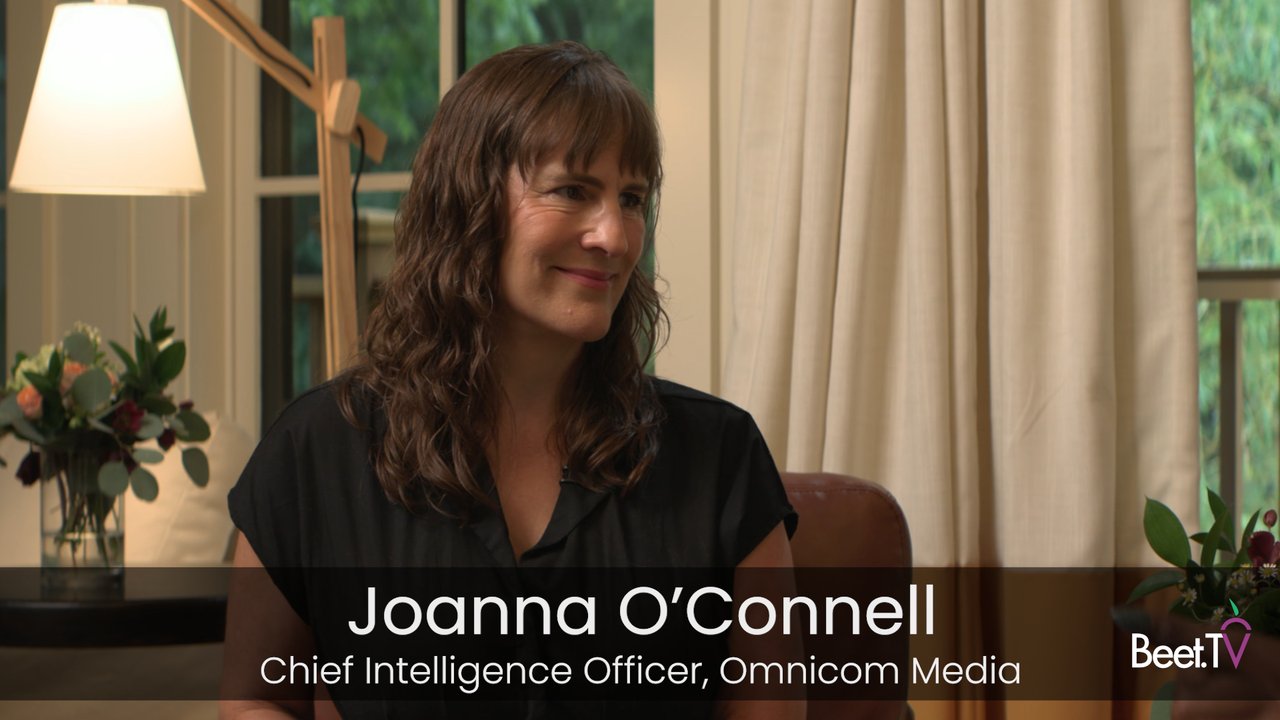
AI Ads Need More Humanity, Less Robot Energy: Omnicom Media’s Joanna O’Connell

AMENIA, N.Y. — Artificial intelligence may be writing code, summarizing meetings and generating suspiciously photogenic influencers but consumers still aren’t ready to hand over advertising to the robots.

That’s one of the key findings from research discussed by Joanna O’Connell, chief intelligence officer at Omnicom Media, during an interview with Beet.TV contributor Tameka Kee at the Beet Retreat Berkshires. The interview is part of a Beet.TV video series produced in collaboration with the New York Stock Exchange.

O’Connell said the research explored what consumers actually enjoy about advertising, what annoys them and where AI fits into the picture. One surprise was just how convinced people already are that AI is everywhere.

“It was something like 80% of people thought at least a quarter of the ads that they saw were AI generated,” she said.

Whether they’re right is another matter.

Consumers seem to identify AI-created ads for reasons that are almost delightfully contradictory. As O’Connell explained, they’ll say an ad is AI because “it’s not perfect enough” or “it’s too perfect” or simply “it’s generic.” The common thread is that “it just doesn’t feel right to them.”

Robots can place the ad, just don’t let them write it

The industry’s efficiency obsession may be racing ahead but consumers appear to be tapping the brakes.

According to O’Connell, “Only 16% of people agreed that they were good with an ad being entirely AI generated.”

Instead, consumers want people involved in the creative process. “People are much more interested in humans being in the loop and guiding the use of the AI,” she said, adding that many respondents now place a higher value on human-produced advertising.

That doesn’t mean consumers reject AI altogether. O’Connell said they’re generally comfortable with AI helping determine when and where ads appear or reducing the number of irrelevant ads they see.

“They’ll even say things like, ‘I think that AI could actually be helpful in advertising, for example, showing me fewer ads but more relevant ones,'” she said.

In other words, consumers are happy to let AI operate the traffic lights. They just aren’t ready to hand it the steering wheel.

Authenticity is becoming a brand strategy

As AI-generated content floods social platforms, O’Connell said transparency matters more than ever.

“They absolutely do. They want labeling,” she said when asked whether consumers want disclosure about AI-generated advertising.

She acknowledged that identifying AI-generated content isn’t always technically straightforward and that some AI use may be so subtle consumers never notice it. What matters more, she argued, is whether brands remain authentic.

“They just want to feel like the brand is expressing itself in a way that is honest and authentic and probably representative of who the brand is and what they stand for,” O’Connell said.

That means brands shouldn’t adopt a one-size-fits-all AI strategy. A company built around authenticity may decide never to use AI-generated images while another brand could reach a different conclusion based on its identity and audience.

Stop chasing people around the internet

If there’s one advertising habit consumers would happily leave behind, it’s the digital equivalent of an overly attached ex.

O’Connell said advertising needs to become “augmentative rather than interruptive” instead of “aggressively repetitive” or “feeling like it’s just chasing someone around the internet.”

Consumers reward advertising that fits naturally within its environment, she said. A TikTok ad shouldn’t resemble a connected TV commercial and neither should look like an Amazon product listing.

Her prescription is simple even if the execution isn’t.

“How do you deliver things that just feel right to the consumer? Relevant to them, in the right context, feels like it belongs in the platform, feels like it understands who they are without being creepy.”

That’s a tall order for an industry that has spent years perfecting the art of finding you across every device you own. But if O’Connell’s research is right, consumers are offering a straightforward bargain: keep the AI, lose the uncanny valley and maybe, just maybe, stop showing the same sneaker ad 47 times after they’ve already bought the sneakers.

Posted in Uncategorized

Three Pillars for Retail Media Network Success in a Crowded Market

CANNES, France – There are now more than 240 retail media networks vying for advertiser dollars, leaving brands struggling to navigate a fragmented landscape where data readiness and interoperability have become key concerns.

Some think the path forward requires a disciplined approach to three core capabilities: preparing data infrastructure for identity and segmentation, building interoperable systems that work across platforms, and delivering omnichannel experiences that follow consumers through their entire journey.

“What’s really going to help media networks – and everyone should really take notes right now – there are three things,” said Elizabeth Donovan, SVP, global head of retail and commerce, Acxiom/Omnicom Media, in this video interview with Beet.TV.

Turning transaction data into actionable audiences

The rise of commerce data as a primary signal has forced marketers to rethink how they construct audiences. Raw transaction information holds enormous potential, but extracting value requires expertise in data transformation and activation.

“What we’re doing here at Acxiom and Omnicom is really focusing on making sure that the raw data turns into something more meaningful for outcomes,” Donovan said. “We’re really focused on making sure that the partners that we work with, the brands, not only are data ready, but their audiences are deliverable in market.”

That goal extends beyond on-site activation to encompass offsite monetization as well. “We are experts in the space so that we could help you identify your data layers and how they’ll be marketable,” Donovan added.

Breaking free from closed ecosystems

Walled gardens have proliferated across the retail media landscape, offering convenience at the cost of reach. According to eMarketer projections, Amazon and Walmart alone will capture more than 89% of incremental retail media spending in 2026, highlighting the concentration of power among a handful of dominant players.

But Donovan cautioned against over-reliance on these closed systems. “While it may be comfortable for brands to want to utilize walled gardens and closed ecosystems, it’s really important that you pick a provider like Acxiom to focus on broadening your data, only because it limits scale,” she said.

The consequences of staying siloed can be significant. “If you have a closed ecosystem, you’re not going to be able to reach the right people at the right time to help bring in top-line revenue, to support your customers and enhance their experience,” Donovan explained.

AI-enabled targeting takes center stage

When asked about the technology capability that will matter most in the coming year, Donovan pointed to artificial intelligence. The practical application lies in real-time targeting and measurement, she said.

“I know people like to say the buzzword of AI and interoperability, but I think it’s really important for you and your teams to work and lean into those AI real-time targeting efforts within the ecosystem, especially when we’re thinking about measurement and how we’re going to market,” she said.

U.S. omnichannel retail media is projected to generate $71.67 billion in 2026, as retailers work to unify in-store and digital operations.

“Really think about how your audience is layered and what you’re going to market with and make sure that it’s AI-enabled and working with the right technology partners to get those advertising served so that you could serve the right people at the right time,” Donovan said.

AI Won’t Kill Agencies, but Programmatic Advertising Might: Taboola’s Adam Singolda

CANNES, France — If you expected artificial intelligence to wipe out advertising agencies, Adam Singolda, founder and chief executive of Taboola, has other ideas. The bigger threat, he argues, is that the traditional programmatic advertising business could end up getting replaced by software agents that negotiate directly with each other while humans are still debating the agenda for the next status meeting.

Speaking with Beet.TV contributor David Kaplan at the Cannes Lions International Festival of Creativity, Singolda painted a future where agencies survive, publishers adapt and AI handles much of the tedious plumbing that has defined digital advertising for years. The catch is that everyone has to move a lot faster.

“I’m very optimistic,” Singolda said when asked whether agencies still have a future.

That optimism comes with conditions. Agencies, he said, should invest heavily in first-party data and build AI agents capable of negotiating directly with platforms on behalf of clients.

“I’m bullish on agencies that will lean in” by owning first-party data and developing internal AI agents that can negotiate with major platforms, Singolda said.

His prediction for today’s programmatic ecosystem was considerably less charitable.

“Buying programmatically is archaic, not sophisticated, old school and will be gone,” he said, adding that he expects it to be replaced by “agent-to-agent negotiation” built on Model Context Protocols and other AI standards.

AI agents could become advertising’s new media buyers

Rather than relying on layers of ad tech vendors, Singolda envisions agencies using AI agents that can strike deals directly with Google, Meta, connected TV platforms and companies across the open web, including Taboola.

That approach, he said, could reduce costs while producing better results for advertisers.

“I think those agencies create more value to the client, keep more money, which is always good,” Singolda said.

He pointed to industry consolidation and investments in identity platforms as evidence that major holding companies already recognize the growing importance of proprietary customer data.

Advertisers want proof, not pretty PowerPoint charts

Singolda said advertisers are becoming far less interested in proxy metrics and much more focused on measurable business outcomes.

“We’re seeing an increase and a desire of clients to understand an outcome,” he said, rather than relying on studies or indirect measurements.

At the same time, he doesn’t believe AI eliminates the importance of branding. Quite the opposite.

As consumers increasingly rely on AI assistants to recommend products, emotional connections with brands may become even more valuable. Singolda compared that loyalty to the way sports fans remain fiercely attached to their favorite teams regardless of the standings. The algorithms may be making recommendations but people still buy with their hearts.

Publishers have a traffic problem, but also an opportunity

Singolda acknowledged that AI search is already reducing traffic flowing to publishers.

“We’re seeing around 20%” declines in search traffic at various publishers, he said, largely because of Google’s AI-powered search experiences.

Instead of fighting that trend, Taboola is betting publishers should embrace conversational AI through its DeeperDive platform.

Describing DeeperDive as an ad-supported answer engine for publisher websites, Singolda said it allows readers to ask follow-up questions while staying inside a trusted publisher’s environment instead of disappearing into a general-purpose chatbot.

The early engagement numbers have surprised him.

“I’ve never seen numbers like that,” he said, referring to click-through rates of 15% to 25% generated through conversational interactions.

Singolda said the platform already processes roughly one-third of a million questions every day and gives publishers something they have rarely possessed before: detailed first-party curiosity data showing exactly what readers want to know.

That data, he argued, could become one of publishers’ most valuable assets as AI agents increasingly negotiate advertising opportunities automatically.

Connected TV gets smarter when someone measures it

Singolda also expects connected television to continue evolving from a branding channel into a measurable performance platform.

Television remains essential for building emotional connections with consumers, he said, but advertisers increasingly expect proof that campaigns actually produce business results.

“It’s just not good enough,” Singolda said of relying solely on brand lift studies and proxy measurements.

He expects more television companies to combine branding with outcome-based measurement, creating experiences that resemble the full-funnel capabilities already offered by companies such as Amazon.

AI advertising may become the industry’s next growth engine

While AI advertising remains in its infancy, Singolda believes it could become one of digital marketing’s fastest-growing channels.

“The number one conversion rate comes from LLM,” he said, referring to performance data generated through DeeperDive.

Because AI assistants are expanding rapidly across apps and services, he believes the available advertising inventory will grow much faster than connected TV inventory.

“LLM monetization… might be the next CTV,” Singolda said.

For an industry that has spent years squeezing marginal improvements out of increasingly complicated ad tech stacks, Singolda’s message was refreshingly simple. The future may belong less to whoever has the fanciest demand-side platform and more to whoever builds the smartest AI negotiator. Somewhere, an overworked media buyer just felt both relieved and slightly unemployed.

Roku’s Jake Piasecki: CTV Home Screen Ads Satisfy Both Performance And Branding Objectives

CANNES, France — The battle for the connected TV home screen is on. Recent research by Roku and Omnicom is showing why, as advertisers look to satisfy the twin goals of performance and branding.

“What we found is giant — up and to the right is basically what we’re seeing in terms of brand lift, brand favorability. And then we saw a 40% decrease in a cost per action, which I think is really powerful as we start to think about not just broad reach opportunity, but how then we combine that to outcomes,” Jake Piasecki, co-head of Enterprise Ad Sales at Roku, told Beet.TV contributor David Kaplan at Cannes Lions.

This combination of scale and deterministic data from 100 million fully authenticated accounts positions Roku’s dual-asset approach as a performance channel rather than a traditional awareness-only television medium.

Deterministic data as differentiator

Roku’s competitive foundation rests on fully authenticated logged-in audience data rather than IP addresses or cookies, enabling precise audience targeting at scale across the number one CTV operating system in North America.

“The deterministic, fully 100% authenticated audience is the bedrock of everything that we do. It’s scaled data, it’s deterministic data that becomes very powerful when you start to combine targeting, home screen sponsorship and that type of thing,” Piasecki said.

This data infrastructure connects to an interoperable ad tech ecosystem spanning measurement vendors, DSPs, and agency holdco data spines through clean room partnerships that enable both targeting precision and backend measurement.

Home screen allows targeted reach

As streaming fragmentation creates content discovery challenges, viewers spend significant time navigating Roku’s home screen interface — creating daily high-reach, high-attention ad opportunities that complement video campaign targeting.

“125 million people come through our front door every single day. That’s Super Bowl size reach literally every day,” Piasecki said. “What’s powerful about browsing is that navigating around our user interface, there’s ad opportunity there. It’s giant reach, but it’s also targeted reach, which becomes super valuable when marketers are trying to reach Gen Z in a more meaningful way.”

Clickable home screen ad units drive viewers directly into brand experiences or content sponsorship zones including food and NFL categories.

All TV will be streamed

Streaming viewership has eclipsed linear audiences, with Gen Z’s early adoption giving way to broader generational uptake including growing Gen X and Boomer audiences on the platform.

“We believe that all TV will be streamed eventually. We’re eclipsing what linear ratings look like in linear viewership. There’s now more people streaming than watching linear,” Piasecki said.

This trajectory strengthens the case for CTV as a primary rather than supplementary media investment for brands still skeptical about streaming’s performance capabilities.

Results supplant reach and frequency

Media planning evolution from reach and frequency toward outcome optimization requires front-end audience precision combined with third-party measurement validation that demonstrates actual business impact rather than delivery metrics.

“If you target better on the front end and then leverage really great third party measurement vendors on the back end, you can measure correctly, optimize appropriately, and that becomes a really powerful tool,” Piasecki said.

Roku Ads Manager extends this performance orientation to small and medium businesses while blue chip advertisers pursue deeper outcome measurement integration through agency data spine connections and clean room development.

“It is about reach, but then you get into attention and then you want to get into performance. What we’ve seen with the power couple research that we did with Omnicom, we’re seeing this 40% decrease in cost per action, which is an incredible starting point and will only get stronger as we move forward,” Piasecki said.

AI Is Smart, but It Still Needs an Adult in the Room: Canvas Worldwide’s Anita Patil-Sayed

AMENIA, N.Y. — Artificial intelligence may be churning out marketing insights faster than a coffee machine at Cannes Lions but Anita Patil-Sayed isn’t ready to hand it the keys just yet.

Speaking with Beet.TV contributor David Kaplan during the Beet Retreat Berkshires, Patil-Sayed, managing director and head of advanced analytics and measurement at Canvas Worldwide, offered a refreshingly grounded message for marketers drowning in dashboards, AI-generated recommendations and enough measurement methodologies to make anyone nostalgic for simpler times.

Her advice? Stop obsessing over whether AI produced the answer and ask a far simpler question.

“It’s about what is the business question that we are trying to address? That is the most important,” Patil-Sayed said.

It’s a remarkably practical response in an industry that sometimes treats every new algorithm like it just descended from a mountain carrying stone tablets.

Instead, she argues that AI deserves different levels of scrutiny depending on what’s at stake. Using it to optimize a campaign? Fine. Using it to steer a major strategic investment? That’s where everyone should slow down and start asking uncomfortable questions.

Garbage in, AI out

Patil-Sayed repeatedly returned to a point that’s becoming almost unfashionable amid all the AI excitement: data still matters.

Actually, it matters more than ever.

“AI is just sitting on top of data, but what is the data?” she asked, urging marketers to examine whether information is comprehensive, representative and current before trusting any recommendation.

That’s less glamorous than talking about large language models or agentic AI. Unfortunately for conference keynote writers, it’s also how real decisions get made.

She suggested validating AI recommendations against other evidence, business context and additional measurement sources rather than assuming an algorithm must be correct simply because it arrived wrapped in mathematical confidence.

Canvas Worldwide’s role, she said, is helping clients separate genuine insight from statistical wishful thinking.

Transparency isn’t reading the source code

Kaplan asked whether marketers really need transparency into increasingly complex AI models.

Patil-Sayed’s answer was essentially: not really.

Clients aren’t demanding access to every line of code, she said. They’re asking a much more useful question.

“Should I trust this recommendation that you’re asking me to act on it?”

For her, transparency isn’t reverse engineering algorithms. It’s understanding the data behind them, the assumptions being made, the validation process, attribution windows, limitations, governance and privacy protections.

In other words, marketers don’t need to inspect the AI’s brain. They need confidence that it isn’t making expensive guesses.

That also means ensuring recommendations rest on properly governed, permission-based data instead of information that wandered in from somewhere legally adventurous.

Trust grows. Mistakes scale

One of Patil-Sayed’s strongest observations may also be the least comforting.

“Trust isn’t binary. Trust is earned over time,” she said.

The problem is AI doesn’t patiently earn trust. It scales. Good recommendations spread quickly. Bad recommendations spread just as quickly.

That’s why she believes validation and governance become even more important as AI accelerates. Poor assumptions hidden inside a fast-moving model can create bad business decisions at industrial speed.

In fact, Patil-Sayed admitted that’s exactly what keeps her awake. Fortunately for her clients, insomnia apparently counts as quality assurance.

Making sense of measurement chaos

If media fragmentation used to be marketers’ biggest headache, Patil-Sayed believes measurement fragmentation has gladly accepted the promotion.

Today’s marketers juggle marketing mix modeling, incrementality testing, attribution, brand lift studies, platform analytics and AI-generated insights, each answering different questions. Rather than forcing every methodology into one magical metric that promises to explain the universe, Canvas focuses on synthesizing them into a coherent narrative.

Data storytelling becomes the bridge. Each measurement tool contributes evidence from its own perspective, while analysts interpret how those pieces fit together to support actual business decisions.

AI helps accelerate that synthesis by processing massive volumes of information far faster than humans could manage alone, she said.

Humans still have a job

Perhaps the most reassuring moment came when Kaplan asked where people still fit into increasingly automated measurement. Patil-Sayed’s answer probably disappointed anyone hoping AI would replace every analytics meeting.

“As AI becomes more capable, we need more human judgment to keep it within its guardrails,” she said.

Canvas organizes its AI strategy using what it calls a Hero-Hub-Hygiene framework.

“Hygiene” automates repetitive tasks like gathering data, interrogating dashboards and detecting anomalies. “Hub” democratizes insights by putting analytics into the hands of strategists and activation teams instead of keeping them trapped inside analytics departments. “Hero” uses AI to create strategic advantages through advanced measurement capabilities.

Throughout all three layers, Patil-Sayed emphasized one principle that may become increasingly valuable as AI capabilities expand.

Canvas embraces AI, she said, but “we’re not outsourcing human judgment.” AI supports decisions. It doesn’t replace the people responsible for making them.

For an advertising industry currently trying to decide whether artificial intelligence is a miracle worker, an intern or both, that’s probably the healthiest conclusion of all.

Posted in Uncategorized