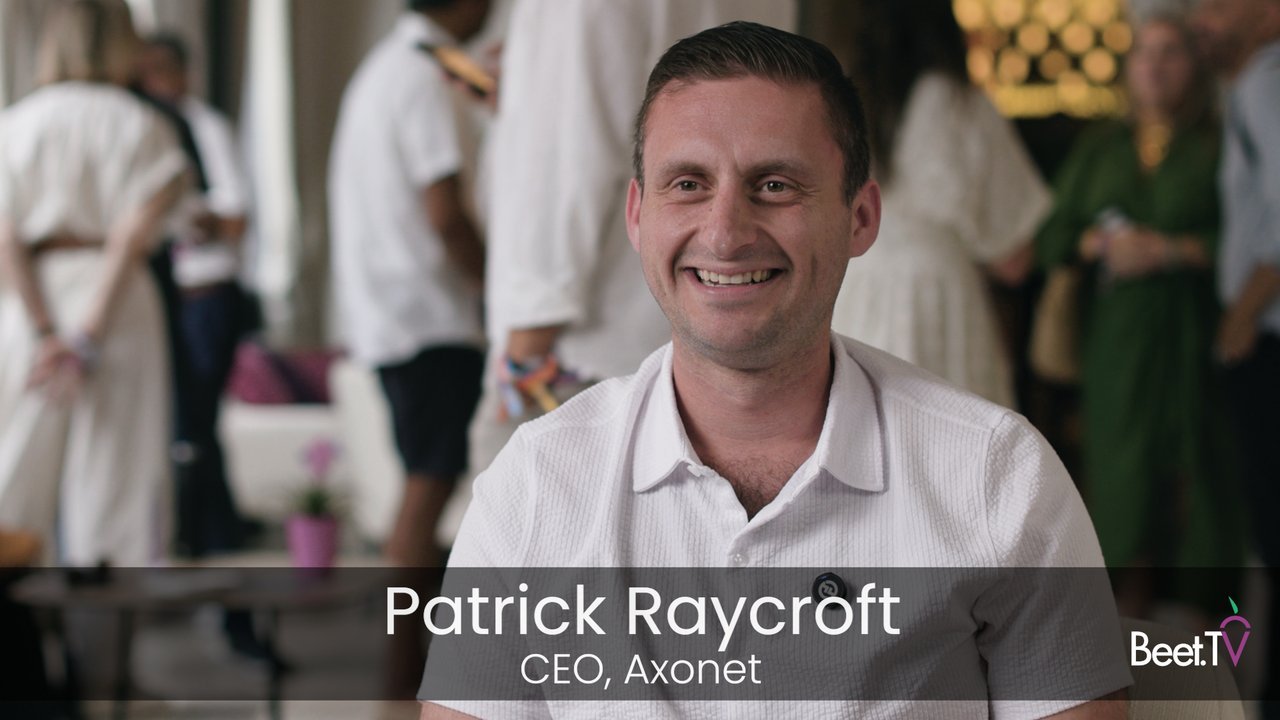
Axonet’s Patrick Raycroft: RMN Aggregation Democratizes Access To Retail Media

CANNES, France — With 250 retail media networks now competing for advertiser budgets, the math of direct relationships is breaking down. Brands and agencies have fixed time, fixed resources, and fixed capacity for RMN partnerships. And that means spending tends to consolidate at the top and the long tail goes unfunded.

“The brands and agencies that are engaging with RMN have limited ability to activate with an increasing number of RMNs. There’s fixed costs, fixed time and resources that have to go into those relationships, and that limits spend going into RMNs down market on the long tail,” Patrick Raycroft, CEO of Axonet, told Beet.TV contributor David Kaplan at Cannes Lions. “We believe it’s democratizing access, not only for the retailers, but also for those brands that may want to activate in some of those retail outlets but don’t have the time, the resources, the people to engage with them.”

Axonet positions itself as a first-party media network. It aggregates retailer data and owned and operated touchpoints into a single layer that national campaigns can activate against while retaining the measurement credibility that makes retail media valuable in the first place.

Retailers keep control

The most common concern Raycroft hears from retailers considering aggregation is loss of control over their data and direct brand relationships. His answer separates two distinct use cases that can coexist.

“We aren’t here to stand in between retailers working directly with brands on particular activations. If a brand wants to do a big bet with a retailer, they can still do that within an aggregated model,” Raycroft said. “They’re still your owned and operated assets.”

Data control is addressed retailer by retailer through legal frameworks built around the principle that retailers controlling their own assets is paramount. From there, aggregation is layered on top as a value exchange rather than a takeover, Raycroft added.

Think national, not “network”

The bigger behavioral shift Raycroft is pushing brands toward is organizational rather than tactical. Most brands currently manage RMN and national budgets in separate teams with separate objectives — a structure that prevents them from unlocking what aggregation actually offers.

“In order to unlock the power of a national first party media network, you need to think about it as that — as a national media network — not necessarily as an RMN. But it brings the RMN bonafides behind it of first party audiences, first party touchpoints, and that trusted and verified measurement,” Raycroft said.

Both, not either/or

Raycroft is careful not to position aggregation as a replacement for direct retailer relationships. Large bets, limited time offers, and deep brand-retailer integrations still belong in direct relationships. Aggregation serves the national layer alongside them.

“I don’t see it as an either or. I see it as an and,” Raycroft said. “That’s where we’re growing and continuing to grow with our retailers on our network, but also our brands and agencies as well.”

CTV’s Awareness-Only Era Is Over: Brands Now Chasing Performance on the Big Screen

The living room’s biggest screen is no longer just a billboard. Marketers once treated connected TV as a blunt awareness tool – the digital successor to the 30-second broadcast spot – but that thinking is increasingly outdated as advertisers demand the same accountability from CTV that they expect from search and social.

U.S. CTV ad spending is forecast to grow 14% to $37.26 billion in 2026, according to Emarketer research, yet nearly 38% of marketers still cite difficulty proving incremental return on ad spend as a top barrier.

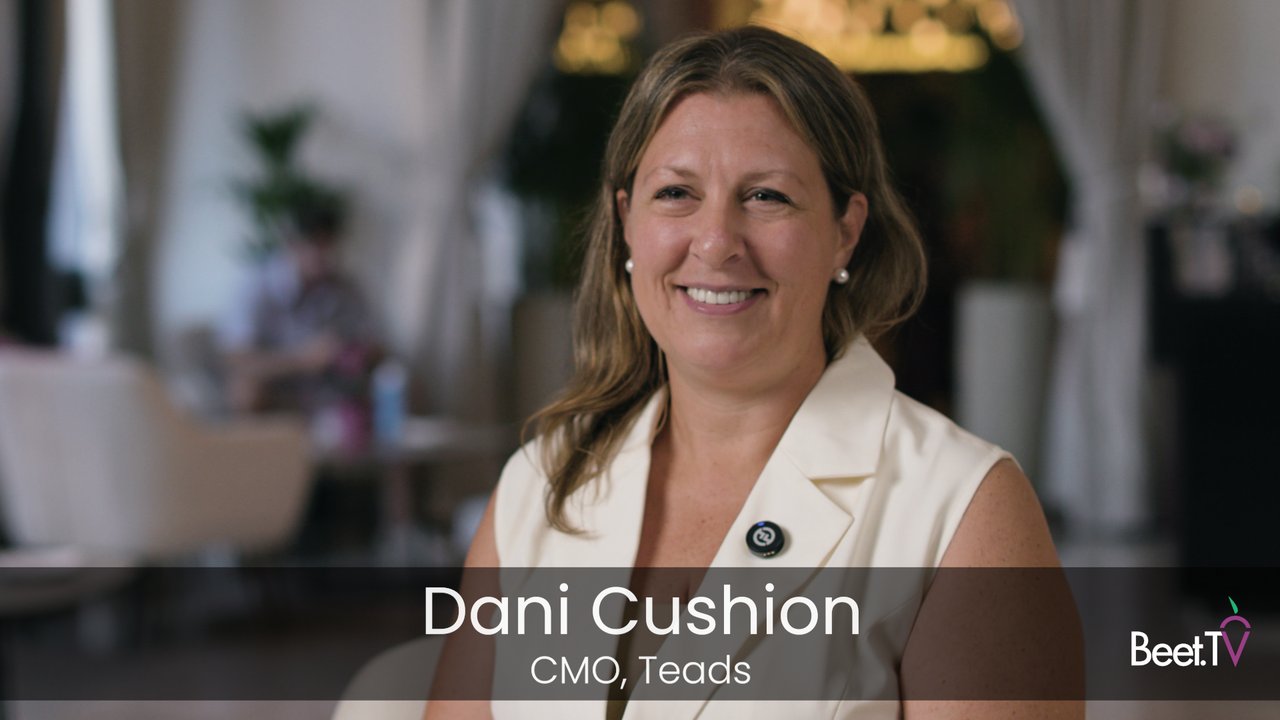
“CTV is no longer just super high funnel awareness driver. It also can truly drive people through their experience,” said Dani Cushion, CMO of Teads, in this video interview with Beet.TV at Cannes Lions 2026.

The second-screen reality demands orchestration

Research suggests 50% to 60% of viewers are simultaneously on a phone or tablet, a figure that climbs higher during live sports. That fragmented attention makes CTV a starting point rather than a destination.

Cushion argued that brands should treat CTV as the anchor of a cross-device strategy rather than a standalone buy. “CTV is the first screen that you’re going to see, but figuring out how to get that to connect in an omnichannel way with web, with mobile, and using them together is really important,” she said.

The approach relies on sequential messaging and retargeting across screens. “I as a consumer am going to be watching a show, engaging with an ad, but perhaps getting a similar ad either retargeted sequentially or just being surrounded later by the brand,” Cushion said. “It really is thoughtful about the experience that I’m having with the brand.”

Data remains the sticking point

Omnichannel sounds elegant in a pitch deck but some think it tends to fall apart in execution. The culprit, according to Cushion, is data fragmentation – specifically the difficulty of tying a household on a smart TV to an individual on a mobile device to a browser session on a laptop.

“Unless you can actually have data to be able to tie the thread between knowing who is one person here, one household here, and how are you actually making sure that you’re targeting the same people with the right kind of messages – the data is a lot of what stands in the way of that,” she said.

Teads positions its omnichannel graph, built on direct CTV integrations and relationships with more than 10,000 open-web publishers, as the connective tissue. “You don’t have to worry about patching it together. You have it all in one place and you can make sure that you have this sort of symphonic connection of reaching your consumers effectively,” Cushion said.

From attention to attribution

CTV’s attention advantage is well documented – Teads claims its HomeScreen video ads achieve a 48% attention rate and outperform skippable pre-roll by 16% – but attention alone does not satisfy CFOs. The company recently launched CTV Ensemble, a suite that includes what it calls CTV Performance, designed to connect big-screen impressions to lower-funnel outcomes.

The product emerged from a beta spanning roughly 40 campaigns across 14 countries. “We’re actually able to help brands show that it’s not just high funnel, but that you can drive performance campaigns from CTV and drive actual measurable outcomes,” Cushion said.

One example she cited was Citroën, which used CTV Performance to drive test-drive bookings. A Teads case study reports the campaign generated a 94% video completion rate, more than 13,000 site visits, and 5,000 online conversions tied to vehicle configuration and dealership searches. “We were able to measure the impact from CTV to those online conversions that drove that,” Cushion said.

How Brands Engineer Impulse Buying: Axonet’s Patrick Raycroft and Mars United’s Amy Andrews

CANNES, France – The convenience-store impulse buy may feel spontaneous. In reality, an impressive collection of data, advertising technology and loyalty programs could be helping that energy drink leap into a shopper’s hand.

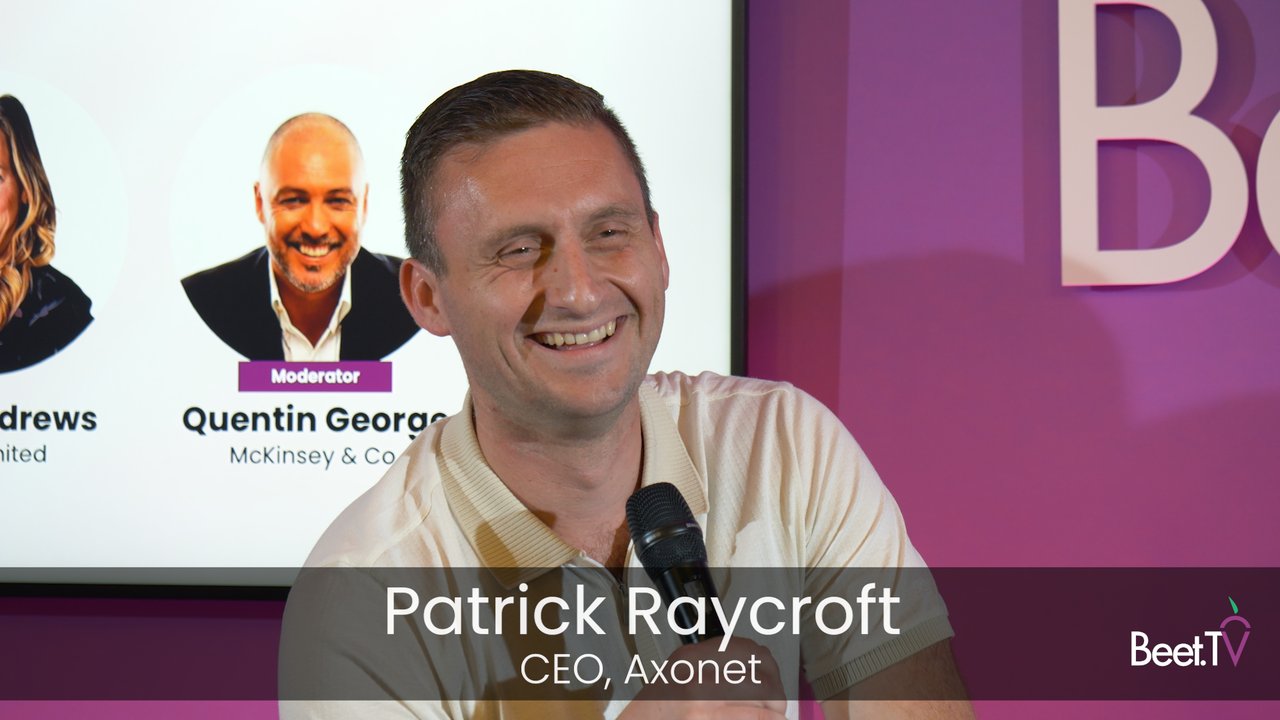
Axonet co-founder and CEO Patrick Raycroft and Mars United Commerce president Amy Andrews examined the science behind those quick purchases during a panel moderated by McKinsey & Co. partner Quentin George at the Cannes Lions International Festival of Creativity.

Axonet operates a retail media network for convenience stores and fuel retailers. Mars United is a commerce marketing company that helps brands influence shoppers across stores, digital platforms and retail media networks. Publicis Groupe acquired Mars United in 2024.

The discussion covered everything from three-minute shopping trips to artificial intelligence agents that may someday order products before consumers know they want them. Apparently, even robots will understand the medicinal importance of a gas-station snack.

Impulse trips are partly planned

Andrews distinguished between an impulse purchase and an “impulse trip,” such as an unplanned stop made while traveling somewhere else.

“We are absolutely still in an impulse era,” she said. “There’s the impulse purchase, but then also the impulse trip.”

Raycroft said the word “impulse” doesn’t fully describe the 160 million transactions that take place each day at U.S. convenience stores. Many visits are inevitable even if shoppers haven’t decided when or where they will stop.

People need fuel, food, caffeine or products involving what Raycroft diplomatically called “vices.” The trip is coming. The precise location remains up for grabs.

“Once I make that stop, that’s the moment that we have to influence the impulse buy,” he said.

For brands, that creates a narrow opening between a practical need and a sudden craving. The shopper may have planned to buy gasoline. The neon-blue beverage and family-sized bag of cheese dust were more of a late roster addition.

Three minutes leave little time for Hamlet

Convenience-store shoppers are typically in and out in less than three minutes. Raycroft’s advice for advertisers was characteristically restrained: “Hit them a lot and hit them in really short bursts.”

That can mean reaching consumers at fuel dispensers, on screens inside the store, through audio messages or with advertising delivered before they arrive. It also can involve customer relationship management programs and loyalty data.

The creative must fit the setting. A 30-second television commercial has little chance against a shopper moving toward the register with the speed and determination of someone who left a child waiting in the car.

“The eight, 10, 12-second range” tends to be most effective, Raycroft said. Those shorter formats also can work across social media, off-site advertising and other digital channels.

Andrews said artificial intelligence and automation can help advertisers produce variations of creative for different audiences and moments.

“AI is not replacing creativity,” she said. “But in terms of scaling content, there’s a lot of automation technology that we can use now.”

Loyalty data follows the shopper around town

A typical consumer regularly visits five to seven convenience-store brands, according to Raycroft. That makes it important to connect shopping activity across different retailers.

“It’s all about the connectivity in the convenience-store customer,” he said.

The goal is to understand what one shopper does across BP, Marathon and other chains rather than treating every stop as the work of a newly discovered human being.

Consumers help by entering their phone numbers into loyalty programs, usually in exchange for discounts. Andrews described that bargain as a value exchange. People are more willing to identify themselves when the resulting offer provides a meaningful benefit over time.

Marketers then face another problem: separating useful buying signals from the enormous warehouse of digital clutter they have spent years proudly collecting.

“We have so much data now,” Andrews said. “We’re all struggling with what are the right signals.”

More complete data can help agencies examine purchases across retailers and sales channels. That allows them to identify the behaviors most relevant to a client’s objectives.

Selling another unit is still the assignment

For all the elaborate technology and discussion of omnichannel consumer journeys, Raycroft said convenience-store advertising eventually comes down to a fairly uncomplicated measurement.

“At the end of the day, it’s unit velocity,” he said. “That’s just the name of the game.”

Unit velocity measures how quickly products sell. Advertisers also want to know whether a campaign brought in new customers or generated purchases that would not otherwise have occurred.

Andrews warned that moving a planned purchase from tomorrow to today does not necessarily create incremental sales. It may simply change the date on the receipt.

Challenger brands have a particular opportunity in convenience stores. Consumers may hesitate to buy a 12-pack of an unfamiliar beverage at a supermarket. They are more likely to gamble on one can during a quick stop.

“You gain brand loyalty through the single-unit purchase, not through the multipack purchase at the grocery store,” Raycroft said.

That makes convenience stores a proving ground for new brands. It also gives established companies one more thing to worry about before breakfast.

Timing prevents advertising overkill

Convenience stores place shoppers within 20 to 30 feet of many advertised products. Retailers can synchronize video and in-store messages to reach consumers when an item is almost literally within arm’s length.

Timing matters. Raycroft noted that promoting energy drinks at 1 a.m. on a Thursday is unlikely to be especially productive. Presumably, the truly dedicated Thursday-night energy-drink customer has already made arrangements.

Loyalty data can help advertisers estimate when commuters and professional drivers are likely to shop. Brands can then concentrate their messages before, during and after the expected visit.

That prompted George to ask whether consumers need protection from a marketing barrage that follows them to the pump, through the store, past the register and back into the car.

“That feels like a lot,” Andrews conceded.

She recommended using different messages across the day and the shopping journey. The aim is to create a coherent experience without making customers feel pursued by a can of soda carrying a search warrant.

Fragmentation complicates national campaigns

Convenience retail remains divided among chains, franchisees and independent operators. A national advertiser might have to deal with dozens or even hundreds of retail media networks.

Raycroft said aggregation can simplify that buying process, provided retailers retain the qualities that make their businesses distinctive.

“It makes it really difficult when you have to navigate 10, 20, 30, 200 retail media networks in the C-store space,” he said.

Axonet seeks to give advertisers access to first-party retail data at a national scale while allowing retailers to preserve their direct relationships with suppliers and manufacturers.

Mars United takes a wider view of the shopper. Andrews said Publicis puts identity at the center of its strategy, examining purchases across convenience stores, grocery outlets and other sales channels. Agencies can then determine whether the convenience channel should support a product launch or help turn a one-can experiment into a six-pack commitment.

AI may automate temptation

George closed by asking whether agentic AI could eliminate impulse purchases by automatically ordering household staples and optimizing shopping lists.

Both panelists said no.

Raycroft suggested that autonomous vehicles could have a bigger effect by changing when and why consumers visit fuel stations. Until then, the convenience-store impulse buy appears safe.

Andrews went further, predicting that AI could become an entirely new source of temptation.

“True agentic commerce could be the ultimate surprise and delight,” she said.

An AI agent might introduce consumers to products they did not know they needed. That would preserve the impulse purchase while removing the inefficient step in which the shopper personally develops the impulse.

For marketers, it is a tantalizing prospect: a machine that knows what consumers want before they do and is always willing to stop for snacks.axonet


Healthcare Marketers Seek to Close the Loop from Ad Impressions to Patient Outcomes

CANNES, France – Healthcare marketers have been promising to “close the loop” between advertising and patient outcomes for years. Unfortunately, that loop has often resembled a circle drawn by someone riding in the back of an ambulance.

Connecting an ad impression to a real health outcome is unusually difficult. Patient journeys are complicated, medical data is highly sensitive and the healthcare system does not exactly glide along with the efficiency of a Cannes hotel bar tab.

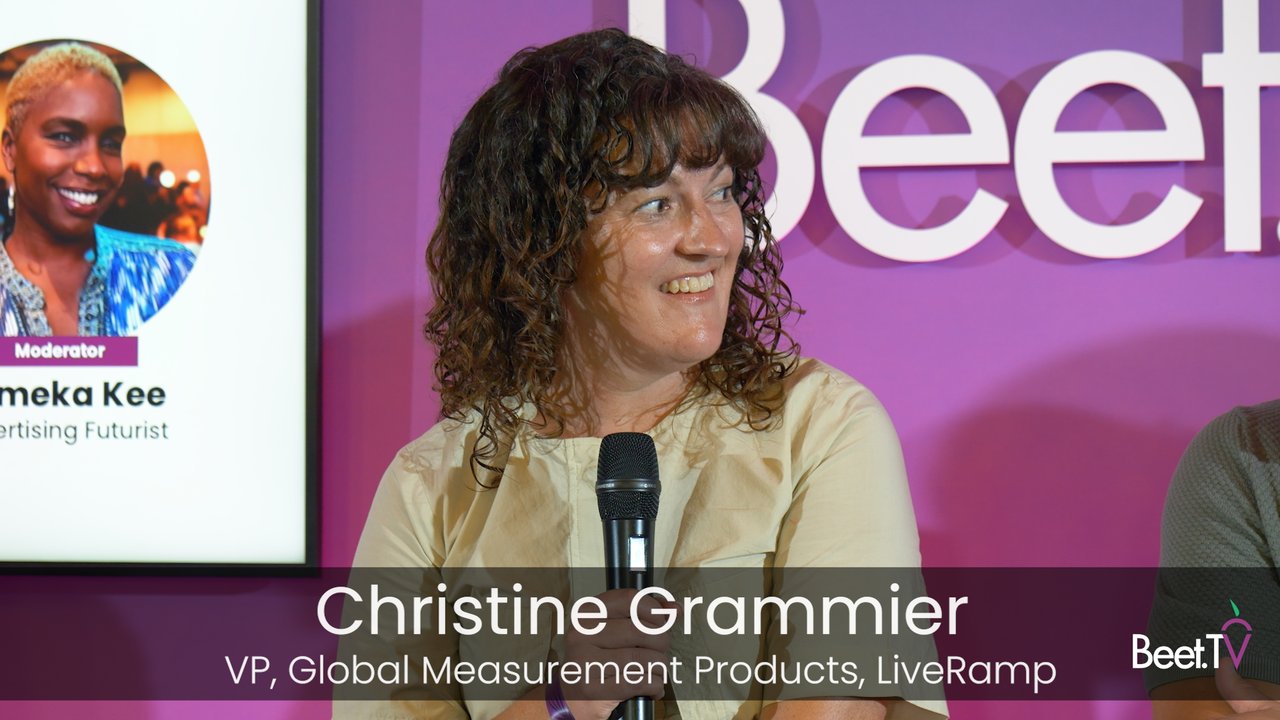
Christine Grammier, vice president of global measurement products at LiveRamp, Scott Mackay, head of sales at CVS Media Exchange, or CMX, and Frank Lin, vice president and general manager at IQVIA Digital, discussed how marketers are getting closer to making those connections in a panel moderated by Beet.TV contributor Tameka Kee at the Cannes Lions International Festival of Creativity.

Pharma ads attempt a reputation transplant

Pharmaceutical advertising may inspire eye rolls, especially when a commercial’s list of possible side effects seems longer than the program it interrupted. Lin argued that relevant health information can still help patients begin conversations they might otherwise avoid.

“Pharma ads get a bad rep,” Lin said. Yet for a patient or caregiver dealing with a condition, a well-placed message can provide useful information before a doctor’s appointment.

Advertising has also helped reduce the stigma surrounding sensitive categories such as erectile dysfunction, women’s health and mental health, he said. The first step toward closing the loop is understanding whom an impression reaches and whether it encourages a meaningful conversation.

CMX occupies a particularly useful position because CVS operates across retail, pharmacy and patient care. That gives the media network signals that a typical retailer cannot collect between the breakfast cereal and the laundry detergent.

“Most RMNs, retail media networks, they’re looking at actual transactions, where we’re actually looking at health journeys,” Mackay said.

Seven out of 10 visits to CVS are motivated by healthcare needs, according to Mackay. CMX can connect advertising exposure with store engagement, conversations with pharmacists and actions such as prescription fills or refills.

The important question is no longer limited to whether someone saw an ad. Marketers can begin asking whether that person took a step toward better health.

Patient journey refuses to behave like a funnel

The traditional marketing funnel looks reassuringly orderly on a PowerPoint slide. The American healthcare system apparently has declined to participate.

“I wish the loop is this perfect circle that we’d all draw on the whiteboard,” Lin said. “It’s a non-linear journey that we all take.”

IQVIA follows medicines from clinical trials through commercialization and their use among patients in the real world. That broader view helps marketers assess more than whether an advertisement led to a prescription.

“The definition of patient outcome doesn’t stop at that script lift,” Lin said. “It’s really about the continuance of, is this patient getting better?”

That process can include the physician, nurse practitioner, pharmacist, insurer, caregiver and patient. In other words, the healthcare journey has a cast large enough for prestige television, but considerably more paperwork.

Data gets connected without revealing the patient

Bringing these signals together requires technology that protects a person’s identity. Healthcare data cannot simply be passed among companies like a beach-party invitation.

Grammier said healthcare companies use methods including tokenization and expert determination to de-identify information and prevent it from being traced back to an individual.

“The fundamental idea is that your data is de-identified in an expert way, ensured that it cannot be re-identified to you as a consumer,” Grammier said.

LiveRamp provides a clean-room framework that lets companies compare exposure and outcome data without directly transferring sensitive information. Platforms such as TikTok, Snap and Meta can provide advertising exposure data that partners use to determine whether messages reached the intended audiences. YouTube remains “a little tricky,” Grammier said, proving that even sophisticated data architecture must occasionally confront the digital equivalent of a locked medicine cabinet.

The analysis can show whether a person in an appropriate audience saw an ad, visited a doctor, received a diagnosis, filled a prescription and remained on the treatment.

“That whole journey is possible today in our ecosystem,” Grammier said, provided companies take additional steps to protect patient data.

Closed loop runs through drugstores

Mackay offered a practical example of how the process can work. A consumer might see an ad away from CVS, encounter the message again on a screen inside the store and then speak with a pharmacist.

That conversation could lead to the purchase of an over-the-counter product, a prescription fill or a follow-up with a doctor. The campaign crosses several channels while its effectiveness can be measured through connected signals.

CVS can also combine information from the front and back of the store to develop a more complete view of the customer’s healthcare journey. The company must do this without making shoppers suspect that the moisturizer aisle has developed surveillance capabilities.

“Trust is everything,” Mackay said. “That’s really our foundation.”

Consent is also critical. Mackay said CMX can avoid sending vaccination messages to someone who has already received the vaccine. It also seeks to avoid bombarding unvaccinated consumers with the same appeal until they begin hiding from the pharmacy app.

“It’s finding that direct balance,” he said, between educating patients and “not overstepping our boundaries.”

Precision doesn’t belong everywhere

Healthcare marketers may have access to highly precise information, but Grammier said they do not need to apply that precision at every stage of a campaign.

Detailed data can be valuable for measurement while consumer targeting can rely on broader audience models. That distinction lets companies assess whether a campaign worked without delivering an ad so specific that the recipient wonders whether their dermatologist has joined the media plan.

LiveRamp, IQVIA and CVS all maintain data ethics or privacy teams. Lin said IQVIA Digital also uses an ethics board to examine campaigns.

“It’s not just, ‘Hey, can we do this,’ but, ‘Is it ethical to do this?’” Lin said.

The goal is to give patients useful knowledge rather than merely drive prescriptions. Companies working with healthcare information must earn trust through standards that may exceed the minimum requirements of the broader advertising industry, he added.

Dashboard receives grim diagnosis

As healthcare measurement improves, Lin expects marketers to shift their attention from reporting results to acting on them.

“We also believe that dashboards are dead,” he said.

Brands have reached the “so what” stage of measurement, Lin added. A dashboard can report what happened, but marketers increasingly want to know how they should adjust placements, audiences and spending.

IQVIA is therefore moving from measurement toward optimization, working with media partners to shorten the time between gathering results and changing a campaign.

Grammier said optimization does not require telling a media platform that a particular consumer received a prescription. Marketers can use broader signals showing that certain placements or audiences performed better than others.

The future of healthcare measurement may involve less cumbersome planning, faster optimization and stronger privacy protections. It could even produce the rare pharmaceutical campaign that reaches the right patient, encourages useful care and stops showing ads once its work is finished.

For an industry still trying to close a stubbornly broken loop, that would qualify as a healthy outcome.

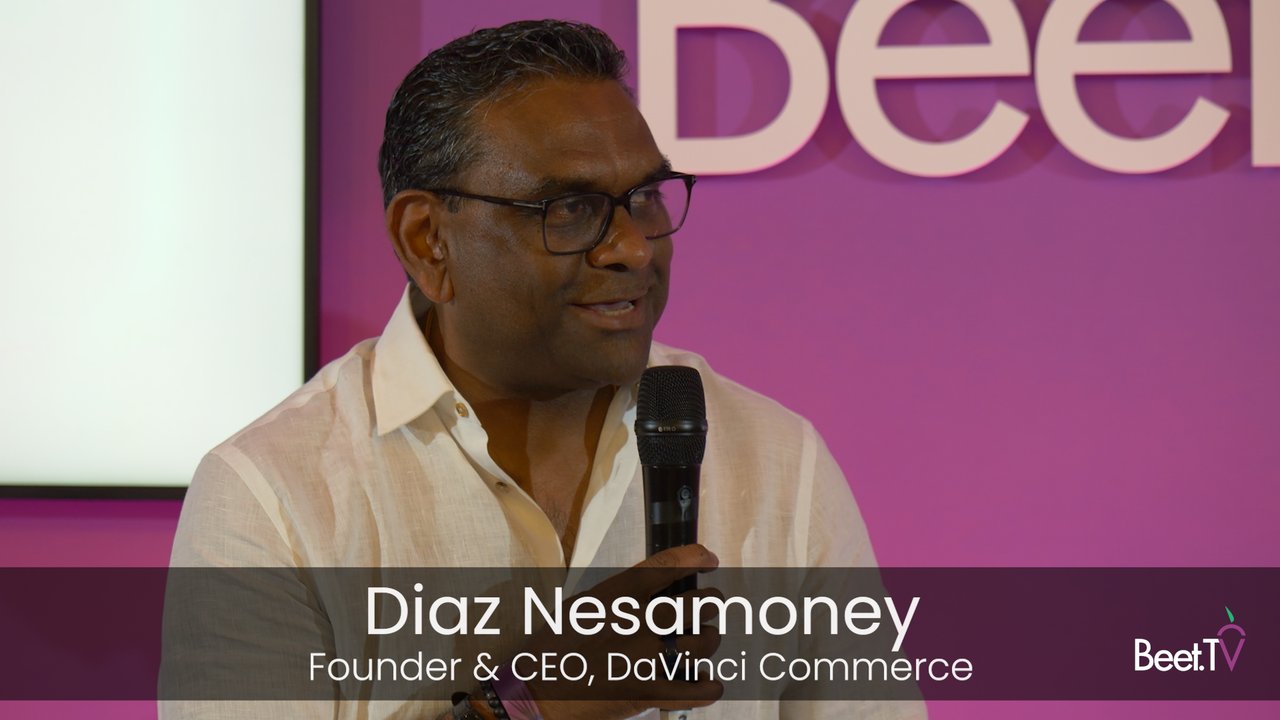
Brands Must Learn to Market to Machines: DaVinci Commerce’s Diaz Nesamoney

CANNES, France – Artificial intelligence may change online shopping by giving consumers something e-commerce has stubbornly resisted for 30 years: a reasonably pleasant experience.

Instead of opening 17 browser tabs, wrestling with filters and wondering why a search for one sensible shirt produced 800 questionable options, shoppers can tell an AI assistant what they need. The agent can research products, compare brands and recommend likely matches.

For marketers, however, this convenience introduces a formidable new gatekeeper. Brands must persuade the machine before they get a chance to charm the human.

“The big difference is you’re marketing to agents,” Diaz Nesamoney, founder and CEO of DaVinci Commerce, said in a fireside chat with Beet.TV contributor Tameka Kee at the Cannes Lions International Festival of Creativity.

Shopping begins long before checkout

Consumers are already using generative AI platforms to discover and research products, even if relatively few are completing purchases within them, Nesamoney said. He estimated that about 30% of consumers are shopping through these services when the definition includes discovery, research and product education.

“Shopping, if you think of shopping as just purchase, then it’s a small number,” he said. “If you think of shopping as the full journey, discovery of products, discovery of brands, researching, learning about them and then eventually buying, that number is pretty high.”

That distinction matters because the first phase of agentic commerce may be less about letting a robot loose with a credit card and more about replacing the traditional search box.

Consumers no longer have to enter a precise request for a yellow tent of a particular size. They can say they are taking their children camping and ask what they might need. The AI can figure out that shelter, sleeping bags and insect repellent would be useful. It may also tactfully refrain from mentioning that the children will want to go home by Saturday afternoon.

“The current e-commerce systems are built for precise searches, but the conversational model requires something very different,” Nesamoney said.

Product specifications meet actual human beings

Most online catalogs were built around technical attributes such as size, weight, materials and camera resolution. Consumers often think in different terms. They may want an affordable phone for a student, a handbag for a wedding or a cocktail that makes a party look more sophisticated than it really is.

That creates a mismatch between how companies describe products and how people ask about them.

Brands need to enrich their product data with information about occasions, lifestyles and practical uses, Nesamoney said. Consumer reviews and discussions on platforms such as Reddit can help because people tend to explain how a product fits into their lives. They rarely gather online to celebrate the dimensions of the shipping carton.

“If you read through the reviews, nobody’s talking about the specs of the product,” he said. “They’re talking about what they love about it, how they used it.”

Rewriting enormous product catalogs for every conceivable use would be a grim assignment for humans. Fortunately, Nesamoney sees AI as both the cause of the upheaval and part of the solution.

“This is where AI comes to the rescue, too,” he said. “AI created the opportunity, but also solving the problem.”

DaVinci Commerce is using AI to collect descriptive information and generate richer product descriptions at scale, he said.

Invisible brands may discover a new meaning for zero impressions

The immediate challenge is ensuring that AI agents can find and understand a company’s products. If a brand’s information does not answer the kinds of questions consumers are asking, the agent may never recommend it.

“If you don’t do what’s needed to have the agents describe or get to your product descriptions and expose it to the consumers, you basically don’t exist,” Nesamoney said.

Discoverability is only the beginning. Brands also need to preserve the qualities that separate them from cheaper competitors. If an agent presents five T-shirts as interchangeable rectangles with sleeves, the lowest price may win. That is unwelcome news for a luxury label hoping consumers remain deeply moved by its stitching, heritage and magnificently expensive cotton.

Nesamoney said branded AI experiences can give companies more control over how they present themselves. These conversational storefronts could recreate the role of a knowledgeable store associate who remembers previous purchases and suggests complementary products.

“These agents, because they have access to all of that data, can do as good a job, sometimes even a better job than a really good sales associate,” he said.

Unlike some sales associates, the AI will presumably not disappear into the stockroom just as the customer needs another size.

The autonomous shopping spree can wait

Early visions of agentic commerce assumed consumers would either buy products immediately from AI-generated listings or allow agents to make purchases for them. Neither idea has proved especially compelling so far, Nesamoney said.

“One is you just show people products, they’ll buy. Well, clearly, that didn’t happen,” he said. “The other was the agent knows what to buy for you and it’s gonna go buy it for you.”

Consumers still want context before making a purchase. They also may hesitate before handing an autonomous agent a credit card and instructions to use its judgment. Humanity has enough mysterious subscription charges already.

A more plausible experience resembles guided shopping. Nesamoney cited DaVinci Commerce’s work with an unnamed liquor brand. Instead of asking consumers to choose a bottle first, the experience begins with the occasion or cocktail. It then recommends a recipe and the alcohol suited to it.

Fashion and beauty brands can similarly answer questions about style, events and seasonal trends before recommending products.

Marketers get a second audience

This shift means brands must communicate with two audiences. Data helps an agent choose which companies and products to show. Creative presentation then helps the consumer decide what to buy.

“You’re marketing to the agent. You’re not marketing to the consumer, not yet, at least,” Nesamoney said. “Eventually the consumer chooses your brand, then you have to start speaking to the consumer directly.”

The emerging work is not purely technical or creative. It requires an understanding of how people perceive products, what questions they ask and what kind of experience they expect from a brand.

That could produce new marketing roles focused on making product information attractive to machines without draining it of all human meaning. The résumé may soon require experience in consumer psychology, product data and politely explaining to a chatbot why a $200 T-shirt is not just a $10 T-shirt with excellent self-esteem.

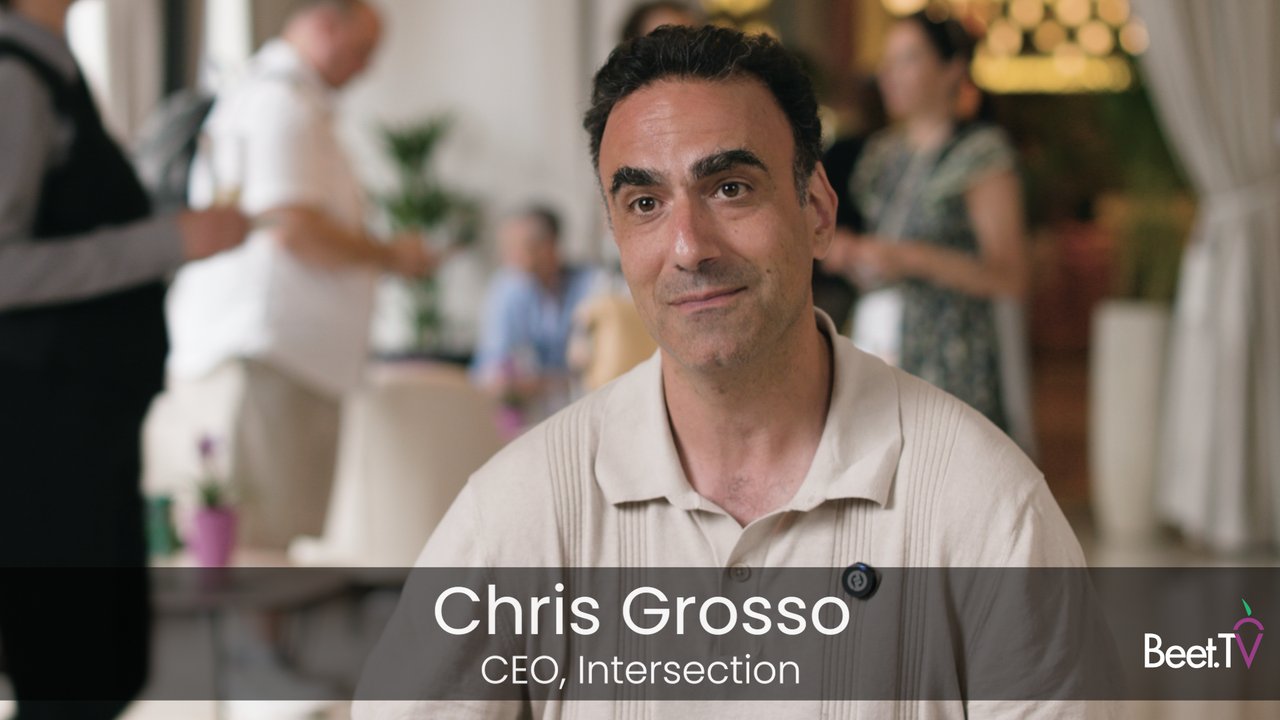
Intersection’s Chris Grosso: There’s No Substitute for Real Life. and That’s Out-Of-Home’s Power

CANNES, France — Science fiction movies have often imagined the future filled with out-of-home advertising. Historians know it goes back centuries further than that. For Intersection CEO Chris Grosso, the medium’s longevity reflects something the industry still struggles to quantify. 

“We all know it works. We need to be able to measure it better and measure it on an apples to apples basis. Once we can do that, we think that there’s going to be a lot more growth, particularly in the US,” Grosso told Beet.TV contributor David Kaplan at Cannes Lions. “We’ve seen that in other geographies.”

That measurement gap, Grosso argues, is the primary reason out-of-home punches below its weight in US media budgets compared to markets like France and the UK, where more rigorous audience measurement has made it a larger share of the mix.

Cities as content platforms

Intersection operates small-format, human-scale digital screens in cities and transit systems and networks like LinkNYC in New York, and similar installations in Chicago and Philadelphia. The company’s philosophy is that content drives engagement. And engagement makes both the screens and the advertising more valuable.

“Our view is that if you put content on the screens, it drives engagement, which makes the advertising more valuable, but also makes the screens more valuable to consumers,” Grosso said.

That content spans train arrival times, weather, sports scores, local facts, trivia, games, and art. Most recently, that content also included live streams of Knicks playoff games and World Cup matches on New York City screens.

Mass reach with city-scale frequency

Some of Intersection’s products reach 80% of a city’s population 20 to 30 times a month. It’s a frequency argument that digital channels struggle to match without significant targeting costs.

“What out-of-home can bring you is mass reach and mass frequency. You really can get out to the cities in a big way,” Grosso said. “The best way for brands to reach them is to be advertising out of home, to be able to touch them when they’re in their daily lives or when they’re around big events.”

Measurement is the growth unlock

The industry is working toward a new audience measurement system developed with Ipsos, designed to be more transparent, accurate, and interoperable with the broader media ecosystem. It’s the same structural improvement that unlocked out-of-home’s larger budget share in European markets.

“When we’ve seen that happen in other geographies like here in France or in the UK where you have much better measurement, out-of-home becomes a much larger part of the media landscape and the media budgets,” Grosso said.

Creators come when you offer 50 million impressions

Mass distribution attracts content partners on favorable terms. Creators, sports leagues, and city governments alike will provide content in exchange for the reach Intersection’s networks deliver.

“When we call a creator and say, ‘Look, we can get you in front of every New Yorker and we’re going to give you 50 million impressions. We just need you to make a video.’ People usually show up,” Grosso said.

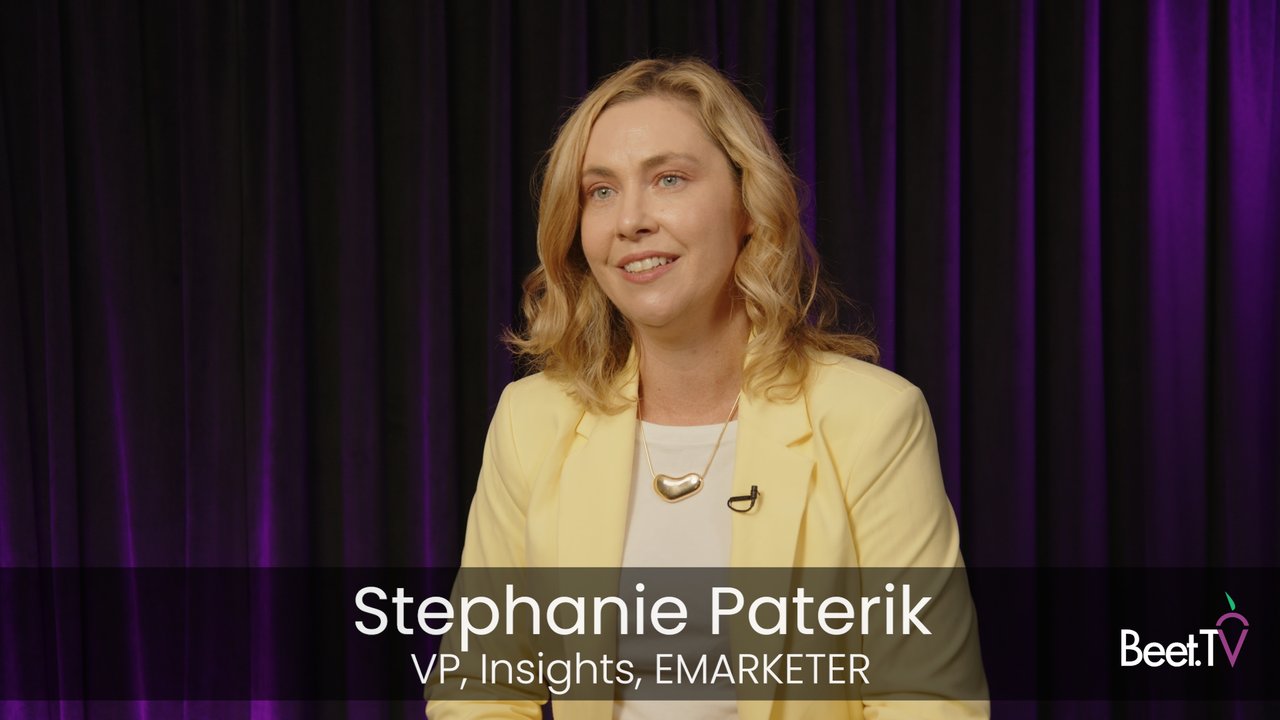
EMARKETER’s Stephanie Paterik: AI Isn’t Cannibalizing Other Ad Channels

Internet content has felt infinite for the past two decades. Still, when generative artificial intelligence arrived nearly four years ago, that sense of infinity felt like it doubled or even tripled. 

For Stephanie Paterik, VP of Insights at EMARKETER, that content explosion isn’t the threat it appears to be. But it is reshaping what actually works in digital advertising.

“We’ve hit the point where you are more likely to find something that was created by a machine online than you are to find something created by a human. There is so much AI slop. The zone has very much been flooded,” Paterik told Beet.TV contributor David Kaplan. “But I actually think this can be an advantage for traditional publishers and content teams who lean into what makes them unique.”

Paterik’s comments come ahead of EMARKETER’s Future of Digital event on September 15th in New York. That’s where the company will share its 2027 digital marketing outlook with a major focus on AI visibility along with sessions exploring how brands show up in AI-driven environments.

AI is additive, not disruptive

One seemingly counterintuitive finding in EMARKETER’s recent research is that AI is not pulling time or money away from established channels. Consumers are spending an average of 16 minutes a day on AI platforms, according to EMARKETER. That still leaves plenty of attention for streaming, social, and retail media, which continue growing alongside AI, Paterik noted.

“AI is not cannibalizing or replacing other channels. It’s additive. It’s actually lengthening the amount of time we are spending online,” Paterik said. “The holistic strategies that our industry has been working toward in recent years continue — and this is a way to get smarter.”

Competitive advantage

As SEO farms fold under the weight of AI-generated content, publishers and branded content teams that lean into human perspective, original reporting, and distinctive voices are finding themselves in a stronger competitive position.

“The human perspective suddenly becomes much more valuable in this world because it undeniably stands out and it’s really hard to replicate,” Paterik said.

Intelligence defines the next era

The fourth industrial revolution, in Paterik’s framing, is the intelligence age. And it rewards brand builders over system gamers.

“It’s going to become harder to game the system. It’s not just about owning certain keywords or flooding the zone to gain traffic. AI and people together have this incredible ability to synthesize all of the information that’s out there about your brand across so many touch points,” Paterik said. “The marketers and the companies that are going to succeed are those who really dig in deep to their core values, to what we know builds trust with consumers, while also leaning into the opportunity of new tech. The future is going to be about really bringing those both together in the most symbiotic way we’ve ever seen.”

Marketing Is Data-Rich but Still Insight-Poor, Says Quigley-Simpson CEO

AMENIA, NY – The fundamentals of marketing have not changed in four decades – attracting and retaining profitable customers. What has changed is the sheer volume of data available to pursue that goal, and the industry’s struggle to turn that data into action.

That tension is the central challenge facing marketers today, according to one agency leader.

“It’s still complicated. It’s still not easy to cull all that data and information and pull insights,” said Carl Fremont, CEO, Quigley-Simpson, in this video interview with Beet.TV at the Beet Retreat in the Berkshires. “At the end of the day, those insights is what’s going to drive the whole marketing ecosystem downstream.”

The measurement gap persists

A Forrester analysis published in July 2026 found that 49% of B2C marketing decision-makers say analytics findings do not translate into action. Meanwhile, Emarketer’s 2026 measurement outlook reported that 46.9% of US marketers planned to invest more in marketing mix modeling, reflecting growing pressure to connect media activity to business outcomes.

Gartner’s 2026 CMO Spend Survey found that 70% of CMOs say their internal marketing processes are not mature enough to implement and scale AI effectively, even as digital media now represents more than two-thirds of total media investment.

Fremont argued that marketers must operate at both macro and micro levels simultaneously. “You can look at it at a macro level in terms of entire marketing system and what it’s driving in terms of sales,” he said. “And then you can look at it at a micro level and you have to do both.”

Defining outcomes before measuring them

The conversation at the Beet Retreat kept returning to “outcomes”, a word Fremont said had dominated discussions. But he cautioned that marketers must first define what they are trying to achieve before they can measure it.

“Well, first we have to understand what impact we’re trying to create,” he said. “At the end of the day, it’s about sales and looking at, is our investments paying out for us? Are we getting the most value from our investments?”

Fremont acknowledged that measurement will never be perfect. The industry will still be grappling with these questions years from now, he predicted. “We all need to continue to do is ask the questions and look for how are things performing, how are things improving, learn, test and learn constantly,” he said. “Be open to things not working. Be open to things that aren’t going to be successful because you’ll learn from that as well.”

What ‘impact obsessed’ actually means

Quigley-Simpson describes its philosophy as “impact obsessed,” a phrase Fremont said the agency developed deliberately. The Los Angeles-based agency, founded 25 years ago, has built its practice around measurement and accountability.

But Fremont argued that impact extends beyond financial metrics. “You can look at impact from a financial side, from a business side. You know, what impact are you having on sales?” he said. “You can look at impact from an enterprise. How is what you’re doing impacting the employees and the other people that a brand and a company are engaging with?”

The agency recently expanded its relationship with Generac, becoming the company’s digital agency of record after a competitive review. The remit includes integrated media strategy, planning, implementation, reporting and analytics, reflecting the agency’s emphasis on connecting media activity to measurable outcomes.

Posted in Uncategorized

NBCUniversal’s AI Creative Engine Shows Early Branding Drives 2.8x Higher Recall

The conventional wisdom about saving the big brand reveal for a commercial’s climax may be wrong. New data from NBCUniversal’s AI-powered creative analysis suggests advertisers who “brand early and brand often” see dramatically better results than those who build to a logo payoff.

The finding comes from NBCU’s Creative Ad Engine, which uses artificial intelligence to analyze tens of thousands of ads across live sports, tentpole programming and Peacock ad formats. The system found that ads featuring branding within the first five seconds deliver higher recall, with effectiveness increasing as branding appears more frequently throughout the spot.

“When we see and look at advertisers who actually brand early and brand often, they sort of have their logo appear within the first five seconds and sort of let the consumer know what they’re about, we see 2.8 times higher recall,” said Gina Reduto, evp, strategy, NBCUniversal, in this video interview with Beet.TV. “And that only increases as the branding increases throughout the creative.”

Creative intelligence at scale

The insights come as marketers face intensifying pressure to prove the value of every advertising dollar. According to Reduto, some 60,000 advertisers competed for space in premium video last year, creating what she described as a “race to prove relevance, break through the clutter, and ultimately deliver outcomes.”

NBCU’s Creative Ad Engine functions as what Reduto called “predictive creative intelligence at scale.” The system analyzes creative performance to identify what drives breakthrough, captures attention and delivers business outcomes. The company has made the findings available to clients during the pre-flight stage, allowing them to evaluate creative even in storyboard form.

“We’re leveraging AI to analyze tens of thousands of creative across live sports, our tentpoles, our Peacock ad innovations,” Reduto said. “The goal is to really understand what drives breakthrough, what captures attention, and ultimately what delivers outcomes.”

Talent alignment boosts memorability

NBCU’s analysis found that connecting creative talent to content context significantly improves performance. When talent in an advertisement is connected to the content it runs in, the company observed a 49% lift in message memorability. For live sports specifically, featuring an athlete drove a 29% lift in message memorability.

The findings extend to category-specific best practices. For automotive advertisers, the highest-performing creative features the car in motion with the driver front and center. Technology advertisers see better results when product features are clear but presented in relatable, familiar settings.

“What gets more interesting is going back to our commitment to really leaning in and understanding clients at a category level,” Reduto said. “What are the best practices we see by industry?”

Creative as competitive advantage

The creative focus arrives as the industry converges on connected TV and streaming video, where the promise of TV-scale attention combined with digital-style targeting is attracting growing budgets. IAB projects U.S. CTV ad spending will reach $29.3 billion in 2026, up 11% year over year.

NBCU recently unveiled Rock Studios, an expanded in-house creative operation that will use the Creative Ad Engine insights. The company also announced a dynamic contextual advertising solution with Omnicom Media designed to match creative variants to shows, episodes and moments.

“The pace at which the market is moving, the level of competition, the fragmentation and amount of consumer choice is only going to continue,” Reduto said. “The piece that is within a marketer’s control is creative, and so it’s a unique opportunity to really drive impact.”

Commerce Media Belongs at the Checkout Counter: Fluent’s Matt Conlin

CANNES, France – Retailers have spent years turning websites and apps into advertising businesses. Now Fluent wants to make sure the physical checkout counter gets a piece of the action.

Matt Conlin, co-founder and chief commercial officer of Fluent, discussed the next stage of commerce media in a fireside chat with Beet.TV contributor Tameka Kee at the Cannes Lions International Festival of Creativity.

Fluent has partnered with Bilt to bring targeted advertising to point-of-sale systems in stores. The companies aim to combine Bilt’s payment technology with Fluent’s software, allowing retailers to present personalized offers during checkout.

“The right hardware coupled with the right software is critical,” Conlin said.

The idea grew from Fluent’s work helping retailers generate advertising revenue from the digital checkout experience. Clients repeatedly asked whether the same model could work inside stores and connect with their loyalty programs.

Fluent believes the answer is yes, provided that its ads do not leave a shopper trapped at the register while the person behind them silently reconsiders humanity.

“As long as you don’t slow down the shopping experience, it’s gotta be seamless,” Conlin said.

Commerce media looks beyond its usual customers

Retail media initially grew by persuading brands already sold by a retailer to purchase sponsored listings and search ads. Networks then expanded offsite, using retailer data to reach those brands’ likely customers elsewhere.

That strategy has begun to reach its limits at more mature retail media networks, Conlin said. Retailers looking for additional growth are courting non-endemic advertisers, meaning companies whose products are not sold in their stores. They also are finding more places to show ads, including the checkout counter.

“There’s not a CEO in the world that’s asking for them to grow less,” Conlin said.

Conlin offered Home Depot as an example. Its professional contractors and do-it-yourself customers are likely buyers of pickup trucks. Home Depot does not sell Ford F-150s, inconveniently for anyone hoping to add one to an online cart alongside lumber and drywall. It does, however, have an audience that could be valuable to Ford.

A shopper buying soccer cleats at Dick’s Sporting Goods might similarly receive an offer for Apple’s Major League Soccer streaming package. The retailer does not stock the subscription on a shelf, but the purchase provides a strong clue that the customer has at least a passing interest in soccer.

“It adds value to the shopping experience, does not detract,” Conlin said of relevant non-endemic advertising. “It drives monetization, drives engagement and is a perfect fit for that shopper.”

Data turns a receipt into a signal

Retailers have an advantage over many other advertising platforms because they know what customers actually bought. When transactions are linked to loyalty accounts, retailers can combine purchase histories with other signals to identify appropriate offers.

Conlin said that information can be connected with outside purchase-intent data through privacy-focused clean rooms. A sporting-goods retailer, for example, might know that a shopper bought cleats. Additional data could indicate that the same person is considering a vehicle, insurance policy or streaming service.

“It’s not what defines good data versus bad data, but rather how you utilize that data to create a better experience for the shopper,” Conlin said.

Checkout is especially valuable because the customer has already completed the buying journey and supplied identifying information. That gives the retailer an opportunity to serve an offer within a fraction of a second, then deliver it by email using permissions already attached to the shopper’s loyalty account.

Fluent estimates that a well-executed program can produce revenue per thousand impressions of more than $200. That gives retailers a potentially lucrative new source of ad inventory without requiring them to squeeze another sponsored detergent listing onto a crowded search-results page.

QR codes had their chance

The Bilt partnership has been several years in the making, Conlin said. Fluent experimented with different methods of extending its checkout technology into stores before settling on an integrated hardware and software approach.

That experimentation included QR codes, the little squares that spent the pandemic replacing menus and have been waiting patiently ever since for their next major assignment.

“QR codes, which by the way, are tricky to make them work,” Conlin said.

Fluent is now ready to bring its point-of-sale product to market. The challenge will be creating offers that feel useful rather than intrusive. If retailers get it right, checkout could become a meaningful commerce-media channel. If they get it wrong, shoppers may discover that the only offer they truly want is the opportunity to leave the store.

Ibotta’s Chris Riedy: Promotions can Drive the Same Impact as Media

CANNES, France — Promotions and media have lived in separate budget lines at consumer packaged goods companies for generations. But that separation may be costing brands measurable sales impact.

“A dollar spent on promotions can be as impactful as a dollar spent on media,” Chris Riedy, CRO of Ibotta, told Beet.TV contributor David Kaplan at Cannes Lions. “If I were a CMO, I would want the opportunity to drive the most impact with proven measurement.”

That argument now has third-party validation behind it. A six-month Circana study across 48 Ibotta campaigns found 7X sales lift compared to standard media campaigns and 8X improvement in new household penetration, Riedy says. Those numbers, Riedy adds, are generating real attention from brand marketers this week.

The Circana numbers

Where a regular campaign typically delivers around 2.5% sales lift, Ibotta’s campaigns in the study delivered north of 16%, according to Riedy.

“If you’re looking for a partner, you want somebody who’s thinking about incremental sales, but you also want somebody that’s willing to share that data with an independent third party to validate,” Riedy said. “Circana is the gold standard of sales measurement for CPGs.”

The choice of Circana was deliberate; to Riedy, applying the same measurement rigor to promotions that has long been standard for media, puts the two on equal footing for the first time.

Ads plus offers

Ibotta’s model combines closed-loop measurement across hundreds of retail partners — including Walmart, Instacart, DoorDash, and Family Dollar — with the ability to tie a specific impression to an actual transaction.

That infrastructure enables what Riedy calls an “ads plus offers” approach, layering promotional incentives on top of media to pull consumers through from awareness to conversion.

“How do we make sure the consumer is aware of this package, aware of this brand, and then aware of the offer that might pull them through to conversion?” Riedy said.

Change management is the real barrier

Despite the data, trade and media teams at legacy CPG companies remain structurally separated. It’s a reality Riedy acknowledged won’t change overnight.

“These are companies that are hundreds of years old. It’s hard to change and drive new infrastructure,” Riedy said. “Ultimately it’s about thinking about the consumer and their shopping journey as a north star, rather than asking is this trade or is this media?”

Stitch measurement at the start, not the end

The biggest opportunity for CPG marketers isn’t a measurement mistake — it’s a sequencing problem. Most brands arrive at the end of a campaign with multiple incompatible measurement reports from trade, media, and analytics teams.

“Rather than stitching at the end, try to do that in the beginning. State upfront what your objective is — to move a unit, to drive brand love, to increase awareness — and then measure that all the way through,” Riedy said. “Each of the touch points play a part and the more that the brand can establish that upfront, that opportunity will allow the CPGs to drive a much more effective dollar of marketing.”

Ads Inside AI: The Next Media Channel Marketers Can’t Ignore

AMENIA, NY – The advertising industry has spent years using artificial intelligence to optimize what it already does. Now the tables are turning: AI itself is becoming the medium.

As hundreds of millions of users shift their attention from search boxes and social feeds to conversational assistants, a new category of ad inventory is opening up inside the large language models that power them. OpenAI’s ChatGPT ads reached a $1 billion annualized revenue run rate in less than 200 days, with tens of thousands of advertisers now buying across more than 40 countries.

“Imagine being in the early days of the Google ads, Facebook ads, TikTok ads,” said Andrea Tortella, CEO of Thrad, in this video interview with Beet.TV. “You have this net new supply, new ad real estate that is being monetized.”

Two phases of AI in advertising

The first act, which dominated 2025, was about deploying AI to improve existing processes: generative video, smarter bidding, better measurement. The second act, now underway, is about placing ads directly inside LLM environments.

“2026, we’re seeing actual ads entering LLMs,” Tortella said. “ChatGPT launched advertising, other LLMs now have advertising.”

Emarketer forecasts that US AI ad spending will reach $68.25 billion by 2030, more than doubling over five years. But the analyst firm notes that more than 80 percent of that spending in 2026 will appear adjacent to AI-generated content – such as Google AI Overviews – rather than inside pure chatbot conversations. Standalone chatbot ad spending is expected to hit $0.96 billion in 2026, up more than 1,600 percent year over year.

Context is the new cookie

As third-party cookies fade, Tortella argued that contextual data will become the foundation of effective targeting. Partnerships that fill gaps in a marketer’s data infrastructure, he said, are the ones that will matter.

“My take is that the future of the cookie is actually context,” he said. “Now that agents can actually take action, I want to give as much information as possible to those agents.”

The logic is that LLMs expose rich, real-time intent signals when users ask for recommendations, comparisons, or decisions. That creates an opportunity – but also a risk, if advertising compromises trust. OpenAI has published ad policies requiring clear labeling and independence from answers.

Thrad, which describes itself as a DSP and SSP for LLMs, launched four native ad formats in June designed specifically for conversational environments: inline cards, branded follow-up prompts, carousels, and interactive polls.

Agentic AI meets media planning

Beyond the buying side, Tortella sees AI agents transforming the planning phase of marketing. Agents can research regulations, demographics, and cultural nuances that a human team might miss when entering a new market.

“If I’m a brand selling fitness products in the UK and I’m trying to enter Germany, that’s a very different profile,” he said. “Maybe there’s some regulation that prevents me to position my brand and say some things that I’m saying here that I can’t say there. And so having AI actually help me, protect me in those kind of settings, I think that that’s incredible.”

Gartner predicts that 60 percent of brands will use agentic AI for streamlined one-to-one interactions by 2028. IAB’s 2026 Outlook found 96 percent of buyers are aware of agentic AI for ad buying and campaign execution, though confidence remains higher for performance analysis and creative optimization than for deal negotiation.

Separating hype from reality

Asked to distinguish hype from substance, Tortella pointed to automation of existing workflows as the most immediate payoff. But he returned to the bigger structural shift: LLMs as a media channel.

“We’re seeing the fastest emerging channel being LLMs, ads in LLMs,” he said. “That’s the net new inventory that is emerging. That’s where eyeballs are shifting to.”

Whether that shift will rival the early days of Google or Facebook remains to be seen. But for marketers watching attention migrate into conversational interfaces, the message is straightforward: a new surface is being monetized, and the land grab is underway.

Posted in Uncategorized

CTV Metrics Must Look Beyond the Checkout to Reach Branding Goals

CANNES, France – Connected television may have learned the language of clicks, conversions and closed-loop measurement, but advertisers should resist treating every commercial like a digital cashier, according to Liane Nadeau, chief investment officer at Digitas North America.

Speaking at the Cannes Lions International Festival of Creativity, Nadeau joined Carly Friedman, head of agency at Roku, for a panel moderated by Mike Shields on behalf of Beet.TV. The discussion explored how marketers can connect streaming campaigns to business results without stripping television of the qualities that made advertisers fall in love with it in the first place.

The dilemma is simple. Television is being asked to prove that it works, preferably before the chief financial officer finishes a second coffee. Yet not every TV exposure should produce an immediate sale.

“Just because it’s accountable doesn’t mean it has to be to sales or low funnel metrics,” Nadeau said.

She argued that brands should identify short-term signals that point toward longer-term business outcomes. An auto advertisement, for example, should not be declared a failure because viewers decline to buy a car within 30 days. Most people do not add a sedan to their basket while ordering toothpaste.

Roku brings receipts, and plenty of Roku

Friedman said Roku’s scale and authenticated household data allow advertisers to measure results ranging from brand awareness and site visits to closed-loop sales.

“The beauty of Roku is that we’re in 100 million households and we’re 100% authenticated,” Friedman said. “We can do things from brand awareness to site visitation all the way down to closed loop measurement.”

Friedman pointed to a Bank of America campaign built around the World Cup. The campaign included sponsorship of Roku’s home screen environment, Roku City, alongside a programmatic buy that could be optimized in real time.

Nadeau said persistent, authenticated identities help advertisers understand how people engage with brands over longer periods. That is especially useful when a campaign influences behavior gradually instead of prompting viewers to leap from the sofa and immediately open their wallets.

Still, Nadeau warned against making every connected TV advertisement shoppable simply because the technology permits it.

“Just because CTV can be shoppable, I think doesn’t mean it should,” she said.

The funnel is alive, but it has abandoned straight lines

At Digitas, Nadeau said the traditional marketing funnel is no longer a neat sequence. Consumers still move through awareness, consideration, purchase and loyalty, but they may jump between those stages at increasing speed.

CTV can now contribute across that journey. It can build awareness, reach a fan community or support a transaction. The correct role depends on the category, campaign and audience.

One particularly useful CTV signal is fandom, Nadeau said. Viewing data can reveal communities forming around sports, young adult programming and newly released shows. Brands can then connect with the relevant content, creators and cultural moments both on television and elsewhere.

Friedman said Roku’s evolving home screen uses machine learning and artificial intelligence to understand content affinity. Her own repeated viewing of “Off Campus,” she joked, has resulted in a generous supply of young adult recommendations. Roku aims to combine those interests with other datasets to deliver more relevant advertising.

Interactivity still has a remote-control problem

Interactive television advertising is advancing, although the industry has not yet settled on whether viewers prefer remotes, phones, voice commands or some combination requiring three hands.

Friedman acknowledged that QR codes can be awkward on television. Viewers must put down the remote, pick up a phone and sometimes repeat the process before reaching the intended destination. Roku has found that remote-based prompts, such as clicking to receive a text or email, can create a simpler one-click experience.

Nadeau reduced the issue to two words: “friction removal.”

“The more friction exists, the more valuable that enticement needs to be,” she said.

Her example established a useful industry benchmark. Consumers might put down the remote and “run around their couch three times and spin backwards” for a free car. An invitation to read more about a financial institution is unlikely to inspire similar athleticism.

The best interaction method will vary by platform, product and viewing behavior, Nadeau added. There may never be a single universal button that transforms every television viewer into a customer.

Measurement needs a system, not a superhero

The panelists agreed that fragmentation remains one of CTV’s largest obstacles. Apps and platforms operate in silos, making it difficult to calculate true reach and frequency across the market.

“True openness is the only thing that’s going to allow us to solve for platforms that are historically walled,” Nadeau said.

Friedman said the fragmented landscape creates manual work for agency teams. Roku has responded with Roku Curate, a product that uses partnerships with companies including Best Buy and Instacart to simplify campaign execution and measurement.

She also cited a Roku partnership with The Hershey Company and Instacart for Reese’s during March Madness. According to Friedman, the shoppable campaign produced a 30% lift in new buyers and more than $4 in return on ad spend.

No single measurement provider will capture the full picture, Nadeau said. Marketers need a combination of platform data, audience information, site visits, engagement metrics and longer-term modeling.

“There’s no one vendor that’s going to give you everything you need,” she said.

Marketing mix modeling remains important, but traditional studies can arrive one or two quarters after a campaign ends. By then, the findings may be fascinating, accurate and about as useful for real-time optimization as yesterday’s weather forecast.

CFOs want answers before the credits roll

Pressure on television spending is intensifying as companies demand that every dollar work harder. Friedman, who previously worked in linear television, contrasted today’s real-time optimization with an earlier system based heavily on age, gender and post-campaign reporting.

Nadeau’s concern is that financial scrutiny may push marketers too far toward immediate outcomes. Television and CTV often create effects that lead to business results later.

“CFOs hate Cannes, by the way,” she said, drawing laughs from the audience.

The joke carried a serious point. Marketers, agencies and media partners must explain what success looks like before campaigns begin. The answer should be more sophisticated than reach and frequency, Nadeau said, but it should not insist that every TV spot generate an instant sale.

There is, she argued, a productive middle ground between vague brand promises and demanding that viewers purchase something before the commercial ends.

Shields closed the Beet.TV discussion by noting how difficult it might be to quantify the value of a chance meeting on Cannes’ Croisette. Nadeau supplied the natural response: “Measure the ROI on that.”

For an industry determined to measure everything, it was perhaps inevitable that even small talk would eventually need an attribution model.

Agentic Commerce Demands a Full Consumer Experience, Not Just a Smarter Checkout

CANNES, France — Digital commerce has a problem that predates artificial intelligence and anything this agentic moment might finally solve: Most consumers abandon their shopping carts after making a product selection. It’s not because they don’t want to buy. Rather, it’s because the friction between selection and purchase defeats them.

“Our analysis suggests that almost 85% of customers actually abandoned their cart after having made the selection. The fundamental premise of agentic commerce is that it is an unmet need for the customer. And so therefore it is more likely to be successful,” said Rajat Agarwal, global commerce lead at Accenture Song, speaking at the Beet.TV Leadership Sessions at Cannes Lions.

Agarwal was joined by Karin Timpone, CEO of ClearPrompt, and Diaz Nesamoney, founder, President, and CEO of DaVinci Commerce, in a panel moderated by Beet.TV correspondent and advertising futurist Tameka Kee. The session explored what it will actually take for brands to succeed in an agentic commerce environment. The answers went well beyond technology.

Two types of agents will emerge

Agarwal drew a distinction that the panel returned to repeatedly: horizontal agents like ChatGPT, Gemini, and Amazon Alexa will strip friction from the search-browse-checkout process, while vertical agents built by brands with deep category expertise can create experiences that are genuinely interesting rather than merely efficient.

The strategic question every brand must answer, in Agarwal’s framing, is whether to be the choice of agent — discoverable within dominant platforms — or the agent of choice, owning the consumer experience directly.

“Horizontal agents will make it very efficient, but not interesting. That’s the opportunity for brands which have deep categories to become the agent of choice for their categories,” Agarwal said.

First movers’ advantages

Unlike search engine optimization, where late entrants could climb rankings through paid placement or algorithmic catch-up, AI learning platforms compound their understanding of brands over time. Nesamoney argued this makes early investment structurally different from previous platform transitions.

“What’s different about these AI platforms is they’re learning platforms. They’re learning about your brand and they’re also learning about consumers choosing your brand. First movers inherently have an advantage,” Nesamoney said. “Back then it was like, oh, just wait and see. That’s not true here.”

The implication for brands is significant: the window for establishing relevance within AI commerce environments may close faster than it did with search or social.

Don’t send the AI clones

The panel’s sharpest warning was against brands simply porting existing ecommerce models into agentic environments. Kee’s example of an Instacart agent buying four loaves of bread when one was unavailable illustrated what happens when AI replicates human checkout logic without genuine intelligence behind it.

“Don’t clone your retail site into a ChatGPT experience. Make it conversational,” Nesamoney said. “Brands who think about this conversational model and employ AI to make it intelligent — have a conversation like they would have with the sales associate — can win this in a very significant way.”

Data infrastructure precedes everything

Timpone, who has served as CMO at Marriott, Major League Baseball, and Yahoo, framed the entire agentic commerce opportunity as dependent on first-party data discipline that most brands haven’t yet achieved. Marriott’s Ask Bonvoy agent, she noted, was only possible because of years of data investment that came before it.

The storytelling dimension matters too. As LLMs develop a bias for recency, brands that maintain consistent, well-crafted narratives across communications will shape what agents know and say about them.

“When you think about LLMs that have a bias for recency, you want your brand to be showing up in this way. I really strongly encourage human touch all along the process, but also the storytelling craft to optimize where agentic commerce will go,” Timpone said.

Trust, not tech, determines adoption

The panel converged on trust as the variable that will ultimately determine how quickly agentic commerce scales. Parallels were drawn to early digital commerce, when consumers were reluctant to share credit card details online until enough brands demonstrated reliability over time.

“When companies are launching these agents, they have to be agents that give the trust. They need to make sure that the agents are not just a gimmick, but that they can be trustworthy,” Agarwal said. “Brands should make sure that they are investing in developing that trust.”

Vizio’s Allison Clarke: Home Screen Is the First, Most Critical Impression in the CTV Ad Experience

CANNES, France — Connected TV advertising has long been associated with brand awareness. But Vizio’s ad partners are seeing something different on its home screen. For the Walmart-owned smart TV maker and ad platform provider,  marketers it works with are increasingly approaching the premium real estate traditionally reserved for branding as a direct response environment.

“It’s really about more than just awareness, it’s about intent and what is that intention in that moment,” Allison Clarke, head of general market sales at Vizio, told Beet.TV contributor David Kaplan at Cannes Lions. “Audiences are really leaning into it more actively and we’re seeing much higher interaction rates than traditional TV.”

Brands are using the home screen to launch film releases, retail campaigns, and new products — but also to drive tune-ins, click-to-buy, and click-to-cart actions that reflect a performance mindset in what was historically a branding environment.

Three environments, one strategy

Rather than treating home screen, fast channels, and branded content as separate buys, Vizio guides advertisers to think about them as sequenced tactics within a single holistic strategy.

“When you think about the home screen, that’s the piece of driving awareness or discovery or launching. The next phase is how do you reinforce that and take that a step deeper — that’s the RCTV environment within our fast channels and WatchFree Plus,” Clarke said.

Branded content represents the deepest layer, enabling contextual storytelling alignment through shows Vizio creates or curates within WatchFree Plus.

ACR data plus Walmart purchase behavior

Vizio’s core differentiator is the combination of automatic content recognition data showing what viewers watch in real time, layered with closed-loop Walmart retail insights connecting TV exposure to actual purchase behavior.

“When you look at how others can show who’s watching, we can actually say what they’re watching and what they’re buying. That combination of exposure and purchase behavior to really showcase that funnel of outcomes versus just engagement is the piece that’s a big differentiator for us,” Clarke said.

Branded content that’s watchable and shoppable

The most successful Vizio branded content leans into utility, passion points, and cultural moments — categories its audience is already predisposed to engage with.

The Backyard Escapes special, built in partnership with Walmart around its patio and garden event, demonstrated how commerce and content can work together across a single audience, single dataset, and single management strategy.

“We know that we’re seeing the success not only in how the show is doing, but also what is being purchased. It’s really about changing that behavior and how that’s impacting either incremental reach, the cart at Walmart, or how that environment is selling product at the end of the day,” Clarke said.

Pharma Marketers Say ‘Creepy’ Personalization Is Out – Context and Journey Are In

CANNES, France – Do you want to serve a physician a targeted ad based on their treatment of a current patient? Most pharma marketers know that’s a compliance violation waiting to happen. According to those Beet.TV spoke with, the key now is to target the context and the mindset, not the individual data point.

“Personalization does not mean I know exactly what you’re doing right now and I know exactly who you are,” said Oz Demir, CMO and head of digital marketing at Genentech, in a panel at the Beet.TV Leadership Sessions at Cannes Lions. “It has to feel like it’s one-on-one and it has to feel relevant.”

The panel line-up:

  • Oz Demir, CMO, Head of Digital Marketing, Genentech
  • Baron Harper, GM, Business Development, Pharma, The Trade Desk
  • Katie Carr, CRO, Swoop

Segments that never stand still

The mechanics of segmentation are changing faster than most marketing playbooks can keep up with. More data is available, data orchestration has improved, and lookalike modeling has become more sophisticated. But Demir cautioned against treating segmentation as a static exercise.

“The fact that you’re segment A today does not mean that you don’t move to B tomorrow,” he said. “I have to constantly use that data real time to understand, are you moving from here to here today because of what you either researched or engaged with, or did not interact with.” That real-time fluidity is where AI-driven orchestration earns its keep – not by replacing human judgment, but by processing signal volumes no analyst team could handle manually.

For Baron Harper, GM of business development for pharma at The Trade Desk, the opportunity is in ingesting those first-party signals and training models against them. “Brands understand the path to script better than we do,” he said.

“When we can use those signals, we can train the models to get really effective at giving them competitive advantage.” The Trade Desk recently introduced Kokai Zuma, the latest iteration of its Kokai platform, which adds agentic AI and simplified measurement tools designed to automate campaign changes and accelerate optimization — a direct expression of the orchestration logic Harper described.

The intelligence layer above the data stack

Katie Carr, CRO at Swoop, pushed the conversation upstream from activation to insight. Segmentation and measurement are table stakes, she argued – the real competitive edge lies in what she called an “intelligence layer” that answers strategic questions well before a drug ever reaches market. Only about one-third of drugs in development actually launch, she noted, which means the data gathered pre-launch can be decisive.

“How can you leverage our data to make those decisions sooner, better, and collect data during pre-launch so that you can make smarter decisions when you launch, so that you can then collect additional information and insights for smarter, better decisions all the way down to the cash register?” Carr said.

Swoop recently acquired Nimble, a prescription management platform serving 16 million patients across independent pharmacies in all 50 states, extending its data footprint from audience targeting through to prescription fulfillment and medication adherence.

AI is central to generating those insights at scale, Carr said, pointing to conversational signals from brand websites as one underutilized source. Tying those interactions back to real-world data, she argued, could sharpen decisions about creative, channel mix, and audience prioritization across the entire drug lifecycle.

HCPs are people who watch sports

One of the more grounded observations in the session came when the conversation turned to how physicians actually consume information. The instinct in pharma marketing is to treat healthcare providers as a professional audience reachable only through clinical channels – journal ads, rep visits, point-of-care placements. Demir pushed back on that assumption directly.

“These are human beings that make decisions 24 hours a day, not just in the office, not just during treatment,” he said. “They go home, they look at ESPN, they look at a World Cup game score, and they see a banner ad. Sometimes it triggers something for them.”

Harper echoed the point, citing YouGov survey data showing that almost half of HCPs recall pharma messaging encountered while listening to podcasts. “HCPs are just people too,” he said. “That’s kind of the way we try to operate.”

That human-first framing has implications for channel strategy. A Pew Research Center survey published in August 2026 found that 34% of Americans have used AI chatbots for at least one health or medical reason – a behavioral shift that Carr said is moving patients from a fragmented search journey toward a more guided, informative one.

That creates an opening for pharma marketers to provide clearer education at the moment of inquiry, she argued, rather than waiting for patients to find their way to a brand website. Meanwhile, Emarketer forecasts U.S. healthcare and pharma digital ad spending will reach $26.2 billion in 2026, with digital accounting for nearly 80% of total category spend as linear TV’s share continues to erode.


Fewer Signals, Better Signals: Roku Bets on Data Quality to Make CTV a Performance Channel

CANNES, France – As streaming captures nearly half of all U.S. TV viewing time, advertisers are drowning in data signals – yet still struggling to prove that CTV campaigns actually drive business outcomes. Roku thinks the answer isn’t more data; it’s better data, shared more deliberately.

That philosophy is reshaping how the company approaches its agency relationships, moving well beyond transactional media deals toward something closer to infrastructure partnerships. Agencies are building marketing operating systems to plan, buy, activate, and measure media, and Roku wants its data cloud to be a native input into those systems.

“There’s no shortage of noise when it comes to data. There’s a lot of signals in the space today, and I think what clients and agencies need is less signals and better signals,” said Sal Candela, VP of global agency partnerships at Roku, in a video interview with Beet.TV at the Beet.TV Leadership Sessions at Cannes Lions.

The operating system advantage

Roku’s core argument rests on its position as the number-one TV operating system in the United States. Because Roku sits at the OS layer – rather than inside a single app or streaming service – it sees consumer behavior across the entire television glass, regardless of what a viewer is watching or where.

That vantage point, Candela argued, gives agencies something qualitatively different from what they can get elsewhere. “We have a lot of consumer behaviors that we are collecting in a privacy-compliant way that enables agencies to think about how do they target the consumers they’re looking for, how do they do that more effectively and efficiently, how do they do audience matching,” he said.

The privacy-compliant framing is not incidental. Regulatory pressure on CTV data practices is intensifying: California’s DELETE Online and Opt-out from Data Exploitation (DROPE) system, which began processing deletion requests in August 2026, explicitly includes connected TV IDs among the identifiers consumers can submit.

Interoperability as a competitive stance

Candela said that Roku views data sharing as a responsibility, rather than a commercial lever. In an industry where platforms routinely treat proprietary data as a moat, Roku is pitching openness – at least selectively – as a strategic identity.

“We take a lot of pride in being an interoperable platform,” Candela said. “We believe that as the number one TV operating system in the US, we have a responsibility to share our data in a privacy-compliant way for the betterment of the industry, for the betterment of advertisers and our agency partners. We believe that the industry goes further when we move together.”

That posture has translated into a series of concrete integrations.

  • In June 2026, Roku announced a partnership with Smartly connecting the creative and campaign management platform to Roku Ads Manager via the Roku Ads API, designed to bring social-style campaign speed and measurability into CTV.
  • Earlier, in April 2026, Roku launched Roku Curate, packaging its own data with purchase signals from Best Buy Ads, Criteo, Instacart, Kroger, and others to support closed-loop measurement and audience activation.

From branding to performance

The broader market is demanding this kind of evolution. Emarketer forecasts U.S. CTV ad spending will grow 14.5% in 2026 to nearly $38 billion, describing the year as one defined by measurement maturity and performance accountability rather than raw reach. Meanwhile, Nielsen’s May 2026 Gauge report found streaming accounting for 48.6% of total U.S. TV watch time – a viewing reality that makes advertisers more demanding about proof of performance, not less.

“There’s a big opportunity in making CTV more performant, and that’s something that we’re very much focused on at Roku,” Candela said. “The ability to move from insight to action and being able to compress that timeline is the way in which you would want to work with a TVOS like Roku.”

The outcomes ambition is being tested in the market. A January 2026 expansion of Roku’s partnership with iSpot for outcome-based optimization reported that early testing with home security brand SimpliSafe produced a 23% increase in leads and a 31% increase in website visits for the optimized group versus a control group – the kind of lower-funnel proof point that has historically been hard to produce from television advertising.

“It gives brands and advertisers the ability to connect with our data in a much more rapid fashion, makes them a little bit more agile in doing so, and ultimately helps them perform better from a campaign perspective,” Candela said.

Fragmentation Is a Feature, Not a Bug: Comcast’s Hopkins on Premium Video’s Next Chapter

AMENIA, NY – The explosion of streaming services and content platforms has created what many industry observers lament as a fragmentation crisis. But that framing misses the point entirely, according to one senior advertising technology executive.

The real challenge, they say, lies not in the fragmentation itself but in building systems that make navigating it simple enough that buyers can focus on results rather than logistics.

“People talk about fragmentation often like it’s a bad thing, but really it’s a result of consumer choice,” said Michael Hopkins, VP of supply strategy and activation at Comcast Advertising, in a video interview with Beet.TV. “Consumers have more choice than they ever had, and that’s a good thing.”

Television has always been a performance channel

The current obsession with proving business outcomes from premium video advertising treats performance measurement as something new to television, Hopkins said, pushing back against that narrative, arguing that TV has always delivered measurable results, from brand recall to driving weekend retail traffic.

“It’s interesting to hear people talk about TV becoming a performance or outcomes-driven channel because it always has been,” Hopkins said. “Even direct response metrics or getting people to go to the sale that a local retailer is having this weekend, that’s always been a capability of television.”

What has changed is the sophistication of measurement technology and the options available to advertisers. Comcast Advertising has built partnerships with third parties including Mastercard and Clarivoy to deliver outcomes data.

In March 2026, the company launched Outcomes+, a targeting and attribution solution spanning traditional and streaming TV that draws on deterministic data from more than 30 million households. Hopkins said the next frontier involves using measurement insights to directly optimize media in flight, allowing advertisers to maximize results from their investment.

Trust remains premium video’s core currency

Despite the efficiency gains promised by automation and the pressure to prove performance, premium video continues to command significant value from advertisers. Hopkins attributed that staying power to something that cannot be automated: trust built over years between publishers, advertisers, and audiences.

“Premium video is the result of years and years of work on the publishers and the advertisers to build trust, to build trust with consumers,” Hopkins said. “We feel that our FreeWheel tech and our platforms have a front row seat to that and help power that trust.”

The fundamentals that define premium video, including brand safety, non-skippable formats, and professionally produced programming, remain relevant even as the broader video marketplace floods with inventory. Hopkins drew a sharp distinction between volume and value. “Just because there’s a lot of something doesn’t necessarily mean that it’s valuable,” he said.

That distinction matters increasingly as streaming now accounts for nearly half of all television viewing time, according to Nielsen’s May 2026 Gauge report.

AI will define the next chapter

Hopkins declined to predict specifics but emphasized that simplicity must become the industry’s organizing principle.

“What I think we need to do as an industry is continue to simplify buying, selling, measurement,” Hopkins said. “Those things should all be much easier than they are now.”

Artificial intelligence tools represent the most promising path toward that simplification, he argued. The goal is reducing friction for all parties in the transaction, from buyers to sellers to the consumers whose attention everyone is competing for.

Gartner predicts that by 2028, more than 70% of global ad spend will flow through AI-influenced self-serve platforms.

FreeWheel has already moved in this direction, launching Video Content Report in July 2026 to give premium CTV buyers series-level transparency into where their ads appeared. That kind of visibility addresses a persistent pain point for advertisers seeking to verify the value of their premium video investments.

Posted in Uncategorized

Permutive’s Joe Root: Less Than 30% Of Consumers Have An ID. And That’s Reshaping Addressability

AMENIA, NY — The advertising industry built itself on the assumption of near-universal consumer addressability. That assumption is yet to be realized. And most of the ecosystem is still catching up to what that means.

“Less than 30% of consumers have an ID. That creates a lot of downstream problems. It forces everyone into the same 30%. Costs go up, performance goes down,” Joe Root, co-founder of Permutive, told Beet.TV contributor David Kaplan at Beet Retreat Berkshires. “When you don’t reach consumers, you can’t sell to them, so incremental sales goes down.”

The causes are well understood: Apple’s privacy changes, the rise of ad blockers, regulatory opt-outs, and the ID-free nature of fast channels. But the industry’s response, Root argued, has been inadequate.

3 consumer profiles, 3 addressability signals

Root frames the addressability challenge through three distinct consumer segments, each requiring a different approach.

The first, somewhere between five and 30% of consumers, remain comfortable with traditional ID-based targeting. But it’s a pool that shrinks every year, Root said. 

The second maintains a relationship with a specific media company and consents to data use within that context, enabling behavioral signal matching similar to what Meta does with its own audience. The third has opted out entirely, making contextual targeting the only viable path.

“Those three pillars of ID, first party data or behavioral signal, and contextual signal reform the new addressability pyramid,” Root said.

First party data is working against advertisers

The industry’s consensus answer to identity deprecation — build first-party data assets — turns out to be only half a solution. Matching that data to media inventory in a world where only 30% of impressions carry an ID eliminates most of the scale.

“If I want to go and target against my first party data, I need to make it addressable. Now your first party data, when you match it to the media company, loses all that scale overnight,” Root said. “It’s trapping you in a small pool of consumers where prices are high and performance is much harder to find.”

The better approach, Root contends, is using first-party data as a seed to identify behavioral and contextual signals on the path to purchase. From there, it comes down to targeting those signals rather than the data itself.

Can publishers reach 100% addressability?

When media companies apply first-party data effectively, addressable audiences can expand from roughly 20% of inventory to 100%, a transformation Root has seen play out on the supply side where Permutive started.

“When media companies apply first party data really well, they can take addressable audiences from about 20% of inventory to 100% of inventory. And that’s quite transformational,” Root said.

The infrastructure shift that makes this possible is moving data processing toward the edge, enabling real-time matching that cloud-based models are too slow to support.

Making a functional ecosystem

Root outlined the architecture required to solve addressability at scale: publisher signals consolidated in one place; an identity layer connecting advertiser and publisher first-party data; a clean room environment for matching and modeling; and an AI orchestration layer that activates the output across the fragmented open internet.

“When you bring all that together — the ability to connect your first party data with a publisher’s behavioral signals — that’s what allows you to solve this addressability problem because you’re now targeting a tranche of signals which are addressable in every single impression,” Root said.

Performance TV Is Ready to Perform, but Measurement Needs to Hurry Up: Starcom’s Kristin Haarlow

CANNES, France – Connected TV has gained the audience, advertising inventory and buying flexibility needed to become a serious performance channel. Its measurement systems, however, are still searching for their boarding passes.

That was the assessment from Kristin Haarlow, chief investment officer of Starcom, during a panel discussion moderated by Mike Shields on behalf of Beet.TV at the Cannes Lions International Festival of Creativity.

Haarlow said the transformation began with viewers, who abandoned the industry’s carefully labelled boxes and simply followed the programs they wanted to watch.

“The audience does not care if they are watching a linear channel or if they are watching a streaming channel,” Haarlow said. “They’re just following the content.”

Advertising platforms eventually followed. Streaming services opened more inventory while programmatic technology gave buyers greater speed and flexibility. That combination has made connected TV, or CTV, more useful for campaigns tied to business results.

Previously, limited supply made it difficult to reach streaming audiences or adjust campaigns. Now advertisers can buy at greater scale without committing their budgets to the television equivalent of a long and slightly mysterious marriage.

Buying technology arrived before measurement

Haarlow said advertising technology has largely caught up on the purchasing side. Brands can buy programmatically, move faster and make adjustments that were difficult under traditional upfront commitments.

Measurement is another matter.

“The measurement is still very, very fragmented,” she said.

Advertisers face a crowd of measurement providers, each with its own approach. Clients often want one clear account of performance. Agencies, meanwhile, are still assembling what Haarlow called “the puzzle” of the analytics story.

That gap becomes especially noticeable when clients expect television to behave exactly like search or retail media. A chief financial officer may want the same cost per outcome from video that the company gets from search. Haarlow said that expectation does not match how the channels work.

“The cost per outcome is not going to be the same in CTV as it is in search, but that doesn’t mean it’s not relevant for performance,” she said.

CTV can now be evaluated against more specific results than impressions, reach or brand lift. Haarlow said advertisers can track metrics such as cost per store visit, cost per quote and even cost per purchase.

Still, comparing those figures across channels requires context. Television may contribute awareness and incremental demand that a tidy short-term metric does not fully capture. The spreadsheet may want one answer, but consumers continue to be inconveniently human.

Smaller brands get a ticket to television

The expansion of CTV inventory has also lowered the financial barrier for smaller businesses and direct-to-consumer brands.

“You don’t have to lock up hundreds of thousands of dollars or millions of dollars to get into the CTV space anymore,” Haarlow said.

Brands can begin with a test budget, learn from the results and adjust their spending. More supply has also pushed prices lower, a development Haarlow acknowledged with an apology to anyone in advertising sales.

The lower cost does not make CTV identical to search or social media. It does make experimentation more practical for brands that once viewed television as a club with an intimidating cover charge.

Haarlow said video retains an important advantage as more advertisers enter the market: scale. Audiences are already there and television can provide mass reach that brands would otherwise need to piece together through several channels.

The next challenge is connecting more data sources to that viewing activity so advertisers can understand how exposure contributes to business outcomes.

Chasing one metric could leave brands short

Budget pressure is encouraging companies to focus on a single key performance indicator. Haarlow warned that this can push advertisers to remove too much money from broad-reach channels and direct it toward tactics that produce cheaper immediate results.

That approach may look efficient in the short term. It can also ignore the “halo effect” created by upper-funnel advertising.

“My fear is that partners or clients will just cut too much from the more mass channels and go too much into the very specific performance-based channels,” Haarlow said.

Brands that stop investing at the top of the funnel may later see weaker returns in marketing mix modelling or other long-term assessments. Rebuilding lost awareness can take considerably longer than cutting the budget did. Competitors may also use the opening to claim market share, because they rarely observe a rival’s retreat and politely leave the space untouched.

Measurement needs to pick up the pace

Asked what improvement she most wanted to see, Haarlow gave a direct answer: “I think measurement’s gotta get faster.”

Campaign results can still take four, six, eight or even 12 weeks to arrive. That delay clashes with expectations that advertisers should optimize toward precise business outcomes in real time.

Haarlow said the problem is partly technological and partly organizational. Clients must become comfortable with newer measurement platforms and models instead of relying only on slower marketing mix modelling or return-on-investment studies. Technology providers must also process enough data quickly enough to support useful campaign changes.

Shields joked that CFOs and marketing mix models had emerged as the two villains of Cannes. Haarlow noted that the dynamic was “pretty much the same as 10 years ago,” only with a different topic.

CTV, in other words, has acquired abundant inventory, flexible buying and measurable outcomes. Now it just needs its reporting to arrive before everyone has forgotten what the campaign was selling.