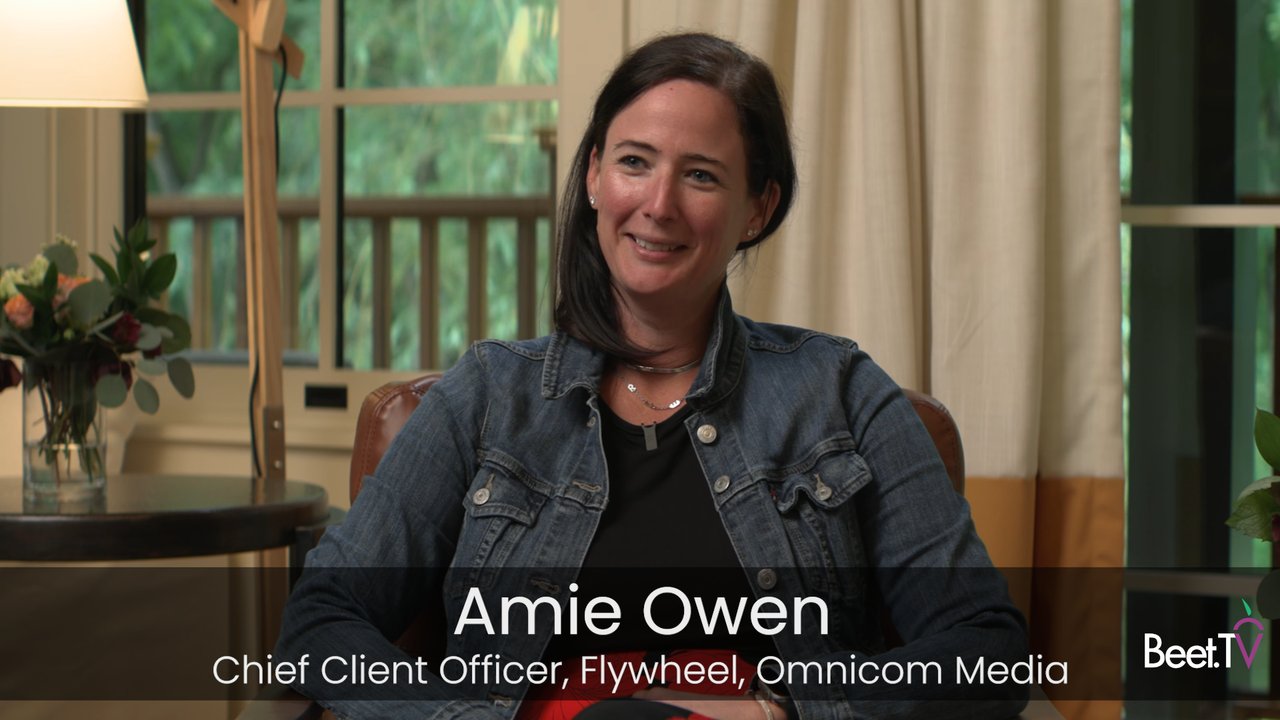
Flywheel’s Amie Owen: Crowded Retail Media Space Creates Costs Most Brands Don’t Notice

AMENIA, NY — Three hundred retail media networks sounds a lot like abundance. But while a rising tide tends to lift boats, the proliferation of RMNs has overwhelmed many brands. That can result in spreading budgets too thin to make impact anywhere while generating hidden data expenses that rarely surface in a media plan.

“There are about 300 plus retail media networks. It’s really hard to actually siphon off money to support all of the different retailers in the same way,” Amie Owen, chief client officer at Flywheel, told Beet.TV contributor David Kaplan at Beet Retreat Berkshires. “There is money that it takes to have the data talk to each other, to pipe the data to where it needs to be, and then also understand the data itself. There’s a lot of costs that are probably under the hood that a lot of people don’t see.”

Flywheel, Omnicom’s commerce arm, positions its Total Commerce framework as the answer, though Owen is candid that the industry still has considerable distance to travel before integration fully delivers on its promise.

Total Commerce goes beyond media

The Total Commerce framework encompasses technology, media, creative, retail readiness, and AI rather than defaulting to media as the primary lever. It’s a distinction Owen argues most commerce conversations still miss.

“A lot of people just default to the media aspect of it. Media is just the icing on the cake,” Owen said. “One hand can’t work without the other. We’re making sure that we’re checking all of the boxes for setting yourself up for success when it comes to commerce.”

Path replaces funnel

Rather than filtering clients through a traditional funnel framework, Flywheel maps brand investment against actual consumer paths to purchase. It’s an approach that changes depending which networks and tactics make sense for each brand, she added.

Owen’s example is instructive: a candy bar brand’s consumer is driving to work, stopping for gas, walking inside to pay. Understanding that physical path determines which retail media tactics actually reach that person at the right moment.

“It’s about that path versus the old terminology of funnel. That’s kind of how we’re taking a lot of what we’re learning from a data and tech standpoint and really tying it together,” Owen said.

Integration is real, but uneven

Asked how close the industry is to delivering on its Total Commerce promise, Owen offers an unusually direct assessment.

“Is it integrated? Yes. Is it a little clunky? Sure. But we’re still trying to figure it out,” Owen said. “We’re talking the talk, we’re seeing a little bit of the walk, but we haven’t really necessarily gotten to where we want to be.”

Retail media will keep growing regardless, she added. That reality that creates both ongoing opportunity and ongoing complexity for brands and agencies alike.

Understanding intelligence

Flywheel’s differentiation rests on combining owned media buying and activation technology with specialized teams across supply chain, retail operations, market intelligence, and media. Those are capabilities Owen argues no single-focus provider can replicate.

“We have specialized teams that understand supply chain, that understand intelligence when it comes to trends in the marketplace, that understand retail operations, media. Understanding all those different pieces together really does help drive home what retailers should be looking for, what clients should be looking for,” Owen said.
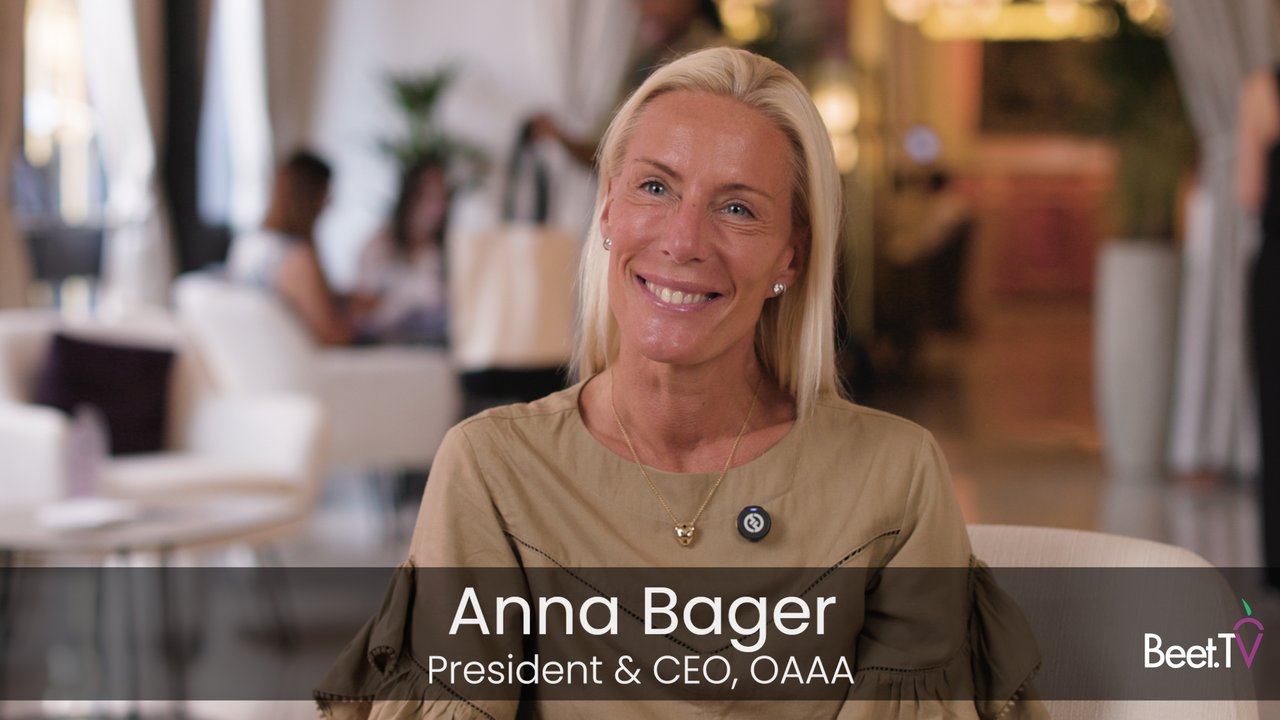
Out-of-Home Advertising Shines as ‘Human Medium’: OAAA’s Anna Bager

CANNES, France – Anna Bager, president and chief executive of the Out of Home Advertising Association of America, arrived at the Cannes Lions International Festival of Creativity with a reassuring message for advertisers: The public still goes outside.

In an interview with Beet.TV contributor David Kaplan, Bager described out-of-home advertising as the “human medium.” It reaches people during their daily routines through billboards, transit displays, digital screens and other formats that do not require a password or a plea to accept cookies.

“We’re a medium you can’t skip, we’re a medium you can’t block,” Bager said. She added that out-of-home advertising has “very little, if any, fraud.”

That positioning highlights one of the sector’s clearest advantages. Its audience exists in physical places, rather than somewhere inside an algorithm’s mysterious attic.

“Our audiences aren’t going anywhere,” Bager said. “They’re there in real life and they’re human.”

Bager said consumers also tend to regard the medium as useful rather than disruptive. Outdoor displays can carry advertising, hurricane alerts and notices about missing people. In other words, the same screen that promotes a soft drink may later help the public prepare for a storm.

Measurement gets a long-awaited makeover

Kaplan noted that measurement has been a persistent challenge for the industry. Bager acknowledged the problem, though she said it is becoming easier to solve.

“It’s not as hard to measure anymore as it used to be,” she said.

The Out of Home Advertising Association of America is working with Geopath, the industry organization that provides audience measurement, to modernize the system. The groups spent about a year consulting advertisers, agencies and technology companies about what they needed.

That work led to the selection of Ipsos as the pilot partner for a new measurement system. Testing is underway, with a revamped product expected in 2027.

The goal is to improve audience measurement and make out-of-home results easier to compare with other media. The system is also expected to support programmatic transactions, attribution and media mix modeling.

That could help the sector escape its old reputation as the charming but difficult member of the advertising family.

Billboards want a seat at the performance table

Bager said out-of-home advertising should no longer be treated only as a tool for splashy product launches or brand campaigns.

“Advertisers should also think about it as a performance medium,” she said.

Better automation and data can allow buyers to reach audiences across formats and coordinate outdoor placements with television, retail media and digital campaigns. A message might appear near a store, follow a major television push or change according to the location and moment.

Digital out-of-home formats also give advertisers more freedom to update creative work quickly. Bager said that ability can make a campaign more relevant to consumers where they are, which remains a useful concept even after the advertising industry has invented several thousand alternative ways to say it.

Pharma and football offer room for growth

Pharmaceutical advertising represents a major opportunity, according to Bager. Television viewers already encounter a steady stream of drug commercials, often accompanied by disclaimers long enough to develop their own side effects.

Out-of-home formats can extend those campaigns beyond television. Bager said the industry has also found ways to handle disclaimers that previously made pharmaceutical advertising difficult.

Major cultural and sporting events present another promising market. Bager pointed to FIFA matches in the United States, saying inventory had nearly sold out in host locations.

“That’s really where Out of Home hits above its weight, around those types of events,” she said.

The appeal is straightforward. Large events gather people in shared spaces and advertisers tend to follow, preferably with signs large enough to be seen from another postal code.

Cannes becomes the industry’s favorite exhibit

Bager argued that out-of-home advertising belongs within broader media plans, rather than being reserved for occasional stunts. It can build brands, support product launches and drive measurable action.

Cannes Lions itself offered her strongest visual aid.

“Cannes is just one large Out of Home execution, let’s just face it,” Bager said.

She cited the festival’s billboards, signage, activations and branded experiences. Many promoted products unrelated to outdoor advertising while relying heavily on outdoor advertising to get noticed.

For an industry seeking a larger share of media budgets, that is a convenient punchline. Advertising executives may debate the value of out-of-home media inside conference rooms, then step outside and walk directly into the evidence.

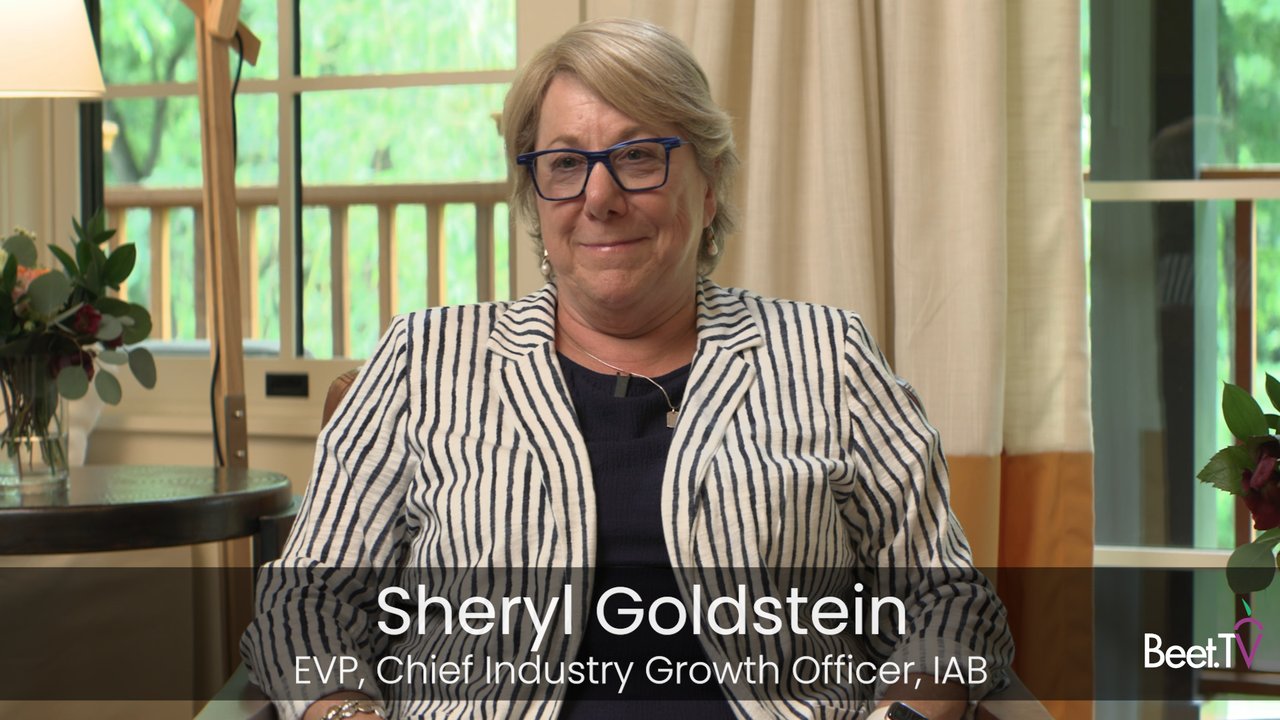
Creators, Brands and AI Must Grow Up Together: IAB’s Sheryl Goldstein

AMENIA, NY – Creators may have started with ring lights and a dream. Now they are becoming media companies, whether or not they have learned the finer points of viewability reports.

Sheryl Goldstein, executive vice president and chief industry growth officer at the Interactive Advertising Bureau (IAB), said creators are reshaping how marketers reach consumers. She spoke with Beet.TV contributor David Kaplan during the Beet Retreat Berkshires.

“The IAB is doubling down on creators,” Goldstein said. The organization launched a creator board this year with senior executives from leading companies in the sector. Its goal is to help creators and advertisers work together at scale without sanding away the authenticity that made creators valuable in the first place.

Creators meet the media business

Creators can build devoted audiences, but many are still small businesses learning how established media operates. Goldstein said they may lack experience with measurement, viewability and brand safety. Brands, meanwhile, see an unusually short path from product discovery to purchase.

“Creators can be the path of least resistance to go from inspiration to action,” she said.

That influence gives brands an opportunity to reach consumers through voices they already trust. The practical challenge is connecting large advertisers with independent creators in a consistent way. Buying creator media cannot always resemble buying a television schedule, even if a marketer would dearly love another spreadsheet.

Goldstein described creators as “a next gen publisher.” The IAB is working to give both sides the standards and common language needed to turn that emerging category into a more mature market.

AI redesigns the kitchen and the campaign

Artificial intelligence is also lowering the cost of producing and adapting creative work. A single piece of content can be translated, placed in new settings or modified for different audiences with remarkable speed.

Goldstein offered a domestic example. She has used AI to experiment with kitchen designs, including a New York Knicks-inspired look after the team won.

“It’s allowing a lot of creativity at the press of a button,” she said.

Creators can use the technology to explore new forms of expression without requiring blockbuster production budgets. Brands can make several versions of an advertisement for different creators instead of hoping one campaign fits everyone like an ill-advised one-size-fits-all poncho.

Goldstein said AI gives creators “a tremendous amount of flexibility at a minimal cost.” It also allows brands to reduce production expenses and tailor creative work more precisely.

Commerce develops a buy-now reflex

Commerce media is expanding beyond retail websites as companies put their first-party data to work across connected television, podcasts and audio. Goldstein said hundreds of businesses can now operate as commerce media players because they have valuable customer data.

Live commerce is another source of growth. Creators can demonstrate and sell products in real time through services such as Facebook Live and TikTok. The distance between “That chair looks nice” and “Why is a delivery truck outside?” keeps getting shorter.

“We’re seeing commerce becoming almost like an immediate thing where I see something, I can buy it now,” Goldstein said.

AI can help shoppers picture a chair in their living room or test another color before purchasing. Large language models can also gather options that once required visits to several websites. Goldstein cited Anthropic’s Claude as a tool she uses to find backsplash ideas.

The result is a faster buying process with fewer points of hesitation. For brands, she said, that creates a substantial opportunity.

Transparency keeps trust alive

As creator marketing, commerce media and AI converge, Goldstein sees transparency as the essential standard.

“Transparency is key no matter what,” she said.

Consumers want to know who is collecting their data and how it is being used. They also want to understand whether content came from a person or an AI system. Buyers and sellers need consistent definitions, measurement practices and governance.

“Transparency leads to trust,” Goldstein said. “And trust is critical across the board.”

Creators depend on authentic relationships with their audiences. Brands rely on consumer confidence. Goldstein warned that if the industry cannot establish responsible practices, regulators will do it instead. She pointed to the European Union’s General Data Protection Regulation and the California Consumer Privacy Act as examples of government intervention.

The IAB’s boards and working groups are developing standards for disclosure, terminology and measurement. The organization is also working with the Association of National Advertisers (ANA) and the American Association of Advertising Agencies (4As) on AI, commerce and creator-economy issues.

Don’t automate away the next generation

Looking toward 2027, Goldstein expects AI to remain “the topic du jour.” Still, she urged industry leaders to slow down long enough to agree on use cases, terminology and governance before everyone discovers they have built five incompatible solutions to the same problem.

She also challenged companies to reconsider old workflows. Rather than dropping AI into familiar processes, leaders should ask how they would design their businesses from scratch with today’s tools.

Her sharpest concern involved entry-level employment. Junior workers often learn the advertising business through routine tasks such as monitoring and optimizing campaigns. Those jobs can be tedious, but they teach people how systems succeed and how they fail.

“I just worry about the future leadership of our industry if we don’t bring young people in and get them involved and hands-on and learn the business,” Goldstein said.

Replacing every junior task with AI may improve efficiency today while leaving tomorrow’s managers without practical experience. An AI agent may never complain about late-night campaign reports, but it also will not become the seasoned executive who knows why the numbers look suspicious.

For Goldstein, the industry’s assignment is clear: embrace creators, use AI imaginatively and build common standards before the machinery outruns the people meant to operate it.


Posted in Uncategorized

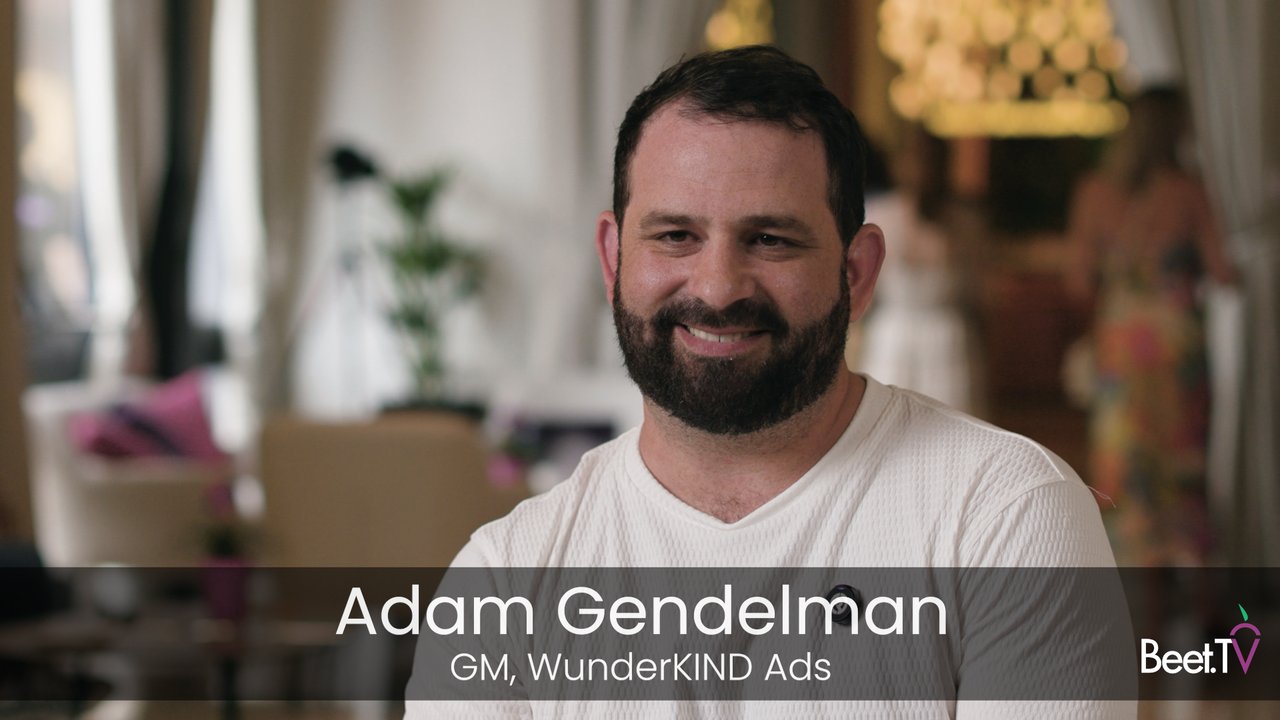
Wunderkind’s Adam Gendelman: Pause Ads Drive Twice The Attention Of Standard 60-Second Spots

CANNES, France — When a viewer pauses a TV show they’re streaming, they’re still in the room. They’re still looking at the screen, still mentally engaged. That moment, it turns out, is far more valuable to advertisers than the traditional commercial break viewers routinely use to check their phones or go to the fridge.

“Pause ads when shown versus a 60-second in-stream ad drove two times higher attention and three times more presence,” Adam Gendelman, General Manager of Wunderkind Ads, told Beet.TV contributor David Kaplan at Cannes Lions. “When the in-stream ad goes on or that commercial break, you usually pick up your phone or you walk out of the room. And that’s exactly what the data showed.”

The findings come from a TVision-measured study spanning 40 advertisers across 15 verticals, establishing the first serious attention benchmarks for pause ads against traditional in-stream formats.

All verticals, not just auto, outperforms

Automotive registered the most dramatic results — 3X to 4X attention lift, according to Gendelman. The lift was driven by the format’s full-page creative canvas that suits longer purchase cycles requiring deeper product research, he noted.

“Context is really king there. When you think about someone getting served an automotive ad, they want to research the product more and that’s what that creative canvas can provide,” Gendelman said. “Whether it’s a carousel or has a QR code, we do see typically an automotive ad perform better, or even a retail or travel ad where a user has to do a little bit more research.”

Notably, every vertical in the study outperformed expectations, suggesting the attention advantage is structural to the format rather than category-specific.

Programmatic solves standardization problems

Pause ads have historically required one-to-one direct deals with each app and OEM, creating operational friction that limited buyer access. Wunderkind’s programmatic approach delivers the format across all apps and OEMs through a single deal ID and single creative.

“What we’re doing is providing scale across any app and OEM in a uniform way. All users or buyers have to do is traffic it,” Gendelman said.

The backend technology effectively creates standardization where none exists in the broader ecosystem, giving media buyers programmatic access to inventory that previously demanded bespoke direct relationships.

Premium inventory, programmatic efficiency

The study ran across Plex, Philo, and DISH — household name streaming environments that counter the common perception that programmatic inventory means lower quality placements.

“The common misconception of programmatic is that buyers think they’re getting less quality inventory. But what the study showed is that programmatic inventory and the access we’re giving to all these apps and OEMs are the same value as going to these apps directly on a one-to-one basis,” Gendelman said.

Pharma Ads Are Stuck in a 60-Second Rut. One Genentech Executive Thinks He Knows the Way Out

CANNES, France — A car jack branded as Viagra, a botox campaign that never describes the product overtly, a GLP-1 drug reminscent of the Mac-versus-PC guys. Picture a pharmaceutical ad, and these wouldn’t be top of your list – but that, according to one industry exec, is precisely the problem.

The pharmaceutical industry’s direct-to-consumer advertising has long been defined by a recognizable formula: efficacy claim, then 30 seconds of a voiceover listing side effects while someone walks a golden retriever on a sun-drenched beach. Regulatory requirements are real, but the creative paralysis they produce is, at least partly, self-inflicted, the argument goes.

That distinction matters more than ever as pharma’s media mix shifts under its feet, said Marc Minassian, head of media and innovation at Genentech, in a video interview with Beet.TV recorded at the Cannes Lions 2026 festival. He said The industry has confused the boundaries of what it must do with the limits of what it can do.

Regulatory ceilings, creative floors

FDA rules governing fair balance and risk disclosure have, over decades, trained pharma marketers to think inside a very specific box, Minassian said – one shaped almost entirely by the demands of 60-second linear television.

“Regulatory restrictions do place limits on what we can say and how we can say it,” Minassian said. “And I think it has created boundaries that we’re just comfortable staying within, particularly on linear television. The pattern is … pretty much all that pharma is able to do on linear TV in the span of 60 seconds.”

That comfort, he argued, is not the same as necessity. At Cannes, a Viagra campaign from Blue Brands – barred from direct-to-consumer pharma advertising in mainland China – won recognition for branding everyday consumer products, including a car jack, with the Viagra name.

Nothing about the pharmaceutical product was said. Brand awareness and sentiment were built anyway. “So brilliant,” Minassian said.

The ‘I Choose’ lesson

Minassian drew on his own experience to illustrate how the same logic can work inside the U.S. regulatory framework. While working on Botox Cosmetic, a boxed-warning medication, he was part of a team that wanted to break out of the 60-second mold and unlock shorter formats – 30s, 15s, and even six-second ads – without triggering the safety-language requirements that make short-form nearly impossible for claim-based creative.

“They found things that they could say that were factual and true and built positive sentiment for the brand without necessitating 60 seconds and 30 of that being safety language,” he said.

The resulting campaign, called “I Choose,” featured patients explaining why they chose Botox Cosmetic in brief, claim-free terms. The approach required a genuine partnership between brand marketers and creative agencies willing to explore the space outside conventional pharma creative conventions, he added.

A Cannes winner in the health category, “Loosen Your Tight Ends” – a campaign framing a blood test in unexpectedly playful terms – was the kind of output that kind of partnership can produce. “It takes that partnership in order to expand beyond what we think the boundaries are,” Minassian said.

The DTC challenger mindset

A new class of direct-to-consumer entrants, many built around GLP-1 weight-loss drugs and telehealth distribution, has been approaching pharma marketing from a fundamentally different starting point – consumer marketing first, regulatory constraints discovered later. That sequence, Minassian suggested, produces a different creative posture.

“They don’t have the legacy of what we can and cannot do, so they’re more inventive, more inclined to be innovative,” he said. That freedom has not gone unnoticed by regulators: the FDA sent warning letters to more than 30 telehealth companies in early 2026 over allegedly misleading claims related to compounded GLP-1 products. Minassian declined to comment on specific companies’ legal situations but was clear about the prerequisite for any creative risk-taking. “Your legal and compliance and regulatory folks need to go along for the ride with you,” he said. “They obviously need to accept that risk before you do it.”

The broader industry numbers suggest the creative rethink cannot come fast enough.

  • U.S. pharma digital ad spending is projected to reach $26.15 billion in 2026, up 5.6% year over year, according to eMarketer.
  • Traditional pharma ad spending – including linear TV – is forecast to fall 12.1% to $6.9 billion.
  • Prescription drug TV spending fell to $2.82 billion in the first half of 2026, down 5.3% from the same period a year earlier.

CTV first, not linear first

The structural argument Minassian made about creative also applies to media planning. Pharma, he said, has long operated with a “linear TV first” mentality, treating every other channel as secondary. That sequencing is increasingly out of step with where audiences actually are.

“There is a percentage of the population you will never reach if you’re only running linear TV ads,” he said. “There is a percentage of the population you will never reach if you’re only on social.”

The implication is that omnichannel planning – designing creative simultaneously for CTV, social, online video, and linear – is no longer optional for brands trying to reach prospective patients and their “connected populations” who are actively searching for medications.

That’s the complete “Added” column text from the revision diff — it runs through the “CTV first, not linear first” section and ends there, since the final paragraph on the page (the eMarketer CTV upfront-spending stat) was a pure deletion with nothing added in its place.

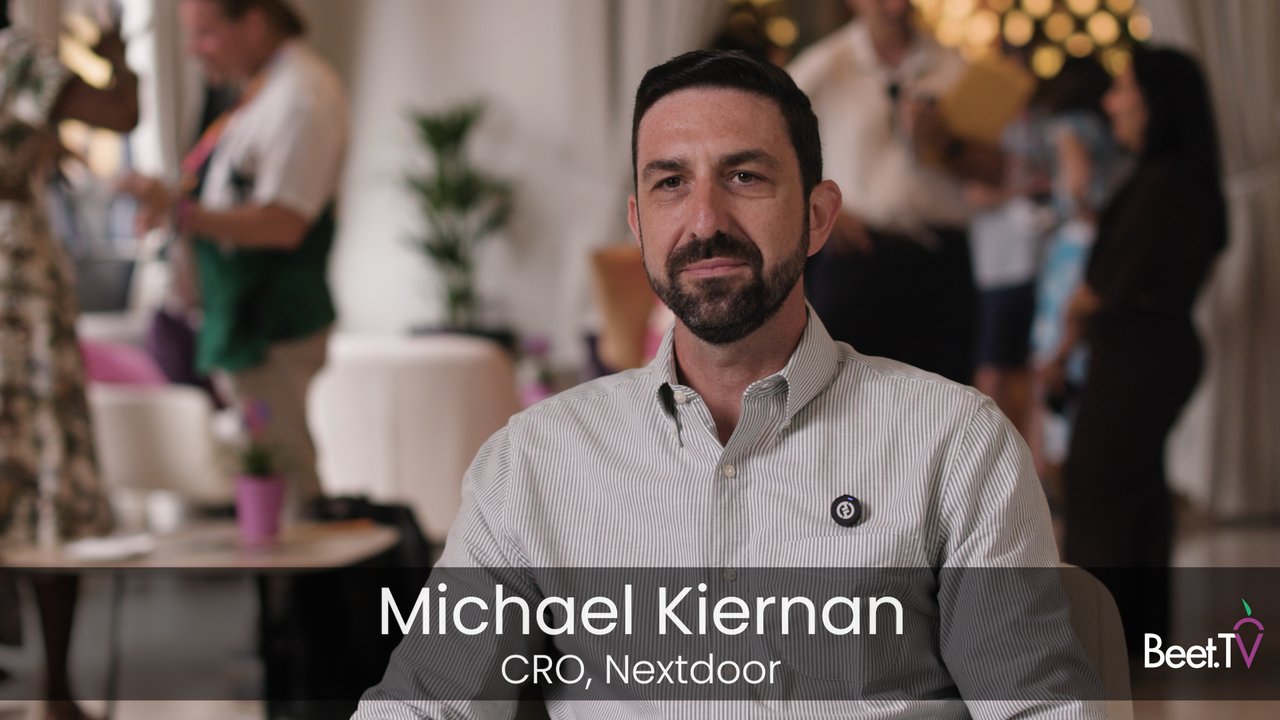
Nextdoor’s Michael Kiernan: Most Local Platforms Give You A Zip Code. Nextdoor Gives You The Neighborhood

CANNES, France — National advertising reach and neighborhood-level relevance have long been treated as competing priorities. Nextdoor’s pitch to brands is that the tradeoff is a false one.

“We’re not necessarily running local budgets. We’re helping you take your national message and really personalize it across every neighborhood, across the globe,” Michael Kiernan, CRO of Nextdoor, told Beet.TV contributor David Kaplan at Cannes Lions. “Most platforms, when they think of local, they give you a zip code. Nextdoor gives you the neighborhood. We’re in 350,000 neighborhoods.”

The distinction matters because of who is actually using the platform and what they are thinking about when they do.

Household state of mind

Nextdoor’s user base skews heavily toward heads of household: the person who signs the lease, manages home services, and makes major purchase decisions on behalf of the family. That audience is already in a neighborhood mindset when they open the app.

“When they’re using Nextdoor, they’re already in a neighborhood state of mind. They’re thinking about what’s going on in their home, around their home, in their community. Usually when you’re at home, that’s actually where you tend to make big decisions and big purchase decisions,” Kiernan said.

Sentiment data reveals what DMAs can’t

For categories like telecom, where word-of-mouth heavily influences switching decisions, neighborhood-level sentiment signals unlock intelligence that traditional geographic targeting cannot surface.

“Think about what a telco wants to know. It’s not how many people in this DMA are interested in my services? It’s what does each community think? Are they loyalists where maybe I have an advantage versus a competitor? Is there sentiment in the neighborhood related to perhaps an outage?” Kiernan said.

Dynamic local lifts engagement

Nextdoor’s dynamic local substitution capability goes beyond city-level personalization, weaving local imagery, community context, and neighborhood events into national creative to drive a 15% engagement lift over standard messaging.

“It’s not just making the message specific to your city. It’s using local imagery, local context, maybe events that are happening in the community. We weave that into the message to make it feel more personal. When it feels more personalized, it tends to resonate more,” Kiernan said.

Fifteen years of neighbor recommendations

Nextdoor has accumulated 15 years of neighbor-to-neighbor recommendations spanning local restaurants, hikes, preschools, and home services. It’s a trust layer that Kiernan said no star-rating system can replicate.

“A local recommendation we believe is the most trusted form of recommendation. The fact that it is coming from your neighbor — we believe that’s the most trusted form of recommendation you can find,” Kiernan said.

For brands that have historically had no way to participate in neighborhood-level word of mouth, that accumulated trust represents an entirely new channel for authentic consumer influence.

“The most important question is asking yourself where is the consumer when they’re making a decision? They tend to be at home. It’s when they’re the most focused on what truly matters to them,” Kiernan said. “Nextdoor is completely oriented around where people are and what they think around their home.”

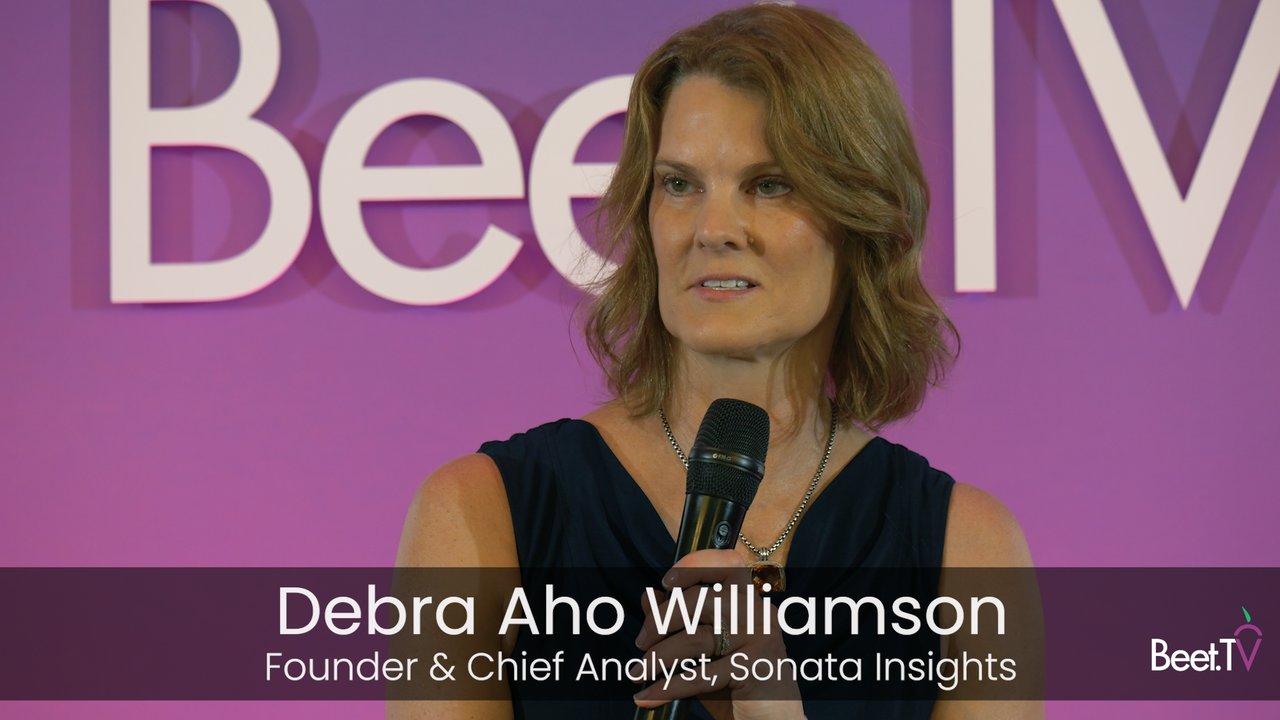
Chatbot Conversations Are Capturing Consumer Intent Before Brands Even Know It

CANNES, France — For decades, that moment of a consumer intent decision lived inside a search query. Now it’s happening inside a conversation with an AI assistant.

When a consumer asks ChatGPT whether a particular skincare product will work for their specific concerns, they’re revealing a bit more than a keyword ever could. This new kind of intent signal, once the exclusive province of search engines and social platforms, is migrating to conversational AI.

“The companies that own that path toward intent and can mine that intent and can understand that intent, whether it’s a conversational environment or whether it’s following the path back and forth from AI to other destinations, that’s where the future lies,” said Debra Aho Williamson, founder and chief analyst at Sonata Insights, during her AI Summit at the Beet.TV Leadership Sessions during Cannes Lions 2026.

A birthday morning revelation

Williamson, who spent 19 years at eMarketer building out the firm’s social media research practice, has turned her analytical lens toward how AI is reshaping consumer behavior. She shared a personal anecdote that illustrates the shift she’s tracking.

Standing in front of her mirror one Saturday morning before her birthday, Williamson noticed she wasn’t happy with how her eyes looked. Shortly after, she saw an Instagram ad featuring Gwyneth Paltrow wearing eye patches for the Goop brand. Rather than clicking through, she took her question to ChatGPT.

“I said:

‘Hey, ChatGPT, tell me about these Goop eye patches. Will they work for me? I have deep-set eyes, I have wrinkles, I have some circles under my eyes.’

“And what ChatGPT said was:

‘No, this is not the product for you. You need this other product that I had never heard of, The Ordinary Caffeine Solution.’

”I didn’t know what that was – never heard of The Ordinary, never thought about using caffeine, but I was intrigued.”

The intent signal black hole

Williamson eventually purchased the recommended products on Amazon. But the transaction data tells only a fraction of the story.

“The retailer at the end does capture the transaction. Amazon got a sale,” Williamson said. “But Amazon and no other media platform other than ChatGPT got any signal, any intent signal of what I was interested in doing.”

What are the implications here? ChatGPT learned that Williamson had a concern, was open to new products, and was ready to buy. That progression of intent, which once would have been captured across multiple search queries and retargeting cookies, happened entirely within a single conversational thread invisible to traditional ad platforms.

AI advertising is scaling, but slowly

The shift Williamson describes is beginning to attract real money. US AI ad spending will more than double over five years to $68.25 billion in 2030, according to Emarketer’s 2026 forecast. However, the research firm notes that in 2026, more than 80% of AI advertising will appear adjacent to AI content rather than inside chatbot conversations themselves.

Chatbot-native ad spending remains a small but fast-growing category. Emarketer projects AI chatbot ad spending will rise 1,641% in 2026, but only to $0.96 billion. The larger near-term opportunity sits in AI search-adjacent advertising, forecast to grow 152% to $26.42 billion this year.

Following the consumer, following the money

Williamson, who launched her AI Ad Economy Substack earlier this year, argues that marketers need to pay attention to where consumer behavior is heading, not just where budgets currently sit.

“I also want to encourage you to just think about the consumer,” she said. “Think about how consumer behavior is changing. Think about how your advertising is reaching them and what signals you are able to adapt to.”

She acknowledged that advertising within AI platforms like ChatGPT isn’t right for every brand. But she emphasized that the underlying behavioral shift is real and durable.

“When consumer behavior changes and technology changes, marketing changes too,” Williamson said. “And following the consumer is going to, I think, help you to follow where the money is going as well.”

Posted in Uncategorized

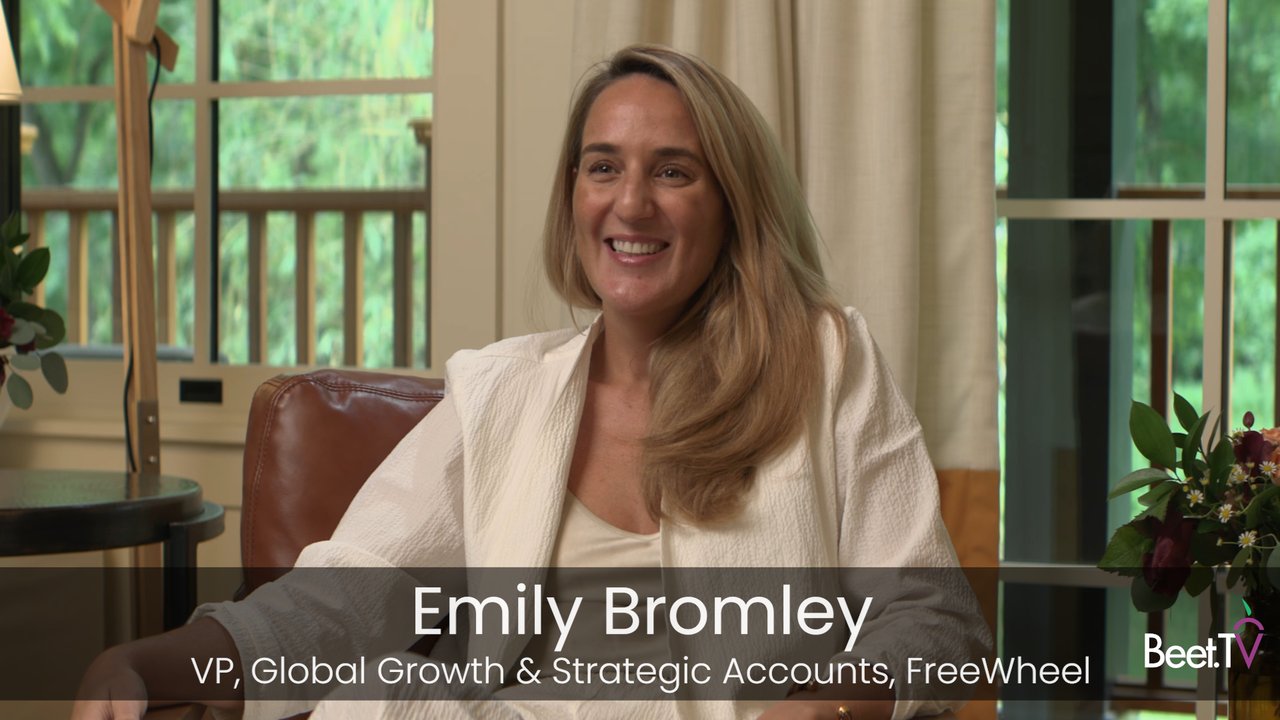
FreeWheel’s Emily Bromley: Creators, Commerce, And Live Sports All Meet In Premium CTV

AMENIA, NY — FreeWheel is aiming to sit at the center of CTV’s absorption of three of the moment’s main drivers of marketing and media growth. But that goal is not without challenges. Still, the streaming video ad platform feels it’s been preparing for this triumvirate for years.

“Creators, commerce, and live sports all have one thing in common right now, and that is premium CTV. It’s where the action is, and that’s where FreeWheel sits,” Emily Bromley, VP of Global Growth and Strategic Accounts at FreeWheel, told Beet.TV contributor David Kaplan at Beet Retreat Berkshires. “Our tagline is to make ‘CTV easy to buy and sell.’”

That mission spans three distinct but increasingly interrelated opportunities that Bromley sees reshaping how brands access premium video audiences.

Creators go programmatic

Top global creators have evolved into what Bromley calls new-age production studios, with professionally produced content spanning blogs, podcasts, recipes, and games distributed across platforms beyond traditional walled gardens.

“Brands and advertisers are looking to monetize or have access to those high-value audiences in new ways,” Bromley said. “That’s really where FreeWheel unifies the space, maximizes the opportunity for both the creator and the brand.”

CTV native opens new inventory

FreeWheel has helped develop programmatic specs for CTV native home screen formats through IAB collaboration, democratizing access to inventory that previously required direct sales relationships.

The format goes beyond standard 15 and 30-second spots, enabling sequential storytelling that reaches viewers in discovery mode before following them into the commercial break.

“CTV native goes beyond the traditional ad in CTV. It enables sequential advertising in a contextual environment that captures a viewer perhaps at a different stage, when they’re in discovery mode,” Bromley said.

Commerce data meets the point of sale

FreeWheel functions as what Bromley describes as the point of sale for CTV advertising, pairing ad delivery data with commerce signals to help brands hit measurable purchase outcomes.

“In the CTV ecosystem, FreeWheel is the point of sale for advertising, for that CTV ad delivered to that viewer watching that show at that moment in time. That pairs very nicely with commerce data to empower those campaigns to hit the KPIs that brands and advertisers are looking for,” Bromley said.

No do-overs in live sports

Live sports remains one of the last remaining CTV opportunities to capture large audiences at genuine scale, combining emotional sentiment and cultural resonance that commands premium investment from both publishers and advertisers. And advertisers have just one chance to get their messaging right.

“Live sports is one of the last few remaining opportunities for brands and marketers in CTV to capture large audiences at scale for that very valuable, unique moment in time. The execution for that has to be flawless,” Bromley said.

AI Is Breaking Advertising’s Favorite Hobby of Putting People in Boxes: GumGum’s Laura Foster

CANNES, France — Marketers have spent years treating consumers like neatly labeled storage bins. Business traveler. Leisure traveler. Luxury shopper. Bargain hunter. Put a person in a segment, check a box and call it strategy.

Laura Foster, senior vice president of global marketing at contextual advertising company GumGum, thinks that approach is overdue for a reality check.

Speaking with Beet.TV contributor David Kaplan at the Cannes Lions International Festival of Creativity, Foster said marketers have misunderstood the very concept of mindset.

“The reality is mindset is something that shifts continuously,” she said.

That sounds simple enough until you remember that most marketing plans are built months in advance and often rely on static audience categories. Foster’s view is that consumers change faster than the spreadsheets designed to describe them.

The travel intender who may need a vacation from vacation

Foster took particular aim at audience segmentation, one of advertising’s longest-running traditions and favorite security blankets.

“I love that you brought up segmentation,” she told Kaplan, before explaining that marketers often apply rigid yes-or-no logic to behavior that refuses to cooperate.

Her example was travel.

“Am I a travel intender? Always. But should I always be in the segment of travel intender? No.”

Whether someone wants to travel, she said, can change based on something as random as a stressful email, family obligations or the realization that a holiday wasn’t nearly as relaxing as advertised.

“My idea of do I want to travel or not travel changes by how mean the last email I received was,” Foster said.

In perhaps the most relatable insight to emerge from Cannes this year, she added that after spending time with family during the holidays, many people discover they need “a vacation for my vacation.”

Somewhere, an airline marketing executive is probably turning that into a campaign slogan already.

AI arrives with a crowbar

For decades, advertisers could only approximate consumer intent through broad categories and historical behavior. Foster believes AI changes the equation because it can process signals humans never could in real time.

“If I asked you as a human being to understand my mood, my emotion, what I’m reading, what I’m doing” and combine all of that with demographic information before serving an ad, she said, “your brain’s going to explode.”

That, she argued, is why mindset marketing becomes practical only in the AI era.

Rather than relying exclusively on pre-assigned audience buckets, marketers can begin responding to what consumers are actually doing, reading and experiencing in the moment.

“I think AI makes it easier to ignore a segment,” Foster said.

That statement may cause minor chest pains among anyone whose career depends on maintaining audience taxonomies.

Stop treating segmentation as a deity

Foster wasn’t calling for the complete elimination of audience data. She acknowledged that segments can still be useful. Her objection is to treating them as the final answer.

“The only way to do that is to stop using segmentation as your god,” she said.

The remark landed as one of the sharper observations in a week filled with discussions about AI, personalization and consumer relevance.

Her broader argument is that marketers have become too comfortable with categories because categories are tidy. Humans, unfortunately for marketers, are not.

The next chapter of personalization

Foster also pushed back against the industry’s tendency to chase ever-more-granular personalization.

Years ago, dynamic creative optimization promised advertisers the right person, the right message and the right moment. Foster said the goal today is less about generating endless variations of ads and more about finding the appropriate context for a consistent brand message.

“I’m interested in how do I take my brand message and make it find the right moment for that individual,” she said.

That’s a notably different ambition from creating millions of hyper-customized ads featuring someone’s location, favorite snack and probable mood after a difficult Tuesday.

Even AI doesn’t have one right answer

Looking ahead, Foster expects marketers to become more comfortable with ambiguity as they gain experience using AI tools themselves.

At Cannes, she said, one recurring question has been: What’s your favorite AI tool?

Her answer is usually another question.

“The real question is for what?” Foster said.

For quick tasks such as writing emails, she prefers ChatGPT. For more strategic work, she said she often turns to Claude. The point isn’t which tool wins. The point is that different situations require different approaches.

“I think if we point ourselves too distinctively into there is a right or wrong answer, a yes or no answer, we miss the beauty of the end,” Foster said.

That may be an uncomfortable message for an industry that loves certainty, dashboards and categories.

Then again, uncertainty appears to be having a pretty good year.

Streaming Ads Are Powerful at Neighborhood Level: Amazon’s Jenn Donohue

CANNES, France – Local advertising used to mean buying airtime around the evening news and hoping the right customers were watching between weather updates and ads for personal-injury lawyers. Amazon wants to give the business a streaming-era upgrade.

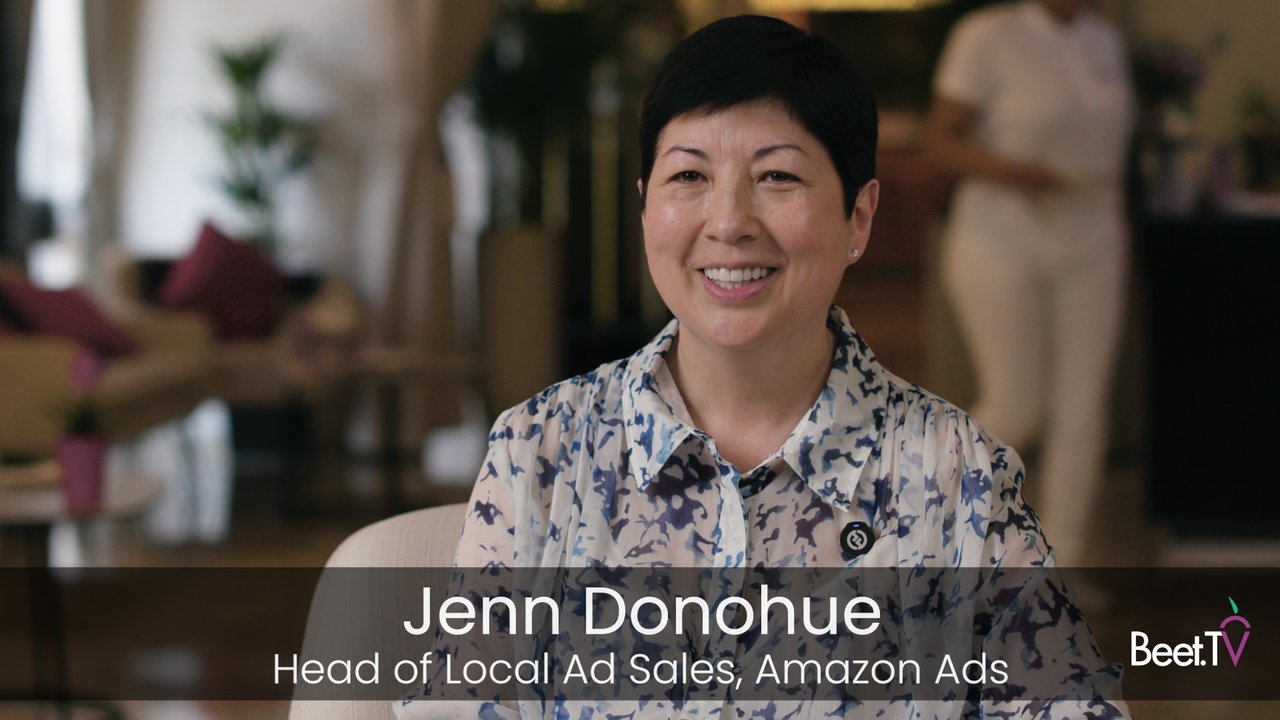
Jenn Donohue, head of local advertising sales at Amazon, discussed the growing overlap between national media strategies and local targeting in an interview with Beet.TV contributor David Kaplan at the Cannes Lions International Festival of Creativity.

Donohue said local campaigns have historically been planned separately from national advertising. Amazon sees an opportunity to bring those efforts together, using its technology to direct campaigns toward specific markets across the United States.

National scale, local precision

Connected television and streaming were initially viewed as national advertising channels. Donohue said that perception is changing as smaller businesses gain access to tools once reserved for major brands with national media budgets and presumably conference rooms large enough to require their own ZIP codes.

“I’m really excited about where we are today,” Donohue said . “I’ve spent my whole career in local media.”

Local advertisers of all sizes can now use many of the same streaming capabilities as national marketers, she said. Amazon DSP combines those capabilities with geographic insights and analytics to help businesses reach audiences in particular cities, states or regions.

That can allow a national campaign to retain its overall scale while placing more weight behind markets that matter most. The approach also gives regional and local businesses access to streaming inventory without requiring them to advertise to every household from Bangor to Bakersfield.

Location data tied to business goals

Geographic targeting becomes most useful when it supports an advertiser’s actual business objectives, Donohue said. Those goals may include selling inventory, reaching consumers near particular stores or generating awareness in areas where the business operates.

“It’s really important when you think about small, medium-sized businesses or regional businesses or national brands that are geotargeting in hyperlocales,” she said.

Amazon works with advertisers to find consumers who may generate store visits, leads or brand awareness. In other words, the objective isn’t merely to locate someone on a map and triumphantly declare victory.

The targeting should connect with key performance indicators. A regional chain doesn’t need to impress viewers hundreds of miles from its nearest location. A bank probably doesn’t need to advertise checking accounts in a state where it has neither branches nor customers, no matter how attractive the CPM looks on a spreadsheet.

Local demand spans industries

Amazon is seeing interest from businesses across a wide range of categories, Donohue said.

“We see all sizes of advertisers,” she said.

Those advertisers include national brands concentrating spending in priority markets as well as regional banks, healthcare providers, lotteries and other local businesses. Amazon works with some local advertisers directly and reaches others through channel partners.

Traditional media companies also can add Prime Video inventory to their offerings, extending Amazon’s reach into more communities. That provides local advertisers with another route into premium streaming environments while allowing established media sellers to offer something beyond the usual television package.

Streaming adds a one-to-one dimension

Traditional local television has long offered broad reach. Streaming adds greater precision and a more direct relationship with viewers, who choose what they want to watch and when they want to watch it.

Donohue described this as a new combination of on-demand viewing, premium content and local television’s established ability to reach large audiences.

“Now we’re able to include precision and reach,” she said. “And that in combination has been really helpful for local advertisers.”

The result is a local television proposition that no longer depends entirely on reaching a large crowd and hoping the right people are somewhere inside it. Amazon is betting that advertisers would prefer to know which neighborhood that crowd lives in too.

Agentic AI will Put Media Budgets In Motion: Dentsu X’s Brad Stockton

AMENIA, NY — Media buyers have spent years teaching machines to follow their instructions. Agentic artificial intelligence promises to let the machines make more decisions themselves, which sounds wonderfully efficient until someone remembers that the machines will be spending actual money.

Brad Stockton, evp, head of investment at Dentsu X, discussed the emerging technology with Beet.TV contributor David Kaplan at the Beet Retreat Berkshires. Stockton said agentic AI could improve the speed of campaign optimization while helping advertisers allocate impressions across channels and media partners.

“It’s really about the speed in which we’re able to make optimizations into our practice,” Stockton said.

More signals enter the buying equation

Agentic systems are designed to act with greater autonomy than traditional programmatic tools. Instead of waiting for a human to initiate every adjustment, the technology can evaluate signals and respond while a campaign is running.

The potential results will become clearer over the next three, six, nine and 12 months as the technology reaches greater scale, Stockton said. Buyers will examine cross-platform and cross-channel performance to determine the right mix of impressions for each partner.

Agentic AI also could give buyers more data points for deciding where media dollars should flow.

“It’s going to have more data points and signals at our fingertips to then start putting that right impression to the right person at the right time to deliver the right outcome,” Stockton said.

Asked which platforms and formats stand to benefit, Stockton offered the most honest answer available when discussing a rapidly developing technology: “We’re going to find out.”

Partners that deliver the most efficient results should receive more impressions. The machines may be new, but the desire to get more for the client’s money remains comfortably old-fashioned.

Humans keep their hands near the controls

Greater autonomy introduces an obvious question for advertisers: What happens when an AI system makes a poor decision at machine speed?

Stockton said agentic buying will continue to require human intervention as agencies build confidence in the technology. Brand-safety rules must define where advertising can and cannot appear, while exclusion lists and other protections need to be applied correctly.

Humans will audit campaigns before and after they run. That should provide some comfort to brands that do not want an autonomous buying system discovering an exciting new audience in the comments beneath a conspiracy video.

“Today it’s going to be very much manual oversight, with the future really being more about auditing on a consistent basis,” Stockton said.

The long-term vision gives agentic systems more freedom to make and execute buying decisions. For now, however, the robots will have supervisors.

Budgets become more fluid

Agentic buying may require advertisers to loosen rigid channel budgets. Rather than instructing an agency to spend fixed amounts in connected television, social media or display, brands could define the desired outcome and let spending move toward the best-performing channels.

Those outcomes might include awareness, consideration, a specific action or a completed sale. Stockton said agencies must work with clients to establish clear performance indicators and determine the role of each channel within an omnichannel campaign.

“We should be optimizing towards that biggest outcome,” he said.

Media partners that deliver stronger results would be allowed to clear more impressions. That approach could make budgets more responsive, though perhaps less reassuring to anyone emotionally attached to a beautifully color-coded allocation chart.

Getting comfortable with discomfort

The biggest change may be psychological rather than technical. Brands and agencies will have to trust systems that can shift investment across channels instead of following a fixed spending plan.

“The first is we have to get comfortable being uncomfortable,” Stockton said.

That means allowing greater fluidity across omnichannel campaigns while maintaining a clear definition of success. Data and technology can then guide spending toward the most efficient results for clients.

Agentic AI may eventually make media investment faster and more flexible. It will not eliminate the need for judgment. It may simply move humans from pressing every button to checking afterward whether the machine pressed the right ones.

Posted in Uncategorized

Canvas Worldwide’s Paul Woolmington: The Science and Religion of Fandom Rests on Community

CANNES, France — Canvas Worldwide’s years-long look at sports marketing’s unique potency implores brands that treat tapping into fandom  as a media buy rather than a community relationship will tend to miss the mark.

“The parallel between fandom and, without being blasphemous, religion — this congregation, the notion of entities that can sometimes be the church, but the congregation are really the fans,” Paul Woolmington, CEO of Canvas Worldwide, told Beet.TV contributor David Kaplan at Cannes Lions. “The one thing that can bring people together is being a part of a fan group or feeling a part of a community that goes very deep.”

Woolmington’s comments draw from The Fandom Advantage, Canvas Worldwide’s latest sports marketing report, which examines the science, benefits, and orchestration of fandom across brand, platform, league, and media company perspectives.

Fandom as community

The research frames fandom less as a media context and more as a social infrastructure. It breaks down fandom’s components as multi-generational and simultaneously analog and digital. Those elements are why sports are capable of uniting strangers in stadium stands who share nothing except the game in front of them.

“If you’re in the stands of a Kansas City Royals game or at a World Cup match, you can literally be cheek by jowl with people from other worlds, other experiences, that share one beautiful thing,” Woolmington said.

For brands, that communal power creates both opportunity and obligation. Buying impressions through sport is legitimate. Earning permission to genuinely participate in that community is something else entirely.

Earning permission

Woolmington speaks of a sharp distinction between transactional sports sponsorship and authentic fandom integration. And the behaviors that enhance the fan experience at every level create the credibility that media spend alone cannot manufacture.

“You really have to think about permission. How do you earn this permission in the short, medium, and long term? How do you connect a big anthemic idea, like a big sponsorship, to grassroots?” Woolmington said. “[It comes down to a brand’s] behaviors; what you do is as important as what you say.”

Naturally, some brands carry more permission than others. But the framework applies universally, Woolmington said, from pouring rights for beverage brands to far more nuanced brand-community relationships built over years.

Entry points exist for every budget

The new sports media landscape has expanded well beyond America’s traditional big four leagues around football, basketball, baseball, and hockey, creating viable entry points for brands at every budget level and audience target.

The Fandom Advantage report highlights women’s volleyball as a particular opportunity. It’s  growing rapidly across college programs and delivering what Woolmington describes as an exponentially stronger impact when audiences see themselves represented.

“A lot of people are saying, ‘We’ve missed the boat on women’s sport.’ No, you haven’t. Women’s sport has exponentially grown in the last few years and it will continue to grow,” Woolmington said. “You can get even more bang for buck in some of these sports.”

Elsewhere, Formula One, golf, and an NFL now distributed across 12 platforms round out a landscape where, as Woolmington puts it, there is now an entry point for almost every brand.

Long-term strategy beyond the campaign

The brands extracting the most value from sports partnerships are those who have stayed in them longest. Sixteen-year brand-franchise associations are worth exponentially more today than they were at signing.

“Be purposeful. Think about your long-term strategy. Think about it not campaign by campaign,” Woolmington said. “Think of all the techniques you’re going to use — when and how. But the important thing is we’ve got great entry points for almost every brand today.”

When Robots Buy Media: Future Maps the Agentic AI Shift in Programmatic

CANNES, France — The robots are coming for the media buyers – and the sellers, too.

Agentic ad buying and selling represents “one of the biggest things” to hit programmatic advertising in the past 15 years, according to one senior publishing executive. The shift could alter how digital advertising is traded, potentially eliminating the benefits of economies of scale that have defined the industry for decades.

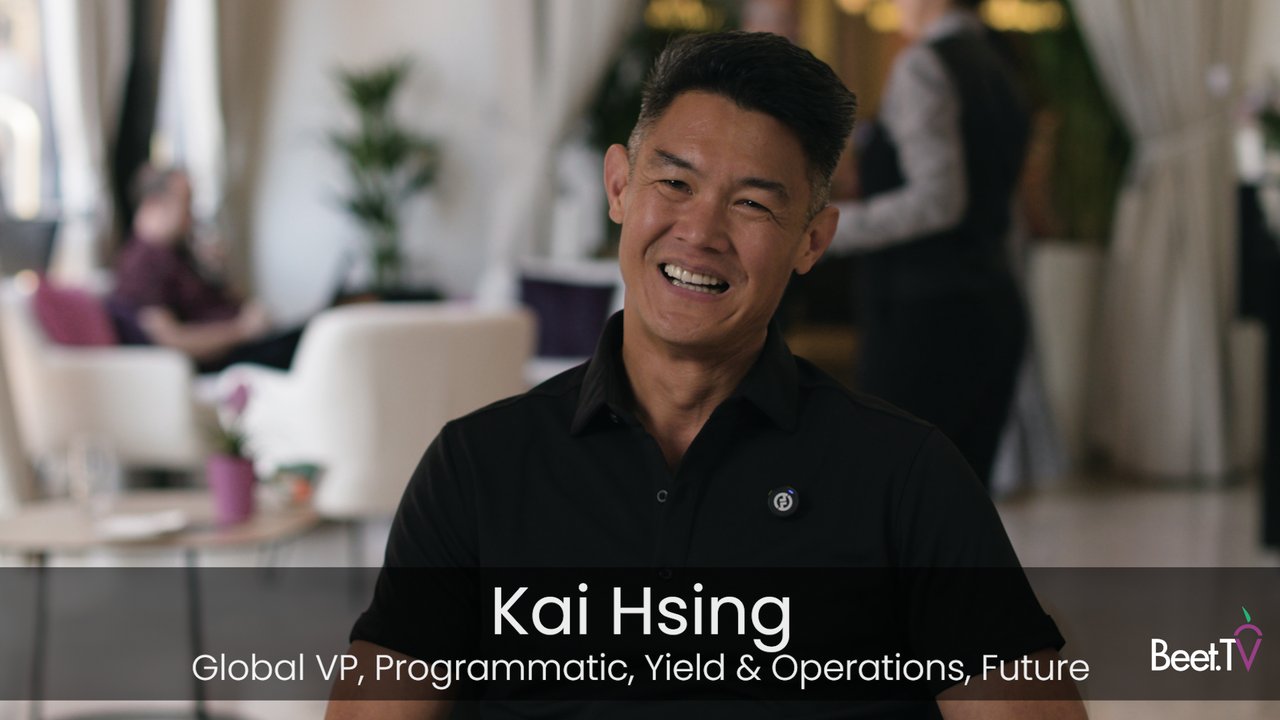
“When we have agents in the workflow, you remove the benefits of economies of scale,” said Kai Hsing, global vp of programmatic, yield and operations at Future plc, in this video interview with Beet.TV at Cannes Lions 2026. “There are so many intermediaries, there’s so many services that benefit from that, but perhaps they don’t exist.”

Democratization or consolidation?

The implications of agent-driven trading remain uncertain, Hsing acknowledged, but he sees two potential outcomes.

  • One resembles the music industry’s digital transformation, where technology democratized distribution and access.
  • The other is less optimistic. “Perhaps that leads us into a case of not dissimilar from the music industry where you democratize things. That would be fantastic,” Hsing said. “There is a risk that power consolidates and hopefully that doesn’t happen.”

The industry is already moving to formalize agentic advertising workflows. IAB Tech Lab is developing frameworks including ARTF, Agentic Audiences, and Agentic Advertising Management Protocols to make agent-to-agent transactions interoperable. According to IAB’s 2026 Outlook Study, 96% of buyers are now aware of agentic AI ad buying, with roughly two-thirds focusing on it for campaign execution.

High-intent audiences at the point of decision

Future operates more than 170 specialist media brands, including Tom’s Guide, Kiplinger’s, and century-old titles like Horse & Hound. Hsing argued this portfolio positions the publisher advantageously as AI reshapes how advertising is bought and sold.

“We are able to influence people at the point of decision,” Hsing said. “I am on, say, Kiplinger’s, and I’m deciding which mutual funds to invest in. They will come to us at that point of finally making that decision.”

That high-intent positioning matters increasingly as U.S. programmatic ad spending tops $200 billion in 2026, according to Emarketer, representing approximately 92.6% of total display ad spend. The market is shifting from open-scale buying toward programmatic direct, private marketplaces, and outcome-based measurement.

New AI tools for audience intelligence

Future launched Helix, its audience intelligence engine, in March 2026. The product uses predictive AI and first-party data to optimize campaign performance at granular levels.

“We have employed agents who will look at past campaign performance based on that at an extremely granular level, understand the optimal combination of factors basically to help provide advertising performance,” Hsing said. Early tests across 20 campaigns reportedly produced double-digit click-through rate increases and improved return on ad spend.

The company is also leveraging its content authority in AI-driven discovery environments. “One thing we have found is the fact that we have authority, the fact that we have heritage means we are often one of the most cited, if not the most cited sites in various LLMs,” Hsing said. “We are loaning that authority to our clients to help them manage their narratives.”

Podcasting Is Ready for Bigger Slice of Ad Budgets: IAB’s Jason Adamski

Podcast advertising has graduated from an experimental line item to a core part of the media plan, according to Jason Adamski, director of the Media Center at IAB. Now the industry must prove it can measure all those hosts, videos and mattress ads without counting the same audience twice.

In an interview with Beet.TV contributor David Kaplan ahead of the IAB Podcast Upfront on Sept. 16, Adamski said podcast ad revenue increased from about $106 million in 2015 to $2.9 billion in 2025.

“A decade of pure growth shows that it’s moved from niche to core,” Adamski said.

Buyers prepare to do more than listen

Podcasting is growing about 17.6% year over year, Adamski said, citing the PwC-IAB Internet Advertising Revenue Report. Buyers have also changed how they approach the medium.

Instead of matching brands primarily with particular hosts or genres, marketers increasingly want the reach, addressability and full-funnel results associated with other forms of digital advertising. The charming host with the devoted following can stay, but somebody will eventually ask for a spreadsheet.

Adamski said marketers attending the IAB Podcast Upfront should be ready to act in three areas. They need to plan across audio and video, demand clearer data from publishers and invest more money in the medium.

“I think buyers should be moving more money into podcasting,” Adamski said.

Publishers should be prepared to provide consistent show titles, platform names and accurate information about where ads appear within podcasts, he added. That means buyers should know more than whether an ad ran somewhere between the opening banter and an unexpectedly detailed discussion of a meal-delivery service.

Video complicates the podcast picture

The definition of a podcast is getting blurrier as creators put more programming on camera. Adamski said 71% of creators now produce video podcasts, forcing the industry to think about the format as both audio and video.

“I think that really forces the conversation from audio to audio and video,” Adamski said.

IAB is developing definitions and structures to bridge different measurement standards for the two formats. The goal is to prevent impressions from being counted twice or disappearing entirely when people toggle between watching and listening.

“We wanna make sure that the impressions aren’t double-counted or not counted at all,” Adamski said.

The organization will address the issue in its “Podcasts Continue to Evolve” paper, which is scheduled to be presented during the 2026 IAB Podcast Upfront. Adamski said the paper proposes disclosures designed to help close the measurement gap between audio and video.

Audio wants full-funnel credit

Podcasting also has some catching up to do with social media, display advertising and connected television. Adamski said audio was slower to adopt pixel-based attribution, dynamic ad insertion and identity frameworks.

Publishers now have household IP data and impression-level information that can support marketers’ attribution models, he said. IAB’s “Power of Audio Data” paper presents case studies showing that podcast advertising can influence outcomes throughout the funnel.

Those effects range from greater awareness at the top to stronger purchase intent at the bottom. In other words, podcast advertising would like marketers to know that it can do more than make listeners vaguely familiar with a brand after hearing its name during a true-crime investigation.

“It appears we’re at that point right now, that podcasts should be a portion of the core media buy,” Adamski said.

Posted in Uncategorized

Uber, Publicis and McKinsey on Reframing the Role of Last-Mile Media

CANNES, France — The advertising funnel is collapsing – and delivery apps are catching the debris.

That is the argument emerging from commerce media executives who say platforms like Uber and Uber Eats are becoming advertising destinations precisely because they intercept consumers at the moment of decision.

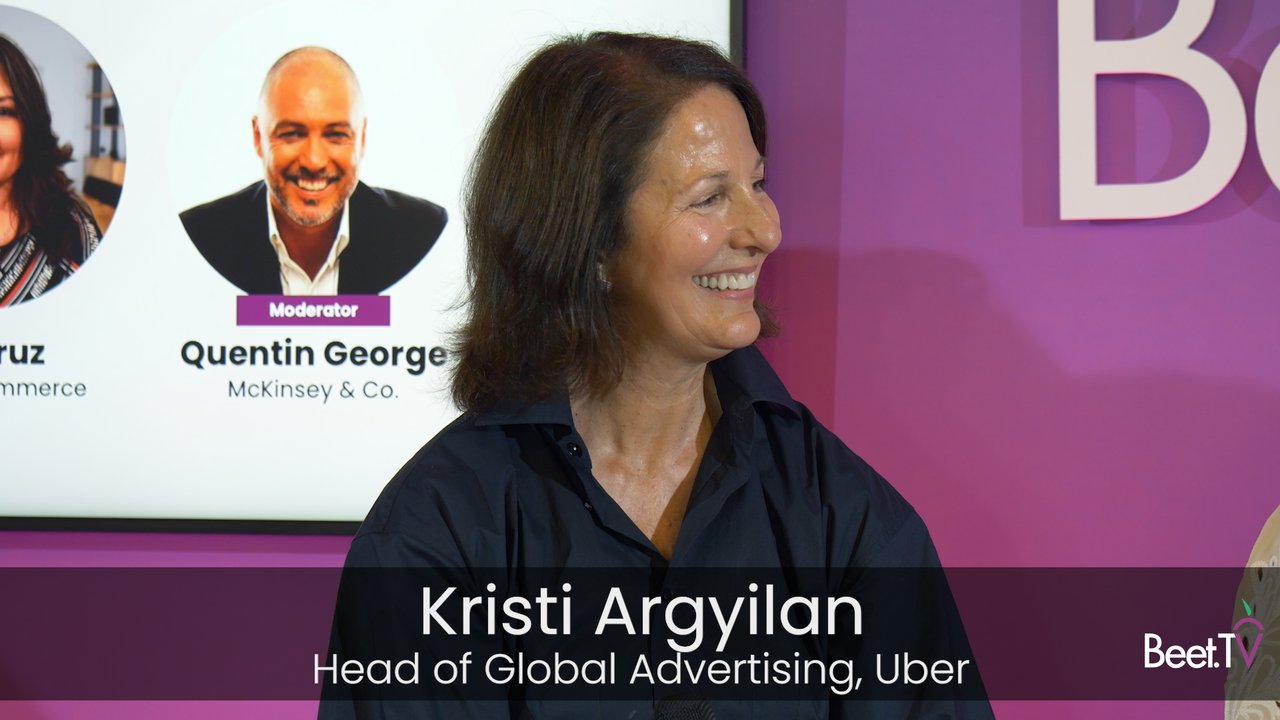
“They really capture intent in motion and in real time,” said Jill Cruz, evp of commerce strategy at Publicis Commerce, in a video interview with Beet.TV at Cannes Lions. “When it comes to last-mile, you’re capitalizing on what we’re buying right now.”

Panel line-up:

  • Jill Cruz, evp, commerce strategy, Publicis Commerce
  • Kristi Argyilan, head of global advertising, Uber
  • Moderator: Quentin George, partner, McKinsey & Co.

Discovery happens mid-journey, not just at the start

The conventional view of consumer discovery places it at the top of the funnel – awareness campaigns, brand storytelling, the creative work celebrated at Cannes. But Cruz and Argyilan argued that discovery also happens deep inside a transaction, when a consumer has already committed to one purchase and is open to another.

“Sometimes I might go to Uber Eats and I might know already what I want for dinner,” Cruz said. “But as I get into maybe that restaurant or get into that store as I’m shopping for something, I might find other opportunities and other things that I may need.”

Argyilan said Uber is seeing this in search behavior. “People are coming to our platform to search for new ideas, places to go to eat, which is kind of interesting to see what a utility that we’re becoming,” she said.

The funnel collapses, but brand still matters

The speed of last-mile commerce – order, wait, receive – creates what Argyilan called “the collapse of the funnel.” Discovery and purchase happen in minutes, not days. But both executives pushed back against the idea that everything is now performance marketing.

“Performance marketing is there to capture demand that’s already being created,” Cruz said. “Brands are there to create that demand.” She cited a Foster’s beer spot from the Cannes reel as an example of creative work that rekindled interest in a brand she had not considered in years.

Argyilan agreed, but reframed the question. “Everything is expected to be performant, but what the metrics are vary greatly,” she said. “I don’t think that we will ever replace the need to make a human connection. And that is especially important in terms of what brand marketing does.”

Redistribution now, but the pie will grow

Asked whether brands should shift linear television budgets into last-mile platforms, Cruz said the current reality is “mostly a redistribution” rather than a net increase. But she noted that last-mile platforms offer advantages for categories like alcohol, where retail media networks can be constrained by retailer relationships and regulatory sensitivities.

“When you start to drive outcomes, that opens up dollars,” Cruz said. “I do think the pie will grow as more performance is seen and as more incrementality gets driven.”

Argyilan credited Publicis for separating its Uber investment from the broader retail media pool, which she said allowed both sides to treat Uber as “a more concrete marketing platform versus a trade marketing platform.”

Physical and digital experiences converge

Uber’s advertising strategy is not limited to in-app placements. Argyilan described how the company’s creative studio is building campaigns that cross from digital to physical – World Cup activations, airport experiences, and promotional events like free pizza giveaways at Cannes.

“There are just these different ways that we tie digitally and then physically into the experience,” Argyilan said. “We’re trying to do as much of this digital-to-physical crossover as possible.”

The company recently introduced Uber Marketing Manager, a self-serve platform intended to unify advertising workflows across Uber and Uber Eats. Uber also announced offsite ad solutions that extend its first-party data signals to Meta and Google Shopping.

Ad fatigue is a shared problem

When asked who blinks first if conversion rates drop due to ad fatigue – the platform or the advertiser – Cruz declined to answer directly. She said the question has not yet become urgent because both sides share the same goal.

“We want the consumer to have a great experience,” she said. “If they have too many ads and there’s ad fatigue, or if the CPMs are too high and our agencies aren’t able to buy, we’re not able to accomplish the goals we want.”

Argyilan suggested that AI and agentic commerce could make last-mile platforms even more valuable by offloading routine tasks and creating more space for discovery. McKinsey has estimated that 10% to 35% of e-commerce transactions could eventually be initiated, influenced, or completed through AI-native experiences.

Gen AI Speeds Content Production for Our Brands: Mondelez International’s Michael Lampert

AMENIA, NY – After spending up to two years building and testing its generative artificial intelligence platform, Mondelez International is ready to serve it to more brands and markets. Unlike a cookie, however, the technology comes with training sessions, compliance checks and a lawyer.

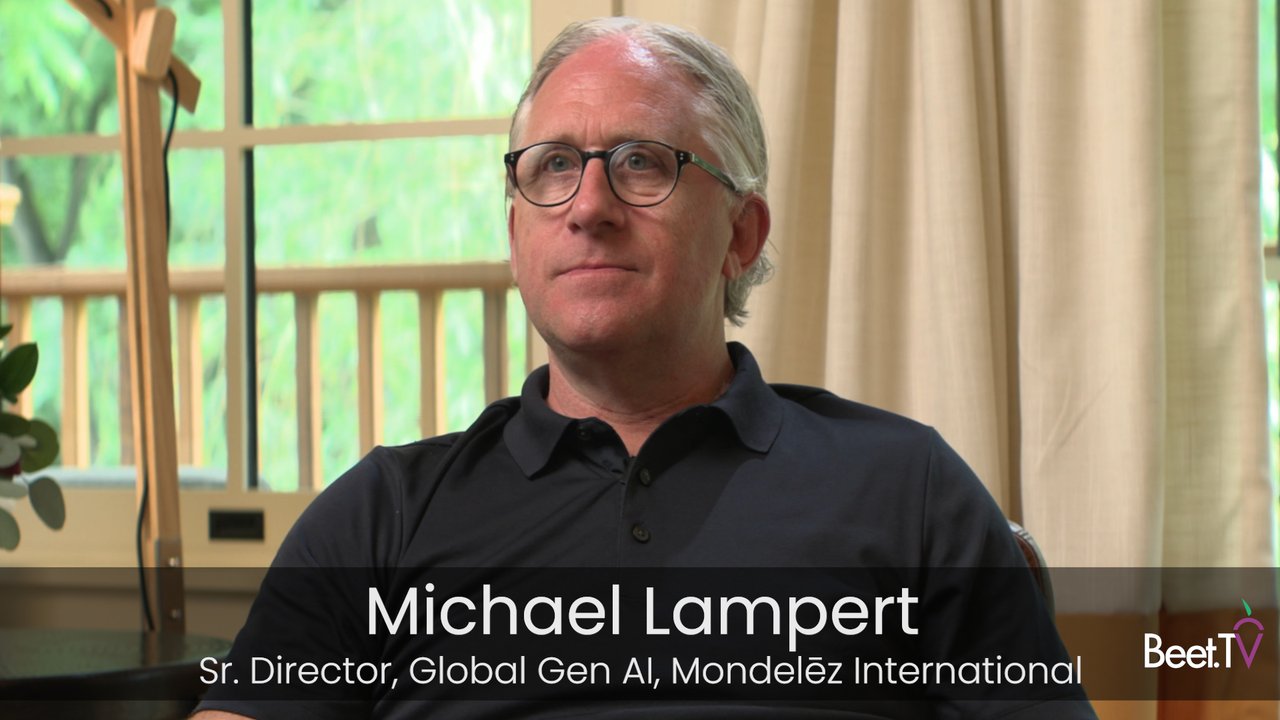
“For us, it’s really about activation now,” Michael Lampert, senior director of global gen AI at Mondelez International, said in an interview with Beet.TV contributor David Kaplan at the Beet Retreat Berkshires.

Mondelez piloted its AIDA content-generation platform in seven global markets while evaluating whether the technology could deliver what the company needed. It is now moving from development into worldwide adoption.

“We’ve done all the change management, we’ve done all the training, we know the product does what it’s supposed to do,” Lampert said. The next step is getting the platform into wider use across Mondelez brands and business units.

Teaching AI the rules of the cookie jar

Producing content at scale creates an obvious concern: Artificial intelligence can make things quickly, but it can also make things that no brand manager wants to explain on a Monday morning.

Mondelez created knowledge bases containing brand guidelines, previous campaigns, older assets and other standards. That information helps guide the platform after a user enters a prompt.

The company also built a proprietary content checker. Before material can go live, it must pass about 16 compliance tests. These cover issues such as overconsumption, the depiction of people or celebrities and requirements unique to individual brands.

“The machine generates the content, the machine checks the content against the governance rules and then the human has the final say as to whether that ad goes live or not,” Lampert said.

In other words, AI may be doing more of the production work, but it still has to answer to an adult.

Agencies get their hands on the keyboard

Mondelez designed AIDA primarily for its creative agency partners rather than its own employees. Only about 5% of the company’s content is produced internally, Lampert said.

The platform is intended to strengthen the creative process within agency content-development teams. That means much of the organizational challenge involves teaching agencies how to incorporate AIDA throughout their workflows.

“The change management comes from training the agencies on how to use the system and how to embed the system into their process from beginning to end,” Lampert said.

Mondelez employees may brief projects, review work or approve it, but they generally are not the people operating the platform. Lampert said employees are eager to try it anyway, perhaps proving that nothing makes a new tool more appealing than being told it is meant for somebody else.

Four people walk into an AI governance meeting

Mondelez oversees the platform through what Lampert called a “management quartet.” The group represents business strategy, the connection between technology and brands, information technology and the legal department.

The quartet manages business needs, technical development, the product itself and governance. It also helps ensure that the excitement around generative AI does not outrun the company’s ability to control it.

Anyone using AIDA must complete formal training and become an authorized user. The instruction covers the capabilities of generative AI and the fine art of writing a useful prompt.

“If your prompt isn’t very good, we created a tool called prompt enhancers, so they will help you,” Lampert said.

The platform can detect when a prompt is unnecessarily specific. Users do not need to tell it that an Oreo is a chocolate cookie because the system already possesses that important piece of human knowledge.

Mondelez wants users to spend their time taking advantage of the technology instead of wrestling with instructions. That requires a significant upfront investment in education, Lampert said.

“So far the users get in there and they love it,” he said.

Video remains the bigger prize

Mondelez began with text and image generation because those technologies were mature enough for commercial use. They have worked particularly well for commerce content, where speed is often more valuable than producing the next great conceptual advertising campaign.

“If we’re honest, it’s not super conceptual,” Lampert said. “The speed to market is very fast.”

The company added video generation about six months ago, starting with clips lasting six to eight seconds. Its longer-term goal is to produce complete broadcast-quality and digital video spots from beginning to end.

That ambition matters because about 80% of Mondelez’s advertising impressions are video-based. The company is therefore working to expand adoption as quickly as the technology allows.

“The first results look great all the way from storyboard through execution in the system,” Lampert said. Still, he added that more work is needed before video generation can be fully adopted across all of Mondelez’s global brands.

For now, ADA can help create the ad, check the ad and flag potential problems. A human still decides whether the public should see it. That may be reassuring to anyone who has ever watched a machine invent fingers, faces or an Oreo filling that appears to be plotting something.

Posted in Uncategorized

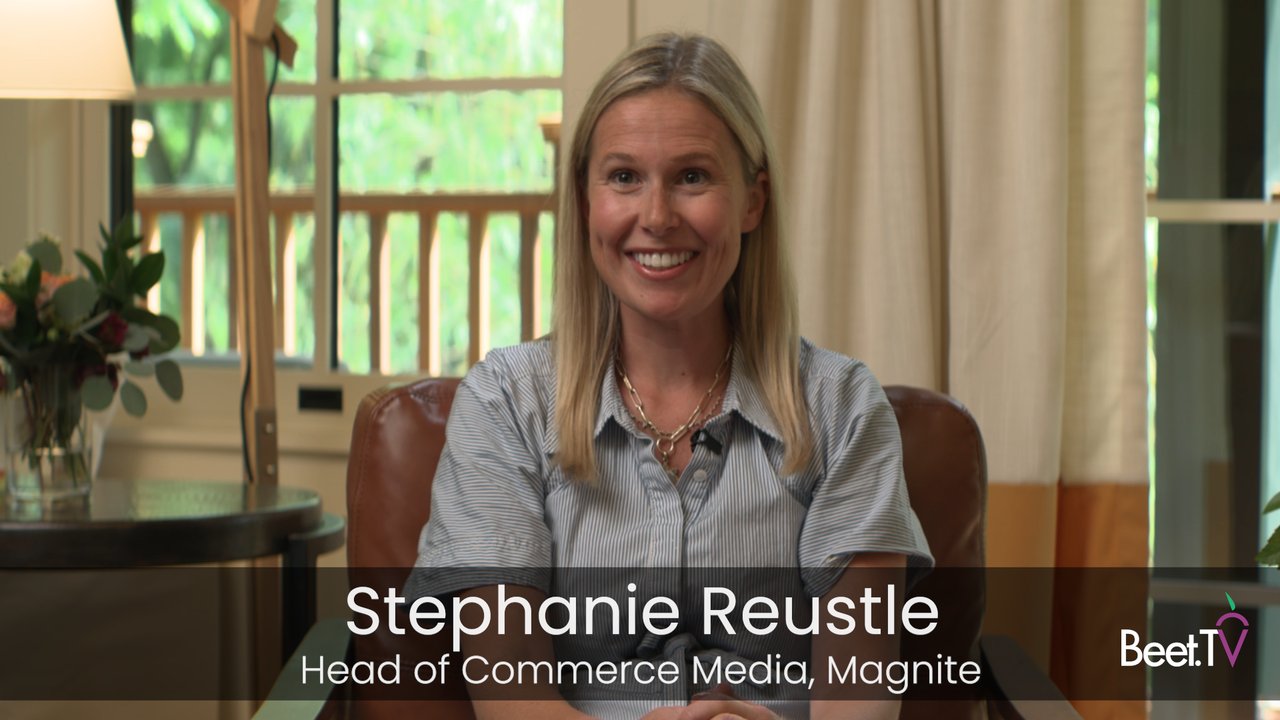
Better Data Puts Commerce Media Signals to Work: Magnite’s Stephanie Reustle

AMENIA, NY – Commerce media is flourishing for a simple reason: Marketers can finally determine whether their advertising accomplished something beyond generating a handsome stack of impressions.

In an interview with Beet.TV contributor David Kaplan at the Beet Retreat Berkshires, Stephanie Reustle, head of commerce media at Magnite, explained how deterministic data, closed-loop measurement and supply-side curation are turning customer signals into measurable results.

“Behind commerce media’s rise is really the ability now to make everything more impactful and measurable,” Reustle said.

That capability addresses a longstanding problem in advertising. Everyone wants to know whether marketing drives sales, subscriptions or store visits. Nobody wants to explain to the chief financial officer that a campaign produced 14 million impressions and a warm feeling.

Deterministic data and closed-loop measurement give advertisers a clearer view of what happened after an ad appeared. They can then use that information to improve campaigns while those campaigns are still running.

Audiences move to the supply side

Kaplan asked what happens behind the scenes as commerce data is connected with media activation.

Reustle said the industry is seeing “a pendulum shift” as audience data moves closer to publishers and is applied to supply-side decision-making. The approach can help advertisers identify their intended customers more reliably while devoting a larger share of spending to working media.

“We’re seeing upwards of four times greater ability in driving match rates when you’re layering audiences and curating on the supply side,” Reustle said.

Higher match rates can improve campaign efficiency by helping buyers reach more of the consumers they intended to target. That sounds elementary, but digital advertising has built an impressive amount of machinery around the occasional inability to recognize the same person twice.

Supply-side curation can also remove some of the intermediaries between buyers and publishers. Fewer stops along the way mean fewer opportunities for campaign dollars to wander off and begin an exciting new life as ad-tech fees.

Good curation stays close to publishers

Curation has become one of the industry’s favorite terms, though its meaning can shift depending on who is using it and what they hope to sell before lunch.

For Reustle, effective curation starts with proximity and transparency.

“Good curation looks like getting as close to the publisher as possible,” she said.

That means minimizing hops, understanding the inventory on which ads will run and maintaining control over how that inventory is selected. Commerce partners benefit when they can participate directly in those decisions instead of sending audience data into a winding supply chain and hoping for the best.

Reustle said greater involvement in curation gives commerce partners more control and has produced a meaningful impact.

Impressions face an outcomes problem

Kaplan also asked how the industry’s growing emphasis on business outcomes changes the way campaigns are planned and evaluated.

Reustle said advertisers need to optimize and measure “every single dollar spent.”

Shoppable video illustrates the opportunity. These formats historically have been measured using digital indicators such as clicks and engagement. Commerce data can connect them to more concrete outcomes, including subscriptions and store visits.

“It looks like being able to ensure that you’re optimizing and measuring every single dollar spent,” Reustle said.

Campaign data also can be passed back to partners for real-time optimization. Instead of waiting for a post-campaign report to announce that the horse left the barn three weeks ago, marketers can adjust spending while there’s still time to affect the result.

That makes commerce signals useful for more than attribution. They can help campaigns work harder while they are active.

Commerce media needs the C-suite

Access to commerce data alone won’t guarantee success. Reustle said the companies most likely to produce measurable growth will understand who their customers are, what those customers are worth and when to reach them during the purchase cycle.

They’ll also treat commerce media as a serious business investment rather than another experimental line item tossed into the marketing budget.

“Commerce media truly is an investment,” Reustle said. “It’s something that needs financial resource. It needs attention from the C-suite.”

That executive involvement matters because commerce media can span marketing, technology and sales. Companies need a clear strategy for their data, media investments and desired outcomes.

The winners won’t merely possess commerce signals like a dragon guarding a pile of first-party data. They’ll know how to activate those signals, measure the results and refine campaigns in real time.

As Reustle put it, commerce media is something companies must approach strategically “to be set apart and successful.” In an industry that has spent years counting eyeballs, the next competitive advantage may come from proving those eyeballs eventually bought something.

Posted in Uncategorized

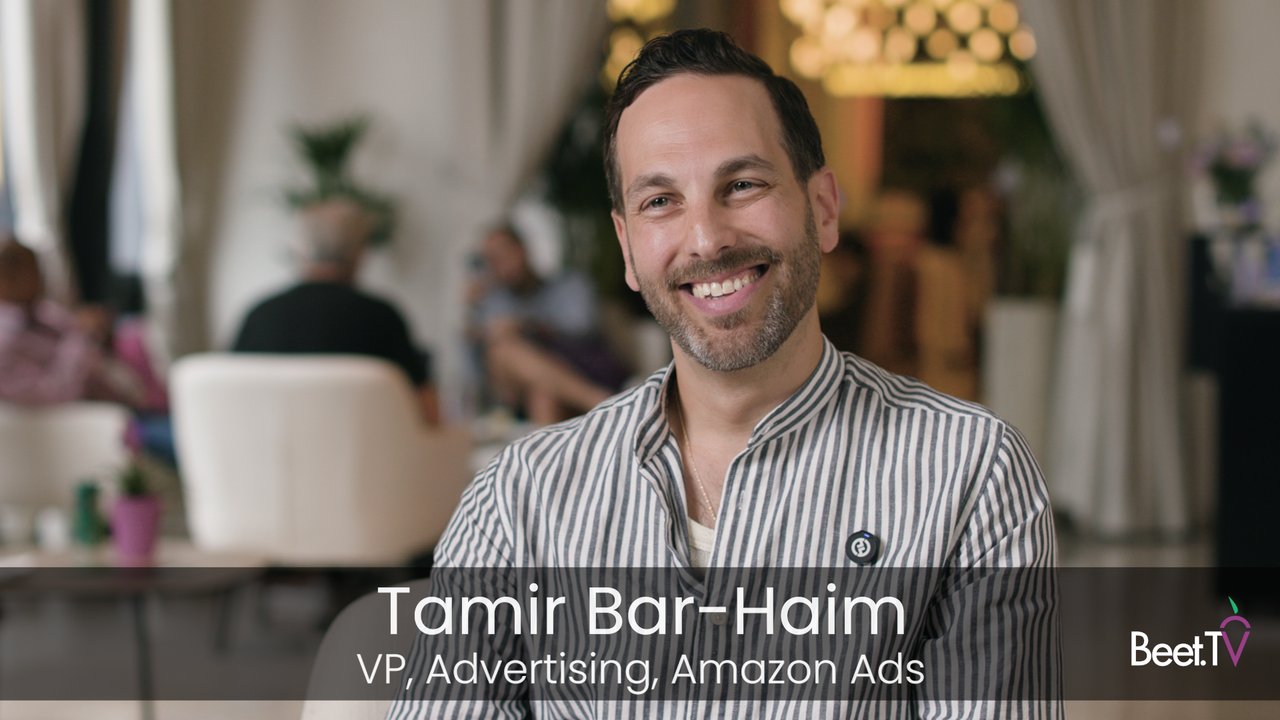
Amazon’s Tamir Bar-Haim: Global Advertisers Mistakenly Assume Home Market Success Travels

CANNES, France — Marketing, like politics, is local. But it’s easy to forget that digital advertising’s promise of scale and efficiency tempts global brands into treating international expansion as a copy-paste exercise that transcends borders.

“The biggest mistake is assuming that offline success will automatically translate online and/or assuming that the trends of customer behavior from a brand’s home country will just automatically be true in whatever other geography they want to expand to,” Tamir Bar-Haim, vp of advertising at Amazon, told Beet.TV contributor David Kaplan at Cannes Lions. “When it comes to digital, there’s an expectation that it’s going to be simpler, scalable, efficient — and that can lead brands sometimes down the wrong track.”

What works instead, Bar-Haim advised, is starting with local customer behavior and working backwards. That entails understanding how consumers browse, shop, and move through purchase journeys in each individual market before building any campaign strategy.

Customer behavior isn’t uniform

Social commerce penetration in China dwarfs comparable adoption in most other markets. Japan’s advertising culture is defined by an insistence on quality. Brazil leads with creative passion. Each market carries its own logic, and regional or global advertisers who ignore that tend to default to vanilla approaches that underdeliver everywhere.

“Every country also tends to have that one thing that they’re really proud of, that thing that they hang their hat on,” Bar-Haim said. “There’s a great opportunity for some of these international countries outside of the US to punch above their weight class and build a proof of concept, establish a playbook that then can scale globally.”

AI democratizes creative localization

The historic bottleneck in international advertising has been creative production — generating sufficient volume and variety to personalize effectively across languages, cultures, and geographies. AI tools are dissolving that constraint.

“The rate limiter has been the ability for brands to produce the variety and volume of creative needed to achieve personalization at scale. Through tools like our image generator or video generator, you can produce professional creative with a click of a button, no incremental cost,” Bar-Haim said.

Japan, he noted, has emerged as a standout example. Advertising partners there are combining Amazon’s AI tools with their own capabilities to drive both relevance and creative iteration at a pace that surprised Bar-Haim on a recent visit.

Different definitions of scale

Across every market, Bar-Haim hears the same three requests: personalization at scale, full-funnel outcomes, and speed. Where markets diverge is in what scale actually means and how mature the business already is.

“For those anchored in a large established business in a mature marketplace, the conversations are really about where do I find that next pocket of opportunity. Whereas for some brands launching in a new country or just getting started, it’s really around where do I have product market fit?” Bar-Haim said. “The good news is no matter where you are on that spectrum, the foundational tools are actually no different.”

The mental model Bar-Haim leaves advertisers with is straightforward — and demanding.

“A brand should know as much about their customers in every individual country that they operate in as they do in their home country. We expect our advertisers to hold us to that bar,” Bar-Haim said. “It’s exciting to look ahead and see how much room there is for growth when we nail those basics.”

Mastercard’s Nili Klenoff: One-Third of Consumers Would Let an Agent Spend $1,000 on Their Behalf, Even Without Asking First

As agentic commerce promises to further ease the friction that still hinders online shopping, earning consumers’ trust is the foundational factor that will determine greater adoption.

Still, consumers’ embrace of agentic commerce may actually be moving faster than most marketers realize. A recent Mastercard survey found that 33% of consumers would already trust an AI agent to spend up to $1,000 on their behalf without prior approval — a data point that reframes the entire trust conversation around AI-driven shopping.

“We’re seeing this shift taking place for consumers,” Nili Klenoff, evp of Mastercard Commerce Media, told Beet.TV contributor David Kaplan. “The biggest opportunity is really the shift from predictive insights to being able to respond in real time to the signals with relevant and measurable content.”

That opportunity comes with a significant caveat. When agents make wrong calls —such as  buying a red sweater on final sale when the consumer wanted a blue one — trust erodes fast and at scale.

Not the same thing

The industry needs to delineate between agentic commerce and agentic marketing, in Klenoff’s view. In her telling, the former is a machine making purchases on a consumer’s behalf; the latter involves AI helping brands show up with greater relevance and discoverability.

“What consumers are going to notice most is those two being seamless, creating an integrated consumer experience. I think they’re also going to notice when those two are not,” Klenoff said.

Mastercard’s Verifiable Intent and Agent Pay frameworks are designed to build the governance infrastructure that makes both sides of that equation trustworthy — ensuring that everyone in the ecosystem, consumer and brand alike, knows the transaction was legitimate.

Personalization requires trust

A 2024 Deloitte study found that up to 80% of consumers want personalized brand experiences and would spend up to 50% more when brands deliver them. But Klenoff is direct about the precondition.

“You can’t have personalization without trust. Trust is the foundation of any consumer relationship. It really needs to be built into that experience from the start,” Klenoff said. “There needing to be an exchange of value for the consumer. It needs to be helpful. It needs to be useful for them.”

Answering AI’s front door question

Even as AI becomes the entry point for product discovery, brands still face the same fundamental questions: who is this consumer? where are they in the buying cycle, what message will resonate? Klenoff posited that commerce media provides the purchase-signal intelligence to answer them.

“AI may become the new front door to shopping, but brands still contend with the same questions that they contend with across any other environment,” Klenoff said. “Commerce media is an essential service because it helps provide insight that’s rooted in real outcomes to drive relevant and contextual messages for the consumer.”

The human element scales

Automation handles tasks and optimizes decisions, but brand building still requires human empathy, judgment, and the capacity to create authentic consumer connections that algorithms cannot replicate.

“AI ultimately may help us automate tasks, optimize decisions, but the most important part of commerce remains deeply human. That’s the trust. It’s the creativity. It’s the connection,” Klenoff said. “I don’t think the future is ‘man versus the machine.’ This is about how we use AI to work smarter so that we can focus on creating those connections and those experiences that are valuable to consumers in those moments that matter most.”

Why the Algorithmic Era Demands Creative Distinctiveness, Not Just Efficiency

When more than half of all media is purchased and optimized by algorithms, brands risk blending into what one agency leader calls a “sea of sameness” – the same signals, the same optimization targets, the same look.

That convergence is forcing marketers to rethink the relationship between performance media and creative strategy. If the algorithm is doing the buying, the only variable left to differentiate is the work itself.

“Once you put an ad in an ad unit space, the number one factor that determines the performance of that media is creative,” said Emily Anthony, evp, head of planning, iProspect, in this video interview with Beet.TV.

The danger of optimizing to vanity metrics

Anthony’s warning comes as U.S. programmatic advertising continues its march toward full automation. According to Emarketer’s H2 2026 forecast, programmatic direct now accounts for 76.3% of overall U.S. programmatic spend, with agentic AI systems increasingly shaping planning, buying, and optimization.

But automation without intention can backfire. Anthony argued that optimizing toward metrics like click-through rate can deliver volume without value.

“That can lead you into a place of, you know, perhaps a high volume but low quality of traffic to your website or brand visibility,” she said. “We’re still continuing to see not really having a high degree of sophistication or intelligence going into how do you optimize for brand, how do you optimize for customer lifetime value in an algorithmic era.”

First-party data and unified media systems

The solution, according to Anthony, starts with first-party data. Brands that understand their customers and keep that data organized can feed better signals into both planning and buying.

“Really understanding your customers, getting organized and clean with the data that you have around your customers, and then fueling that back both into how you plan and strategize as well as how you buy media and design your creative,” she said.

The other piece is what iProspect calls a “unified media system,” which means planning paid, earned, and owned media together rather than in silos. “You’re thinking about how you’re planning media and creative in tandem,” Anthony said.

Creative and performance are no longer separate disciplines

The convergence Anthony described is playing out across the industry. In April, parent company dentsu launched dentsu.connect, an agentic AI-powered operating system designed to unify creative, production, media, and experience within a single workflow. In June, it introduced Idea Builder, an enterprise generative AI platform for creative developed with Google Cloud.

The broader market is moving in the same direction. Gartner’s 2026 CMO Spend Survey found that CMOs are allocating an average of 15.3% of marketing budgets to AI initiatives, though only 30% report mature AI readiness.

Meanwhile, the stakes for getting it wrong remain high. ANA’s programmatic transparency benchmark estimated $26.8 billion in global media value lost each year to programmatic inefficiencies.

Better targeting, better measurement, better creative

Asked where marketers should focus to improve results, Anthony declined to pick a single lever.

“Better targeting, better measurement, better creative. All three of those components are part of what we’re thinking about when we design those integrated comms plans and we’re designing a unified media approach,” she said.

The implication is that the algorithmic era does not make any of these disciplines less important. It makes them more interdependent.

“What we have to design is distinctiveness,” Anthony said. “And that’s where this marriage of performance media and creativity really becomes critically important.”