Brands Must Learn to Market to Machines: DaVinci Commerce’s Diaz Nesamoney
CANNES, France – Artificial intelligence may change online shopping by giving consumers something e-commerce has stubbornly resisted for 30 years: a reasonably pleasant experience.
Instead of opening 17 browser tabs, wrestling with filters and wondering why a search for one sensible shirt produced 800 questionable options, shoppers can tell an AI assistant what they need. The agent can research products, compare brands and recommend likely matches.
For marketers, however, this convenience introduces a formidable new gatekeeper. Brands must persuade the machine before they get a chance to charm the human.
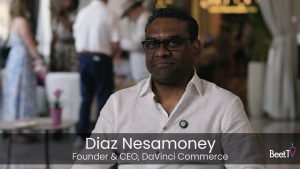
“The big difference is you’re marketing to agents,” Diaz Nesamoney, founder and CEO of DaVinci Commerce, said in a fireside chat with Beet.TV contributor Tameka Kee at the Cannes Lions International Festival of Creativity.
Shopping begins long before checkout
Consumers are already using generative AI platforms to discover and research products, even if relatively few are completing purchases within them, Nesamoney said. He estimated that about 30% of consumers are shopping through these services when the definition includes discovery, research and product education.
“Shopping, if you think of shopping as just purchase, then it’s a small number,” he said. “If you think of shopping as the full journey, discovery of products, discovery of brands, researching, learning about them and then eventually buying, that number is pretty high.”
That distinction matters because the first phase of agentic commerce may be less about letting a robot loose with a credit card and more about replacing the traditional search box.
Consumers no longer have to enter a precise request for a yellow tent of a particular size. They can say they are taking their children camping and ask what they might need. The AI can figure out that shelter, sleeping bags and insect repellent would be useful. It may also tactfully refrain from mentioning that the children will want to go home by Saturday afternoon.
“The current e-commerce systems are built for precise searches, but the conversational model requires something very different,” Nesamoney said.
Product specifications meet actual human beings
Most online catalogs were built around technical attributes such as size, weight, materials and camera resolution. Consumers often think in different terms. They may want an affordable phone for a student, a handbag for a wedding or a cocktail that makes a party look more sophisticated than it really is.
That creates a mismatch between how companies describe products and how people ask about them.
Brands need to enrich their product data with information about occasions, lifestyles and practical uses, Nesamoney said. Consumer reviews and discussions on platforms such as Reddit can help because people tend to explain how a product fits into their lives. They rarely gather online to celebrate the dimensions of the shipping carton.
“If you read through the reviews, nobody’s talking about the specs of the product,” he said. “They’re talking about what they love about it, how they used it.”
Rewriting enormous product catalogs for every conceivable use would be a grim assignment for humans. Fortunately, Nesamoney sees AI as both the cause of the upheaval and part of the solution.
“This is where AI comes to the rescue, too,” he said. “AI created the opportunity, but also solving the problem.”
DaVinci Commerce is using AI to collect descriptive information and generate richer product descriptions at scale, he said.
Invisible brands may discover a new meaning for zero impressions
The immediate challenge is ensuring that AI agents can find and understand a company’s products. If a brand’s information does not answer the kinds of questions consumers are asking, the agent may never recommend it.
“If you don’t do what’s needed to have the agents describe or get to your product descriptions and expose it to the consumers, you basically don’t exist,” Nesamoney said.
Discoverability is only the beginning. Brands also need to preserve the qualities that separate them from cheaper competitors. If an agent presents five T-shirts as interchangeable rectangles with sleeves, the lowest price may win. That is unwelcome news for a luxury label hoping consumers remain deeply moved by its stitching, heritage and magnificently expensive cotton.
Nesamoney said branded AI experiences can give companies more control over how they present themselves. These conversational storefronts could recreate the role of a knowledgeable store associate who remembers previous purchases and suggests complementary products.
“These agents, because they have access to all of that data, can do as good a job, sometimes even a better job than a really good sales associate,” he said.
Unlike some sales associates, the AI will presumably not disappear into the stockroom just as the customer needs another size.
The autonomous shopping spree can wait
Early visions of agentic commerce assumed consumers would either buy products immediately from AI-generated listings or allow agents to make purchases for them. Neither idea has proved especially compelling so far, Nesamoney said.
“One is you just show people products, they’ll buy. Well, clearly, that didn’t happen,” he said. “The other was the agent knows what to buy for you and it’s gonna go buy it for you.”
Consumers still want context before making a purchase. They also may hesitate before handing an autonomous agent a credit card and instructions to use its judgment. Humanity has enough mysterious subscription charges already.
A more plausible experience resembles guided shopping. Nesamoney cited DaVinci Commerce’s work with an unnamed liquor brand. Instead of asking consumers to choose a bottle first, the experience begins with the occasion or cocktail. It then recommends a recipe and the alcohol suited to it.
Fashion and beauty brands can similarly answer questions about style, events and seasonal trends before recommending products.
Marketers get a second audience
This shift means brands must communicate with two audiences. Data helps an agent choose which companies and products to show. Creative presentation then helps the consumer decide what to buy.
“You’re marketing to the agent. You’re not marketing to the consumer, not yet, at least,” Nesamoney said. “Eventually the consumer chooses your brand, then you have to start speaking to the consumer directly.”
The emerging work is not purely technical or creative. It requires an understanding of how people perceive products, what questions they ask and what kind of experience they expect from a brand.
That could produce new marketing roles focused on making product information attractive to machines without draining it of all human meaning. The résumé may soon require experience in consumer psychology, product data and politely explaining to a chatbot why a $200 T-shirt is not just a $10 T-shirt with excellent self-esteem.
You’re watching The Beet.TV Leadership Sessions at Cannes Lions 2026, presented by DaVinci Commerce. For more videos from this series, please visit this page. You can find all of our coverage from Cannes Lions 2026 here.

CANNES, France – Artificial intelligence may change online shopping by giving consumers something e-commerce has stubbornly resisted for 30 years: a reasonably pleasant experience.
Instead of opening 17 browser tabs, wrestling with filters and wondering why a search for one sensible shirt produced 800 questionable options, shoppers can tell an AI assistant what they need. The agent can research products, compare brands and recommend likely matches.
For marketers, however, this convenience introduces a formidable new gatekeeper. Brands must persuade the machine before they get a chance to charm the human.
“The big difference is you’re marketing to agents,” Diaz Nesamoney, founder and CEO of DaVinci Commerce, said in a fireside chat with Beet.TV contributor Tameka Kee at the Cannes Lions International Festival of Creativity.
Shopping begins long before checkout
Consumers are already using generative AI platforms to discover and research products, even if relatively few are completing purchases within them, Nesamoney said. He estimated that about 30% of consumers are shopping through these services when the definition includes discovery, research and product education.
“Shopping, if you think of shopping as just purchase, then it’s a small number,” he said. “If you think of shopping as the full journey, discovery of products, discovery of brands, researching, learning about them and then eventually buying, that number is pretty high.”
That distinction matters because the first phase of agentic commerce may be less about letting a robot loose with a credit card and more about replacing the traditional search box.
Consumers no longer have to enter a precise request for a yellow tent of a particular size. They can say they are taking their children camping and ask what they might need. The AI can figure out that shelter, sleeping bags and insect repellent would be useful. It may also tactfully refrain from mentioning that the children will want to go home by Saturday afternoon.
“The current e-commerce systems are built for precise searches, but the conversational model requires something very different,” Nesamoney said.
Product specifications meet actual human beings
Most online catalogs were built around technical attributes such as size, weight, materials and camera resolution. Consumers often think in different terms. They may want an affordable phone for a student, a handbag for a wedding or a cocktail that makes a party look more sophisticated than it really is.
That creates a mismatch between how companies describe products and how people ask about them.
Brands need to enrich their product data with information about occasions, lifestyles and practical uses, Nesamoney said. Consumer reviews and discussions on platforms such as Reddit can help because people tend to explain how a product fits into their lives. They rarely gather online to celebrate the dimensions of the shipping carton.
“If you read through the reviews, nobody’s talking about the specs of the product,” he said. “They’re talking about what they love about it, how they used it.”
Rewriting enormous product catalogs for every conceivable use would be a grim assignment for humans. Fortunately, Nesamoney sees AI as both the cause of the upheaval and part of the solution.
“This is where AI comes to the rescue, too,” he said. “AI created the opportunity, but also solving the problem.”
DaVinci Commerce is using AI to collect descriptive information and generate richer product descriptions at scale, he said.
Invisible brands may discover a new meaning for zero impressions
The immediate challenge is ensuring that AI agents can find and understand a company’s products. If a brand’s information does not answer the kinds of questions consumers are asking, the agent may never recommend it.
“If you don’t do what’s needed to have the agents describe or get to your product descriptions and expose it to the consumers, you basically don’t exist,” Nesamoney said.
Discoverability is only the beginning. Brands also need to preserve the qualities that separate them from cheaper competitors. If an agent presents five T-shirts as interchangeable rectangles with sleeves, the lowest price may win. That is unwelcome news for a luxury label hoping consumers remain deeply moved by its stitching, heritage and magnificently expensive cotton.
Nesamoney said branded AI experiences can give companies more control over how they present themselves. These conversational storefronts could recreate the role of a knowledgeable store associate who remembers previous purchases and suggests complementary products.
“These agents, because they have access to all of that data, can do as good a job, sometimes even a better job than a really good sales associate,” he said.
Unlike some sales associates, the AI will presumably not disappear into the stockroom just as the customer needs another size.
The autonomous shopping spree can wait
Early visions of agentic commerce assumed consumers would either buy products immediately from AI-generated listings or allow agents to make purchases for them. Neither idea has proved especially compelling so far, Nesamoney said.
“One is you just show people products, they’ll buy. Well, clearly, that didn’t happen,” he said. “The other was the agent knows what to buy for you and it’s gonna go buy it for you.”
Consumers still want context before making a purchase. They also may hesitate before handing an autonomous agent a credit card and instructions to use its judgment. Humanity has enough mysterious subscription charges already.
A more plausible experience resembles guided shopping. Nesamoney cited DaVinci Commerce’s work with an unnamed liquor brand. Instead of asking consumers to choose a bottle first, the experience begins with the occasion or cocktail. It then recommends a recipe and the alcohol suited to it.
Fashion and beauty brands can similarly answer questions about style, events and seasonal trends before recommending products.
Marketers get a second audience
This shift means brands must communicate with two audiences. Data helps an agent choose which companies and products to show. Creative presentation then helps the consumer decide what to buy.
“You’re marketing to the agent. You’re not marketing to the consumer, not yet, at least,” Nesamoney said. “Eventually the consumer chooses your brand, then you have to start speaking to the consumer directly.”
The emerging work is not purely technical or creative. It requires an understanding of how people perceive products, what questions they ask and what kind of experience they expect from a brand.
That could produce new marketing roles focused on making product information attractive to machines without draining it of all human meaning. The résumé may soon require experience in consumer psychology, product data and politely explaining to a chatbot why a $200 T-shirt is not just a $10 T-shirt with excellent self-esteem.
You’re watching The Beet.TV Leadership Sessions at Cannes Lions 2026, presented by DaVinci Commerce. For more videos from this series, please visit this page. You can find all of our coverage from Cannes Lions 2026 here.

Series Videos