

Flowcode’s Tim Armstrong: As AI Agents Take Over Digital, Real Life Becomes ‘A Thousand Times More Important’
CANNES, France — The “click economy” that has driven digital advertising for three decades is facing its most serious structural challenge yet. Flowcode CEO Tim Armstrong, who built Google’s ad sales operation and later ran AOL and Yahoo, sees two forces pulling the industry in opposite directions. He also thinks brands are underinvesting in the one that will matter most.
“I think the industry is going to be bifurcated into really two main areas,” Armstrong, told Intersection CEO Chris Grosso in a fireside chat at the Beet.TV Leadership Summit with the OAAA at Cannes Lions. “On the AI side, advertising is going to turn into a service-based approach. And on the other side, how do you plug into human life?”
The click economy sitting between those two poles, Armstrong argued, faces the most disruption of all.
Agents don’t watch ads
Armstrong arrived at Cannes having run Claude sub-agents through his entire Paris itinerary — restaurants, shopping, VivaTech speakers, logistics. The agents processed in hours what would have taken him a full day. For brands, that efficiency creates an urgent new challenge.
“Agents don’t have any empathy. They haven’t seen your ad. They don’t know how you plug into the real world. My job is to get Tim Armstrong the most value on this trip I can possibly get,” Armstrong said. “As a brand, in that agent economy, you’re going to have to compete by stuffing value and stuffing information into my agent so my agent chooses you.”
That reframes advertising less as messaging and more as service — brands competing to be recommended by an intermediary that optimizes purely for consumer value.
Commuting beats social media as real-world time
While adults spend an average of two hours and 27 minutes daily on social media, the average commute runs 27 minutes — representing 18% of an adult’s day spent out in the physical world, before accounting for everything else people do outside their screens.
“If you went to the average brand and asked them what percentage of an adult’s day in the United States do you think people are out seeing outdoor and experiencing things in real life, just on their commute, I don’t think many people would say 18%,” Armstrong said. “But that’s where I think there’s such a large opportunity in real life.”
France allocates 10% of advertising to out-of-home. The UK runs in the high single digits. The US sits under 4% — a gap Armstrong attributes less to measurement than to perception.
Reframe the industry, change the number
Armstrong’s prescription for closing that gap isn’t primarily a measurement argument. He’d rather see the industry pursue a perception shift — away from “out of home” as a category descriptor and toward the emotional and experiential currency that physical media actually delivers.
“Self-perception of what you think you are is not the perception of what the world sees you as,” Armstrong said, drawing on his experience reviving AOL by putting video on the homepage with Barack Obama, Matt Damon, and Elmo as the first three guests. “I would come up with a new number — 24% — and ask what’s the emotional lever you need to put into people’s minds to get every media person and brand person to wake up and say, ‘25% of my customers’ lives are in the real world.’”
Jump in front of the parade
The Knicks championship parade drew two million people to New York’s streets. Armstrong’s argument is that moments like that don’t require data justification — they require presence.
“If you are on a street when the Knicks won the championship in New York, there’s no data you need. You have to understand that human emotional set. People are going to remember that for the rest of their lives,” Armstrong said. “I would jump in front of the IRL parade and I would use every statistic to help marketers understand why they should do that.”
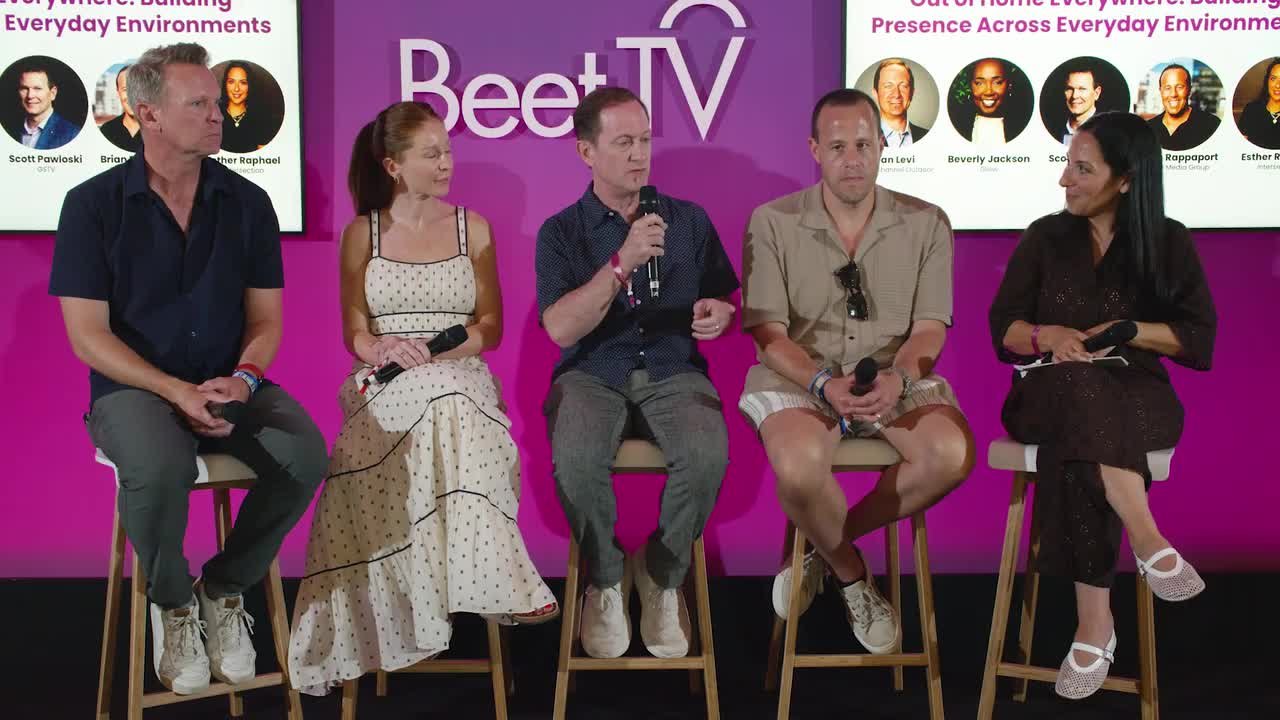


CANNES, France — The “click economy” that has driven digital advertising for three decades is facing its most serious structural challenge yet. Flowcode CEO Tim Armstrong, who built Google’s ad sales operation and later ran AOL and Yahoo, sees two forces pulling the industry in opposite directions. He also thinks brands are underinvesting in the one that will matter most.
“I think the industry is going to be bifurcated into really two main areas,” Armstrong, told Intersection CEO Chris Grosso in a fireside chat at the Beet.TV Leadership Summit with the OAAA at Cannes Lions. “On the AI side, advertising is going to turn into a service-based approach. And on the other side, how do you plug into human life?”
The click economy sitting between those two poles, Armstrong argued, faces the most disruption of all.
Agents don’t watch ads
Armstrong arrived at Cannes having run Claude sub-agents through his entire Paris itinerary — restaurants, shopping, VivaTech speakers, logistics. The agents processed in hours what would have taken him a full day. For brands, that efficiency creates an urgent new challenge.
“Agents don’t have any empathy. They haven’t seen your ad. They don’t know how you plug into the real world. My job is to get Tim Armstrong the most value on this trip I can possibly get,” Armstrong said. “As a brand, in that agent economy, you’re going to have to compete by stuffing value and stuffing information into my agent so my agent chooses you.”
That reframes advertising less as messaging and more as service — brands competing to be recommended by an intermediary that optimizes purely for consumer value.
Commuting beats social media as real-world time
While adults spend an average of two hours and 27 minutes daily on social media, the average commute runs 27 minutes — representing 18% of an adult’s day spent out in the physical world, before accounting for everything else people do outside their screens.
“If you went to the average brand and asked them what percentage of an adult’s day in the United States do you think people are out seeing outdoor and experiencing things in real life, just on their commute, I don’t think many people would say 18%,” Armstrong said. “But that’s where I think there’s such a large opportunity in real life.”
France allocates 10% of advertising to out-of-home. The UK runs in the high single digits. The US sits under 4% — a gap Armstrong attributes less to measurement than to perception.
Reframe the industry, change the number
Armstrong’s prescription for closing that gap isn’t primarily a measurement argument. He’d rather see the industry pursue a perception shift — away from “out of home” as a category descriptor and toward the emotional and experiential currency that physical media actually delivers.
“Self-perception of what you think you are is not the perception of what the world sees you as,” Armstrong said, drawing on his experience reviving AOL by putting video on the homepage with Barack Obama, Matt Damon, and Elmo as the first three guests. “I would come up with a new number — 24% — and ask what’s the emotional lever you need to put into people’s minds to get every media person and brand person to wake up and say, ‘25% of my customers’ lives are in the real world.’”
Jump in front of the parade
The Knicks championship parade drew two million people to New York’s streets. Armstrong’s argument is that moments like that don’t require data justification — they require presence.
“If you are on a street when the Knicks won the championship in New York, there’s no data you need. You have to understand that human emotional set. People are going to remember that for the rest of their lives,” Armstrong said. “I would jump in front of the IRL parade and I would use every statistic to help marketers understand why they should do that.”

Series Videos