

HSR’s Maggie Sellers Takes Brand Building Beyond the Algorithm
CANNES, France – For a generation of marketers raised on clicks, likes and the occasional desperate refresh of an analytics dashboard, a billboard can seem almost quaint. It doesn’t follow anyone around the internet. It doesn’t demand an email address. It just stands there, enormous and mildly judgmental.
That physical presence is precisely what gives out-of-home advertising its power, according to Maggie Sellers, founder of HSR.
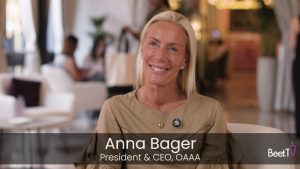
In a fireside chat with OAAA president and CEO Anna Bager, Sellers explained how she built a business audience through social media, podcasts and live experiences before discovering that an old-fashioned billboard could generate a distinctly modern kind of engagement.
Build for someone, not everyone
Sellers created HSR after identifying a gap in business content for women between ages 25 and 55. Her background included work in startups, corporate organizations and entertainment, along with experience managing an $18 million marketing budget.
That experience produced a lesson she now shares with founders: “If you are for everyone, you are for no one.”
HSR, which stands for Hot Smart Rich, was designed to make an immediate impression. Some people might be intrigued by the name. Others might recoil slightly. Both reactions beat indifference.
“You have to be polarizing,” Sellers said. “Maybe you’re intrigued, maybe you’re curious, maybe you’re really turned off by it. Maybe you feel something when you hear it, but you’re not going to pass it by.”
That distinct identity matters even more as automated tools make it easier for companies to produce content that looks and sounds suspiciously like everyone else’s content.
“Everyone is starting to sound the same with AI,” Sellers said. “If you stand out, you have such a better shot at success.”
Community is the asset algorithms can’t manufacture
Sellers views herself less as an influencer than as an entrepreneur building a community-driven company. Her podcast grew into one of the leading female-focused business shows, while her investment activities expanded to include 25 brands.
Creating content has become easy, she said. Keeping people interested is another matter.
“Maintaining an audience and a community is like the one thing you can’t buy,” Sellers said.
That lesson also shapes her investment strategy. Sellers looks for products that work, customers who return and founders she can observe over time. Advertising can acquire customers, but it can’t guarantee they’ll stick around once the introductory discount expires and the Instagram ad stops following them into the bathroom.
For consumer and consumer-technology companies, she examines repeat purchases and subscription longevity. A loyal customer can be more valuable than rapid growth fueled by constant acquisition spending.
AI has a marketing problem of its own
Sellers is optimistic about artificial intelligence, though she believes the industry could use better messaging.
“I think AI has a PR crisis right now,” she said.
Headlines tend to emphasize disappearing jobs and civilization’s imminent handover to machines. Meanwhile, many workers aren’t receiving practical training from their employers. They’re turning to podcasts, TikTok and Instagram to learn how the technology can help them.
Sellers sees AI as especially useful for entrepreneurs and predicts growth in solopreneurs and microbusinesses. Smaller operators will be able to perform work that once required larger teams.
The tools have also helped Sellers manage her own work. “For me, it is such a blessing, but you do have to educate yourself,” she said.
Apparently, the machines aren’t coming for everyone’s jobs just yet. They may first be assigned to organize the founder’s calendar.
A billboard makes digital fame feel real
Sellers’ interest in physical experiences grew after members of her community began organizing their own meetups around the world. Five attendees became 20, then 100 and eventually 200.
Those gatherings showed that ambitious women who had connected online also wanted places to meet in person.
Her first billboard came through Spotify after her show performed well on the platform. Positioned along Los Angeles’ busy 405 freeway during Coachella weekend, it produced an immediate response from people accustomed to seeing Sellers on much smaller screens.
Hundreds of people contacted her after spotting it. The reaction convinced her that out-of-home could give a digital brand a new kind of cultural weight.
HSR later turned another Los Angeles billboard into a scavenger hunt. Followers raced around the city looking for it, with facials offered to the first 10 people who succeeded.
The activation generated a degree of participation that Sellers said would have been difficult to produce through social media alone. It transformed advertising into a shared experience, while presumably creating a few confused drivers wondering why groups of women were celebrating beside roadside signage.
Creators may become billboard customers
Sellers expects more creators to use out-of-home advertising as they look for ways to distinguish themselves from the endless supply of online content.
“Most creators don’t get billboards yet, but I believe that creators are going to become a huge, huge user of billboards to stand out,” she said.
For out-of-home companies hoping to attract that business, Sellers offered one especially candid insight.
“I think creators love their ego. They love it,” she said.
A billboard can surprise creators, validate their growing cultural influence and turn a digital identity into something physically unavoidable. Sellers said seeing her own face on one made her more enthusiastic about the medium than she might otherwise have been.
She also advised out-of-home sellers to work with creator-management companies and talent networks rather than contacting creators individually. One agency relationship can provide access to dozens or hundreds of potential clients. That approach is more efficient than hoping a busy creator notices a cold email somewhere between brand pitches and unanswered messages from her husband.
Culture provides the map
Sellers said brands should plan their marketing around the cultural moments their customers care about, whether that means the World Cup, the Super Bowl or the Victoria’s Secret Fashion Show.
“You have to know your customer, you have to know where they’re going to be, how they’re showing up and then go target them that way,” she said.
That principle connects the entire media mix. Social content can respond to cultural conversations. Podcasts can deepen relationships. Events can bring communities together. Out-of-home can make a brand visible in the physical places where those communities gather.
Algorithms may determine what appears next in a feed. They still can’t reproduce the experience of seeing a familiar creator towering above the freeway, especially when there’s a free facial waiting at the end of the scavenger hunt.
You’re watching The Beet.TV Leadership Sessions at Cannes Lions 2026, presented by OAAA. For more videos from this series, please visit this page. You can find all of our coverage from Cannes Lions 2026 here.
CANNES, France – For a generation of marketers raised on clicks, likes and the occasional desperate refresh of an analytics dashboard, a billboard can seem almost quaint. It doesn’t follow anyone around the internet. It doesn’t demand an email address. It just stands there, enormous and mildly judgmental.
That physical presence is precisely what gives out-of-home advertising its power, according to Maggie Sellers, founder of HSR.
In a fireside chat with OAAA president and CEO Anna Bager, Sellers explained how she built a business audience through social media, podcasts and live experiences before discovering that an old-fashioned billboard could generate a distinctly modern kind of engagement.
Build for someone, not everyone
Sellers created HSR after identifying a gap in business content for women between ages 25 and 55. Her background included work in startups, corporate organizations and entertainment, along with experience managing an $18 million marketing budget.
That experience produced a lesson she now shares with founders: “If you are for everyone, you are for no one.”
HSR, which stands for Hot Smart Rich, was designed to make an immediate impression. Some people might be intrigued by the name. Others might recoil slightly. Both reactions beat indifference.
“You have to be polarizing,” Sellers said. “Maybe you’re intrigued, maybe you’re curious, maybe you’re really turned off by it. Maybe you feel something when you hear it, but you’re not going to pass it by.”
That distinct identity matters even more as automated tools make it easier for companies to produce content that looks and sounds suspiciously like everyone else’s content.
“Everyone is starting to sound the same with AI,” Sellers said. “If you stand out, you have such a better shot at success.”
Community is the asset algorithms can’t manufacture
Sellers views herself less as an influencer than as an entrepreneur building a community-driven company. Her podcast grew into one of the leading female-focused business shows, while her investment activities expanded to include 25 brands.
Creating content has become easy, she said. Keeping people interested is another matter.
“Maintaining an audience and a community is like the one thing you can’t buy,” Sellers said.
That lesson also shapes her investment strategy. Sellers looks for products that work, customers who return and founders she can observe over time. Advertising can acquire customers, but it can’t guarantee they’ll stick around once the introductory discount expires and the Instagram ad stops following them into the bathroom.
For consumer and consumer-technology companies, she examines repeat purchases and subscription longevity. A loyal customer can be more valuable than rapid growth fueled by constant acquisition spending.
AI has a marketing problem of its own
Sellers is optimistic about artificial intelligence, though she believes the industry could use better messaging.
“I think AI has a PR crisis right now,” she said.
Headlines tend to emphasize disappearing jobs and civilization’s imminent handover to machines. Meanwhile, many workers aren’t receiving practical training from their employers. They’re turning to podcasts, TikTok and Instagram to learn how the technology can help them.
Sellers sees AI as especially useful for entrepreneurs and predicts growth in solopreneurs and microbusinesses. Smaller operators will be able to perform work that once required larger teams.
The tools have also helped Sellers manage her own work. “For me, it is such a blessing, but you do have to educate yourself,” she said.
Apparently, the machines aren’t coming for everyone’s jobs just yet. They may first be assigned to organize the founder’s calendar.
A billboard makes digital fame feel real
Sellers’ interest in physical experiences grew after members of her community began organizing their own meetups around the world. Five attendees became 20, then 100 and eventually 200.
Those gatherings showed that ambitious women who had connected online also wanted places to meet in person.
Her first billboard came through Spotify after her show performed well on the platform. Positioned along Los Angeles’ busy 405 freeway during Coachella weekend, it produced an immediate response from people accustomed to seeing Sellers on much smaller screens.
Hundreds of people contacted her after spotting it. The reaction convinced her that out-of-home could give a digital brand a new kind of cultural weight.
HSR later turned another Los Angeles billboard into a scavenger hunt. Followers raced around the city looking for it, with facials offered to the first 10 people who succeeded.
The activation generated a degree of participation that Sellers said would have been difficult to produce through social media alone. It transformed advertising into a shared experience, while presumably creating a few confused drivers wondering why groups of women were celebrating beside roadside signage.
Creators may become billboard customers
Sellers expects more creators to use out-of-home advertising as they look for ways to distinguish themselves from the endless supply of online content.
“Most creators don’t get billboards yet, but I believe that creators are going to become a huge, huge user of billboards to stand out,” she said.
For out-of-home companies hoping to attract that business, Sellers offered one especially candid insight.
“I think creators love their ego. They love it,” she said.
A billboard can surprise creators, validate their growing cultural influence and turn a digital identity into something physically unavoidable. Sellers said seeing her own face on one made her more enthusiastic about the medium than she might otherwise have been.
She also advised out-of-home sellers to work with creator-management companies and talent networks rather than contacting creators individually. One agency relationship can provide access to dozens or hundreds of potential clients. That approach is more efficient than hoping a busy creator notices a cold email somewhere between brand pitches and unanswered messages from her husband.
Culture provides the map
Sellers said brands should plan their marketing around the cultural moments their customers care about, whether that means the World Cup, the Super Bowl or the Victoria’s Secret Fashion Show.
“You have to know your customer, you have to know where they’re going to be, how they’re showing up and then go target them that way,” she said.
That principle connects the entire media mix. Social content can respond to cultural conversations. Podcasts can deepen relationships. Events can bring communities together. Out-of-home can make a brand visible in the physical places where those communities gather.
Algorithms may determine what appears next in a feed. They still can’t reproduce the experience of seeing a familiar creator towering above the freeway, especially when there’s a free facial waiting at the end of the scavenger hunt.
You’re watching The Beet.TV Leadership Sessions at Cannes Lions 2026, presented by OAAA. For more videos from this series, please visit this page. You can find all of our coverage from Cannes Lions 2026 here.