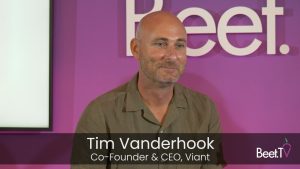


Why High Ratings Don’t Mean High Attention: TVision’s Bid to Rewire Ad Buying
CANNES, France — You probably know those crackling fireplace videos on YouTube. The CPM is dirt cheap, the reach is massive, and absolutely nobody is watching most of the year. It’s the perfect illustration of advertising’s oldest problem: buying eyeballs that aren’t actually looking.
That disconnect between reach and impact is exactly what attention measurement firm TVision has spent 11 years trying to solve. The company captures second-by-second, eyes-on-screen data to help brands understand not just whether an ad was served, but whether anyone was actually paying attention when it appeared.
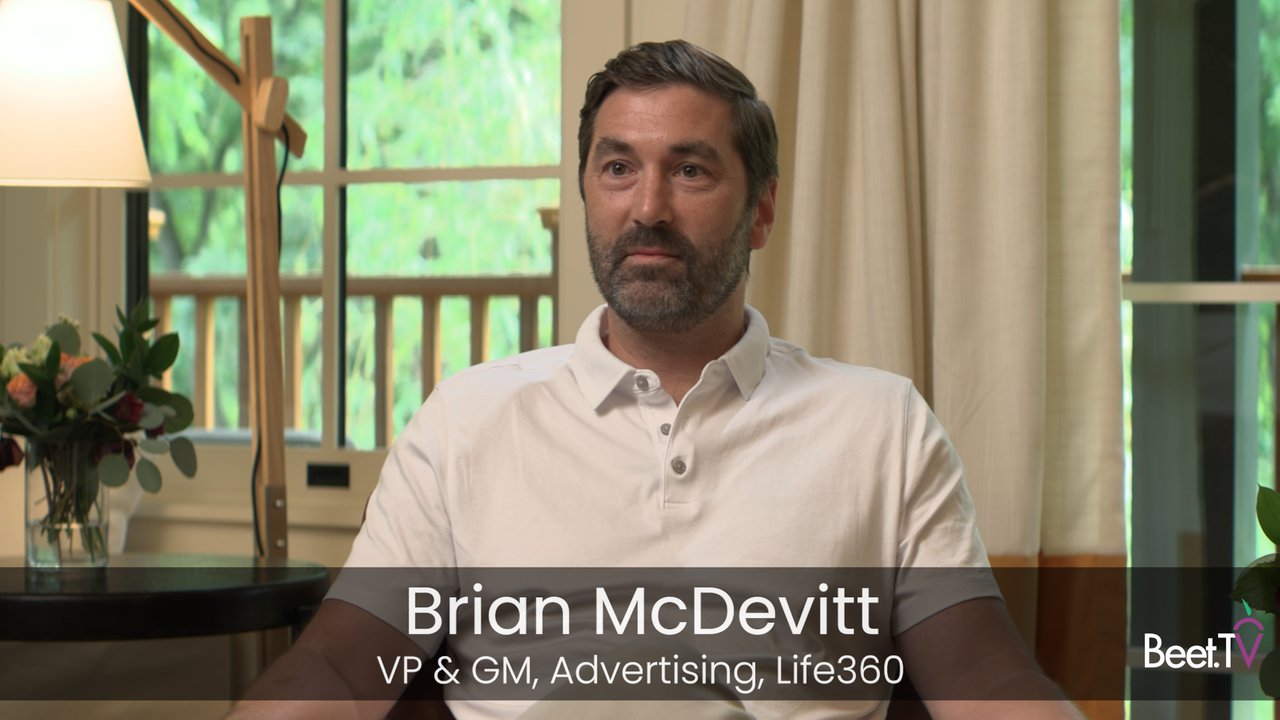
“Brands want impact. The reason why they’ve been buying reach is that was the best proxy,” said Yan Liu, CEO, TVision, in this video interview with Beet.TV. “But … what you need is the impact, and impact comes from attentive audience.”
The granularity gap
The advertising industry has long measured attention at the platform level – Instagram versus TikTok, for instance. But Liu argues that approach is fundamentally inadequate for the programmatic era, where decisions happen impression by impression.
TVision’s second-by-second measurement enables something that has eluded the industry for decades: separating the impact of creative from the impact of media placement. “The media guy always blame creative and creative guy always blame media,” Liu said. “But we believe there’s a happy medium.”
“Once you understand both, then you can understand what’s the best context to really drive the best attention for the creative or vice versa,” he added. “That’s really the beauty of the granular data second by second level to tell a story between the media and creative.”
Viant acquisition changes the game
For most of its existence, TVision operated as a data-only company. That changed in May 2026 when Viant Technology completed its acquisition of TVision Insights, integrating attention measurement directly into Viant’s AI-powered programmatic platform.
The combination addresses what Liu described as a limitation of TVision’s previous approach. “For a long time, TVision we had amazing data. But the way to use the data, I think was a bit more basic,” he said. “We came up with the planner, we came up with the pre-bid solution, basically saying, ‘Hey, just don’t bid on those apps.'”
Now, Liu said, the company is building what he believes is “the most advanced, modern AI solution in the marketplace” – one that combines attention signals with other data to score every impression in real time. “Is Peacock better than WBD? It’s not a simple solution,” he noted. The acquisition also brought IRIS ID, another Viant acquisition that enables activation at the show level or even scene by scene.
The ratings-attention disconnect
Perhaps the most curious finding from TVision’s data: outside the top 1% of programming like the Super Bowl, there is no correlation between ratings and attention. The assumption that high-rated content automatically commands viewer focus simply doesn’t hold up under measurement.
“Many sports games, people assume, ‘Oh, that’s high ratings must be high attention,'” Liu said. “Nobody can pay attention for four hours straight to a baseball game near the end. People got to take a break. We have to get some drink, go to the bathroom.”
The fragmentation of the media landscape makes this insight increasingly relevant. Liu pointed to the explosion of content choices: roughly 1,200 FAST channels, close to 1,000 new professionally produced shows launching annually, plus the vast ocean of YouTube.
“It’s beyond what any human can imagine,” he said. “High ratings usually equals to high CPM, but does it equal to high attention? I don’t think so. That’s why you need data to unpack that.”
You’re watching The Beet.TV Leadership Sessions at Cannes Lions 2026, presented by Viant. For more videos from this series, please visit this page. You can find all of our coverage from Cannes Lions 2026 here.

CANNES, France — You probably know those crackling fireplace videos on YouTube. The CPM is dirt cheap, the reach is massive, and absolutely nobody is watching most of the year. It’s the perfect illustration of advertising’s oldest problem: buying eyeballs that aren’t actually looking.
That disconnect between reach and impact is exactly what attention measurement firm TVision has spent 11 years trying to solve. The company captures second-by-second, eyes-on-screen data to help brands understand not just whether an ad was served, but whether anyone was actually paying attention when it appeared.
“Brands want impact. The reason why they’ve been buying reach is that was the best proxy,” said Yan Liu, CEO, TVision, in this video interview with Beet.TV. “But … what you need is the impact, and impact comes from attentive audience.”
The granularity gap
The advertising industry has long measured attention at the platform level – Instagram versus TikTok, for instance. But Liu argues that approach is fundamentally inadequate for the programmatic era, where decisions happen impression by impression.
TVision’s second-by-second measurement enables something that has eluded the industry for decades: separating the impact of creative from the impact of media placement. “The media guy always blame creative and creative guy always blame media,” Liu said. “But we believe there’s a happy medium.”
“Once you understand both, then you can understand what’s the best context to really drive the best attention for the creative or vice versa,” he added. “That’s really the beauty of the granular data second by second level to tell a story between the media and creative.”
Viant acquisition changes the game
For most of its existence, TVision operated as a data-only company. That changed in May 2026 when Viant Technology completed its acquisition of TVision Insights, integrating attention measurement directly into Viant’s AI-powered programmatic platform.
The combination addresses what Liu described as a limitation of TVision’s previous approach. “For a long time, TVision we had amazing data. But the way to use the data, I think was a bit more basic,” he said. “We came up with the planner, we came up with the pre-bid solution, basically saying, ‘Hey, just don’t bid on those apps.'”
Now, Liu said, the company is building what he believes is “the most advanced, modern AI solution in the marketplace” – one that combines attention signals with other data to score every impression in real time. “Is Peacock better than WBD? It’s not a simple solution,” he noted. The acquisition also brought IRIS ID, another Viant acquisition that enables activation at the show level or even scene by scene.
The ratings-attention disconnect
Perhaps the most curious finding from TVision’s data: outside the top 1% of programming like the Super Bowl, there is no correlation between ratings and attention. The assumption that high-rated content automatically commands viewer focus simply doesn’t hold up under measurement.
“Many sports games, people assume, ‘Oh, that’s high ratings must be high attention,'” Liu said. “Nobody can pay attention for four hours straight to a baseball game near the end. People got to take a break. We have to get some drink, go to the bathroom.”
The fragmentation of the media landscape makes this insight increasingly relevant. Liu pointed to the explosion of content choices: roughly 1,200 FAST channels, close to 1,000 new professionally produced shows launching annually, plus the vast ocean of YouTube.
“It’s beyond what any human can imagine,” he said. “High ratings usually equals to high CPM, but does it equal to high attention? I don’t think so. That’s why you need data to unpack that.”
You’re watching The Beet.TV Leadership Sessions at Cannes Lions 2026, presented by Viant. For more videos from this series, please visit this page. You can find all of our coverage from Cannes Lions 2026 here.