Pause Ads and Home Screens have Outgrown CTV’s Duct Tape: OpenGlass’ Higgins
RANCHO PALOS VERDES, CALIF. — Can CTV’s newest ad surfaces, from the home screen to the pause button, be bought as easily as a 30-second spot when, some argue, the pipes carrying them were built for web video?
Until recently, according to one ad-tech founder, buyers had to strike direct deals with a publisher or two, build custom assets and run campaigns outside their demand-side platform. His proposed fix sounds almost boring: “one deal ID.”
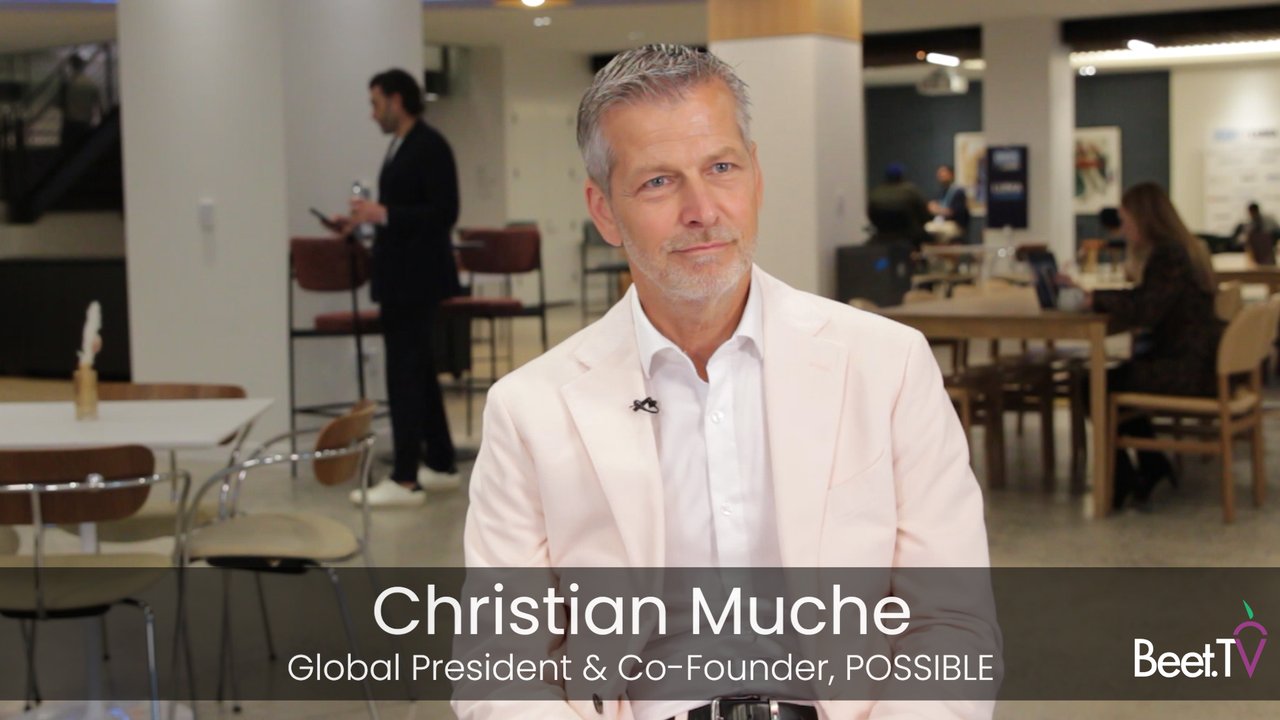
“…Brands need one deal ID, one creative, and the ability to access these from the DSP of their choice,” said Jason Higgins, co-founder and CEO, OpenGlass, in this video interview with Beet.TV.
Duct tape and brittle pipes
Higgins said much of the infrastructure is “built still on old web and video legacy technology,” which was “duct taped together for mobile” before CTV was added. “Unfortunately, that doesn’t work when you start bringing in advanced formats in CTV. The infrastructure is a little too brittle,” he said.
Brands “had to pick one or two partners to do direct IO, build unique assets for, and interact with it, but it kept it out of their DSP,” he said, adding that optimization is hard “when you get the results back a week later.”
Standards bodies are working on the same surfaces. IAB Tech Lab extended its Open Measurement SDK in November to cover pause, home screen, screensaver and overlay ads, while TiVo Ads and OpenGlass opened programmatic access to TV home screen inventory in July.
Front door, pause button, L-bar
Higgins compared the home screen to “the old AOL and Yahoo homepages, that front door of the internet,” and said it suits tentpole events and product launches. “This is the front door of CTV,” he said.
“If you have a Netflix, you probably have a Netflix without ads. So if a marketer wants to reach you, it’s really important for them to have that home screen access so that they can get you before you become essentially blind to their media buy,” he said.
Pause ads matter for the mid and lower funnel, Higgins said: “It’s on screen usually for about two and a half minutes from the data we’ve seen.” Squeeze backs such as L-bars, he said, are “a great way for you to get into sports at a more efficient price.”
One spot, many shapes
Creative is another bottleneck, Higgins told David Kaplan, contributor, Beet.TV. “One of the biggest issues we run into with brands who are excited about the advanced formats is, hey, I don’t have a creative for this,” he said.
He said the OpenGlass creative studio can turn a 30- or 15-second spot into a pause ad, home screen unit or squeeze back, using AI to keep “the heart and soul” of the original intact. “We’re not trying to create something new, but we’re just trying to adapt it,” he said.
Higgins was reluctant to name the format that will matter most over the next two years. “I’m nervous to pick just one,” he said. “If you’re looking for that big product launch… the home screen’s great… And if you want to be around live sports, squeeze backs are great.”

RANCHO PALOS VERDES, CALIF. — Can CTV’s newest ad surfaces, from the home screen to the pause button, be bought as easily as a 30-second spot when, some argue, the pipes carrying them were built for web video?
Until recently, according to one ad-tech founder, buyers had to strike direct deals with a publisher or two, build custom assets and run campaigns outside their demand-side platform. His proposed fix sounds almost boring: “one deal ID.”
“…Brands need one deal ID, one creative, and the ability to access these from the DSP of their choice,” said Jason Higgins, co-founder and CEO, OpenGlass, in this video interview with Beet.TV.
Duct tape and brittle pipes
Higgins said much of the infrastructure is “built still on old web and video legacy technology,” which was “duct taped together for mobile” before CTV was added. “Unfortunately, that doesn’t work when you start bringing in advanced formats in CTV. The infrastructure is a little too brittle,” he said.
Brands “had to pick one or two partners to do direct IO, build unique assets for, and interact with it, but it kept it out of their DSP,” he said, adding that optimization is hard “when you get the results back a week later.”
Standards bodies are working on the same surfaces. IAB Tech Lab extended its Open Measurement SDK in November to cover pause, home screen, screensaver and overlay ads, while TiVo Ads and OpenGlass opened programmatic access to TV home screen inventory in July.
Front door, pause button, L-bar
Higgins compared the home screen to “the old AOL and Yahoo homepages, that front door of the internet,” and said it suits tentpole events and product launches. “This is the front door of CTV,” he said.
“If you have a Netflix, you probably have a Netflix without ads. So if a marketer wants to reach you, it’s really important for them to have that home screen access so that they can get you before you become essentially blind to their media buy,” he said.
Pause ads matter for the mid and lower funnel, Higgins said: “It’s on screen usually for about two and a half minutes from the data we’ve seen.” Squeeze backs such as L-bars, he said, are “a great way for you to get into sports at a more efficient price.”
One spot, many shapes
Creative is another bottleneck, Higgins told David Kaplan, contributor, Beet.TV. “One of the biggest issues we run into with brands who are excited about the advanced formats is, hey, I don’t have a creative for this,” he said.
He said the OpenGlass creative studio can turn a 30- or 15-second spot into a pause ad, home screen unit or squeeze back, using AI to keep “the heart and soul” of the original intact. “We’re not trying to create something new, but we’re just trying to adapt it,” he said.
Higgins was reluctant to name the format that will matter most over the next two years. “I’m nervous to pick just one,” he said. “If you’re looking for that big product launch… the home screen’s great… And if you want to be around live sports, squeeze backs are great.”