

Streaming Has Become a Social Network and Every Show Is an Event: Disney’s Dana McGraw
CANNES, France – Marketers have spent years trying to figure out how to keep consumers engaged. Disney Advertising’s Dana McGraw may have a simpler answer: give people something to obsess over together.
Speaking at the Cannes Lions International Festival of Creativity, McGraw, senior vice president of data and measurement science at Disney Advertising, said modern fandom has evolved far beyond simply watching a favorite show or team. Today it stretches across streaming, linear television, social platforms and enough post-game clips to keep Knicks fans busy until next season.
“Fandom is about connection,” McGraw said in this interview with Beet.TV contributor Tameka Kee. “We all want to belong somewhere, be connected to something.”
That desire to belong has become increasingly valuable for advertisers as audiences fragment across platforms. The good news for Disney is that its fans tend not to stop at a single obsession.
“If you have this propensity to be a fan and to be deeply engaged with us, you’re deeply engaged with us in a multitude of ways,” McGraw said.
For media planners, this is a pleasant way of saying that someone who watches ESPN might also stream Disney+, argue about Marvel movies online and spend an unhealthy amount of time discussing playoff basketball.
Sports still owns the moment
At a festival where artificial intelligence is often treated as the answer to every question, McGraw reminded attendees that live sports still possess a superpower algorithms cannot easily replicate.
“There is nothing like the power of live sports and live events,” she said.
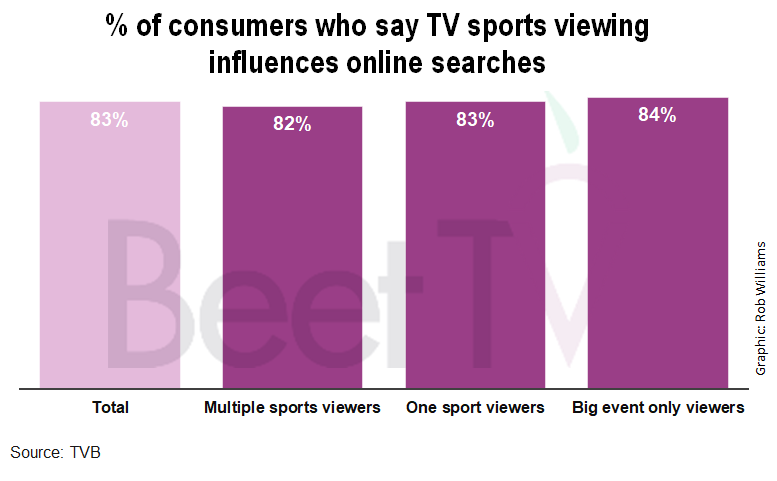
The reason is attention. While viewers may treat many forms of content as background noise while scrolling through their phones, live events create a sense of urgency.
“The attention lasts longer. The connection is tighter,” McGraw said.
More importantly for advertisers, the value extends well beyond the final whistle. Fans relive highlights, share clips and continue conversations long after the event itself has ended.
“It’s the before, it’s the during, it’s the after,” McGraw said.
For brands, this creates something increasingly rare in modern media: a moment when audiences are not actively searching for the skip button.
The rise of eventized viewing
Disney’s latest Generation Stream research project is built around what the company calls “eventized viewing,” a concept that suggests viewers increasingly treat streaming content the way previous generations treated major television broadcasts.
People plan around shows. They gather with friends. They prepare food. They create rituals.
In other words, streaming has somehow reinvented appointment viewing after spending a decade convincing everyone appointment viewing was dead.
Fandom escapes the screen
McGraw said the company’s research across 11 markets found that audiences increasingly turn viewing into shared experiences, even when they’re physically alone.
“People see streaming now as kind of a social network,” she said.
That finding may delight streaming executives and mildly terrify social media companies.
According to McGraw, viewers often feel connected simply by knowing that thousands or millions of others are experiencing the same moment at the same time.
The phenomenon is expected to become even more pronounced as Disney heads into a packed calendar that includes the Super Bowl, College Football Playoff National Championship, Grammys, and Oscars.
For a company built around blockbuster events, it’s essentially Christmas every month.
Beyond impressions and into halos
If advertisers have one universal talent, it’s reducing complex human behavior into spreadsheets.
McGraw would like them to stop doing that.
Rather than measuring events through isolated impressions, Disney increasingly wants marketers to think about what she calls the “halo effect.”
“We want to think about everything as sort of, there’s a halo effect,” she said.
That means understanding not only what happened during a broadcast but how the surrounding content ecosystem influences brand outcomes.
“We want to think about it more for all of those events, and really, all of our content around them,” she said.
The approach reflects a broader shift in media measurement. As audiences move fluidly between television, streaming and social platforms, a single metric increasingly resembles a flashlight trying to illuminate a football stadium.
One audience, many screens
The convergence of linear television and streaming has been discussed at Cannes for so many years that it risks becoming a retirement hobby. McGraw argues the industry should stop treating the channels as separate entities altogether.
“You have to look at it holistically,” she said.
Success, she argued, depends on understanding unified audiences, incremental reach and the role each platform plays within a broader business objective.
“We have to think about unified audiences. We have to think about incrementality,” McGraw said.
It is a less glamorous message than declaring the death of television or the arrival of some revolutionary new platform.
But in Cannes, where every beach seems to be launching the future of media, the radical idea may simply be that consumers do not care which screen they’re watching.
They just want to feel connected while doing it.
CANNES, France – Marketers have spent years trying to figure out how to keep consumers engaged. Disney Advertising’s Dana McGraw may have a simpler answer: give people something to obsess over together.
Speaking at the Cannes Lions International Festival of Creativity, McGraw, senior vice president of data and measurement science at Disney Advertising, said modern fandom has evolved far beyond simply watching a favorite show or team. Today it stretches across streaming, linear television, social platforms and enough post-game clips to keep Knicks fans busy until next season.
“Fandom is about connection,” McGraw said in this interview with Beet.TV contributor Tameka Kee. “We all want to belong somewhere, be connected to something.”
That desire to belong has become increasingly valuable for advertisers as audiences fragment across platforms. The good news for Disney is that its fans tend not to stop at a single obsession.
“If you have this propensity to be a fan and to be deeply engaged with us, you’re deeply engaged with us in a multitude of ways,” McGraw said.
For media planners, this is a pleasant way of saying that someone who watches ESPN might also stream Disney+, argue about Marvel movies online and spend an unhealthy amount of time discussing playoff basketball.
Sports still owns the moment
At a festival where artificial intelligence is often treated as the answer to every question, McGraw reminded attendees that live sports still possess a superpower algorithms cannot easily replicate.
“There is nothing like the power of live sports and live events,” she said.
The reason is attention. While viewers may treat many forms of content as background noise while scrolling through their phones, live events create a sense of urgency.
“The attention lasts longer. The connection is tighter,” McGraw said.
More importantly for advertisers, the value extends well beyond the final whistle. Fans relive highlights, share clips and continue conversations long after the event itself has ended.
“It’s the before, it’s the during, it’s the after,” McGraw said.
For brands, this creates something increasingly rare in modern media: a moment when audiences are not actively searching for the skip button.
The rise of eventized viewing
Disney’s latest Generation Stream research project is built around what the company calls “eventized viewing,” a concept that suggests viewers increasingly treat streaming content the way previous generations treated major television broadcasts.
People plan around shows. They gather with friends. They prepare food. They create rituals.
In other words, streaming has somehow reinvented appointment viewing after spending a decade convincing everyone appointment viewing was dead.
Fandom escapes the screen
McGraw said the company’s research across 11 markets found that audiences increasingly turn viewing into shared experiences, even when they’re physically alone.
“People see streaming now as kind of a social network,” she said.
That finding may delight streaming executives and mildly terrify social media companies.
According to McGraw, viewers often feel connected simply by knowing that thousands or millions of others are experiencing the same moment at the same time.
The phenomenon is expected to become even more pronounced as Disney heads into a packed calendar that includes the Super Bowl, College Football Playoff National Championship, Grammys, and Oscars.
For a company built around blockbuster events, it’s essentially Christmas every month.
Beyond impressions and into halos
If advertisers have one universal talent, it’s reducing complex human behavior into spreadsheets.
McGraw would like them to stop doing that.
Rather than measuring events through isolated impressions, Disney increasingly wants marketers to think about what she calls the “halo effect.”
“We want to think about everything as sort of, there’s a halo effect,” she said.
That means understanding not only what happened during a broadcast but how the surrounding content ecosystem influences brand outcomes.
“We want to think about it more for all of those events, and really, all of our content around them,” she said.
The approach reflects a broader shift in media measurement. As audiences move fluidly between television, streaming and social platforms, a single metric increasingly resembles a flashlight trying to illuminate a football stadium.
One audience, many screens
The convergence of linear television and streaming has been discussed at Cannes for so many years that it risks becoming a retirement hobby. McGraw argues the industry should stop treating the channels as separate entities altogether.
“You have to look at it holistically,” she said.
Success, she argued, depends on understanding unified audiences, incremental reach and the role each platform plays within a broader business objective.
“We have to think about unified audiences. We have to think about incrementality,” McGraw said.
It is a less glamorous message than declaring the death of television or the arrival of some revolutionary new platform.
But in Cannes, where every beach seems to be launching the future of media, the radical idea may simply be that consumers do not care which screen they’re watching.
They just want to feel connected while doing it.
Series Videos