In-store Is Retail Media’s Blind Spot: Michele Roney of Mars United Commerce
LAS VEGAS – For all the precision lavished on ecommerce pixels, the physical store remains retail media’s great shrug.
Speaking with David Kaplan at CES 2026, Michele Roney, executive vp of retailer CX at Mars United Commerce, put it bluntly.
“The gaps in the shopper experience as it relates to retail media are hands down in-store,” she said.
Brands can model every click online, but once shoppers grab a cart, it is mostly mass advertising with a hope and a prayer.
“We’ve spent a lot of time on every pixel within a website,” Roney said, “but very little time in the store.”
Signs everywhere but relevance nowhere
Retailers have not been shy about adding screens, signs and in-store audio, but Roney warned that volume does not equal value.
“We put up a lot of signs and display boards and in store radio, which are great,” she said, “but the messaging needs to be relevant to where they are in the customer experience.”
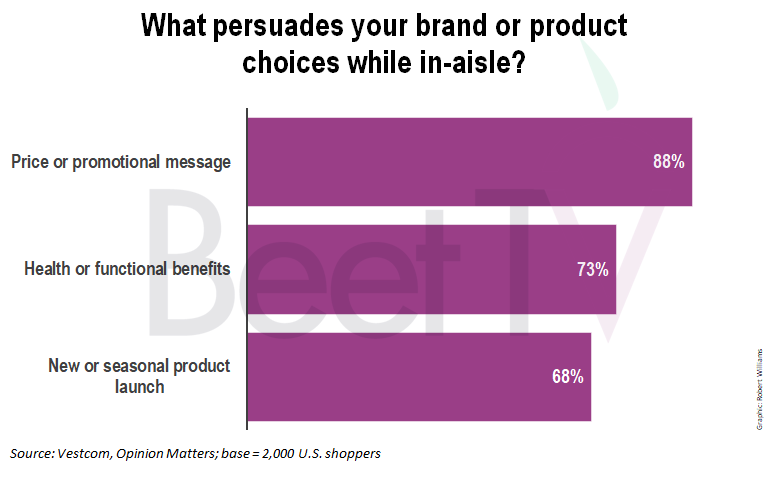
Miss that moment, and “it’s all going to fail.”
The problem isn’t effort. It is understanding how shoppers actually move, pause and decide inside the store.
Simplify the signals before adding more of them
When Kaplan pressed on how brands and retailers can improve CX without turning everything into targeting theater, Roney went straight to the plumbing.
“Foundationally it’s the integration of data leading to actionable insights,” she said.
Collaboration sounds nice on panels, but it requires transparency, scale and clear outcomes. Roney noted there are still barriers everywhere, from retailer to brand, brand to retailer, in store to out of store. The fix starts with agreeing why the data is shared and what success looks like before adding another dashboard.
One size fits all is how relevance gets lost
Roney sees a real risk of brands losing relevance at the moment of purchase, not because of a lack of AI, but because of lazy assumptions.
“No two retailers are alike,” she said, adding that retail media is “not a one-size-fits-all proposition.”
What works in a big box can flop in a convenience store and vice versa. She offered a simple example. In store radio can drive impulse in a C store, but that does not mean it belongs in a warehouse aisle. Brands often write off a format because it failed in one environment, then wonder why it never works anywhere else.
Design for the journey or lose together
Every retail vertical has its own rhythm and every shopper journey is different, Roney said, and ignoring that nuance is a fast track to wasted spend. Her warning came with a smile but landed hard.
“Do not apply one size fits all,” she said, “or we’re all going to lose.”
For media buyers, the message was clear. The future of retail media is not louder screens or shinier tech. It is relevance, context and finally paying attention to what happens after the shopper walks through the door.
You’re watching Beet.TV coverage from CES 2026. For more videos from this series, please visit this page.




LAS VEGAS – For all the precision lavished on ecommerce pixels, the physical store remains retail media’s great shrug.
Speaking with David Kaplan at CES 2026, Michele Roney, executive vp of retailer CX at Mars United Commerce, put it bluntly.
“The gaps in the shopper experience as it relates to retail media are hands down in-store,” she said.
Brands can model every click online, but once shoppers grab a cart, it is mostly mass advertising with a hope and a prayer.
“We’ve spent a lot of time on every pixel within a website,” Roney said, “but very little time in the store.”
Signs everywhere but relevance nowhere
Retailers have not been shy about adding screens, signs and in-store audio, but Roney warned that volume does not equal value.
“We put up a lot of signs and display boards and in store radio, which are great,” she said, “but the messaging needs to be relevant to where they are in the customer experience.”
Miss that moment, and “it’s all going to fail.”
The problem isn’t effort. It is understanding how shoppers actually move, pause and decide inside the store.
Simplify the signals before adding more of them
When Kaplan pressed on how brands and retailers can improve CX without turning everything into targeting theater, Roney went straight to the plumbing.
“Foundationally it’s the integration of data leading to actionable insights,” she said.
Collaboration sounds nice on panels, but it requires transparency, scale and clear outcomes. Roney noted there are still barriers everywhere, from retailer to brand, brand to retailer, in store to out of store. The fix starts with agreeing why the data is shared and what success looks like before adding another dashboard.
One size fits all is how relevance gets lost
Roney sees a real risk of brands losing relevance at the moment of purchase, not because of a lack of AI, but because of lazy assumptions.
“No two retailers are alike,” she said, adding that retail media is “not a one-size-fits-all proposition.”
What works in a big box can flop in a convenience store and vice versa. She offered a simple example. In store radio can drive impulse in a C store, but that does not mean it belongs in a warehouse aisle. Brands often write off a format because it failed in one environment, then wonder why it never works anywhere else.
Design for the journey or lose together
Every retail vertical has its own rhythm and every shopper journey is different, Roney said, and ignoring that nuance is a fast track to wasted spend. Her warning came with a smile but landed hard.
“Do not apply one size fits all,” she said, “or we’re all going to lose.”
For media buyers, the message was clear. The future of retail media is not louder screens or shinier tech. It is relevance, context and finally paying attention to what happens after the shopper walks through the door.
You’re watching Beet.TV coverage from CES 2026. For more videos from this series, please visit this page.