Samba’s Navin Bets AI Agents Can Finally Collect on Programmatic’s Unpaid Promise
Could AI agents deliver the media efficiency that programmatic advertising promised, after many buyers ended up paying for layers of intermediaries instead?
Some in the data business think so, provided agents are anchored in what one executive called “real deterministic data” and humans keep making the strategic calls.
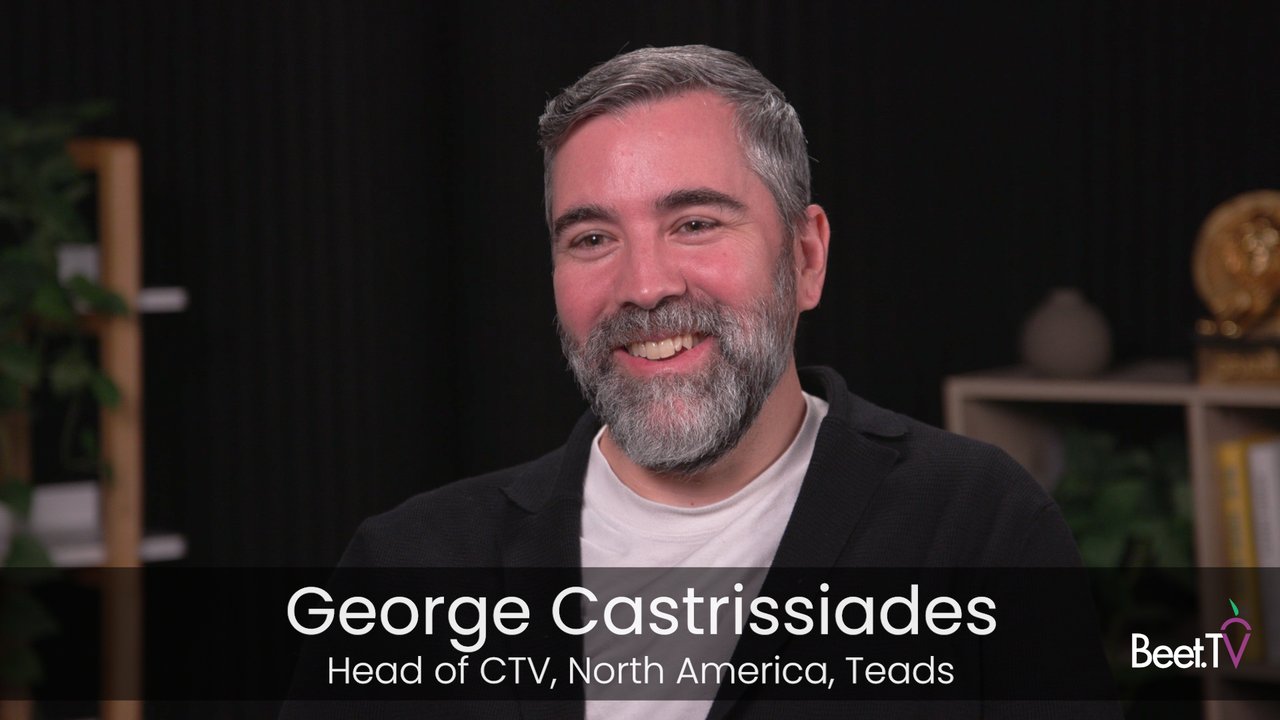
“We were promised media efficiency and instead we got a massive tax of just a lot of layers of technology and middlemen,” said Ashwin Navin, co-founder and CEO, Samba, in this video interview with Beet.TV.
Programmatic, take two
Navin told Andy Plesser, CEO, Beet.TV, that “agentic presents a better future,” one that could bring the efficiency and quality marketers had hoped for. “What programmatic was supposed to deliver, I think will come to fruition, but thanks to agentic,” he said.
“As a marketer, I think you can now canvass a lot of great media in your media plan without the limitation of a human buying process,” Navin said. At its customer event, the Samba Summit, the company demonstrated an end-to-end agentic workflow covering media planning, media buying, and analytics, he said.
Gartner forecasts that by 2028 more than 70% of global ad spend, and 80% of U.S. ad spend, will flow through self-serve platforms where AI materially influences media buying, cost, and outcomes.
Measurement as the agents’ compass
Navin said media buying and selling involve “a lot of manual tasks that we would gladly hand over to agents.” He added: “But when it comes time to make decisions, we still like the idea that humans are in the loop, applying human judgment, human creativity, human strategy.”
“AI needs something to reference to decide how to optimize, how to act on behalf of a particular objective of a client,” Navin said. He predicted measurement “will have another golden moment, like we had through all of the proliferation of new platforms and fragmentation where deduplication became very important.”
The question is whether buyers will trust optimization they cannot inspect. McKinsey found 42% of advertisers cite reliance on black-box optimization systems as a key risk, while cross-platform measurement rose to 72% as a marketer priority, from 64%, in the IAB’s 2026 Outlook Study.
A moment in the sun for the next tier
Samba wants to power agentic media buying and “media analytics that leverages real data and not hallucinations,” Navin said. “We need to anchor all of these decision loops with real deterministic data.” He described an “ontological knowledge graph” of signals on what people watch, stream, and scroll across many countries.
Samba acquired Bestever AI, a generative AI advertising platform, in June, saying the deal would accelerate its agentic advertising roadmap, including autonomous analytics and real-time campaign optimization.
Navin said the largest beneficiaries may sit just below the top. “The largest media companies have never needed that much help, but when you move one tier down… that next tier of media companies I think are going to really have a really great moment in the sun,” he said.
He said “it’ll be easier to buy those than it has been in the past.” “We’re excited that data can provide that transparency into the marketplace where the value is,” Navin said.

Could AI agents deliver the media efficiency that programmatic advertising promised, after many buyers ended up paying for layers of intermediaries instead?
Some in the data business think so, provided agents are anchored in what one executive called “real deterministic data” and humans keep making the strategic calls.
“We were promised media efficiency and instead we got a massive tax of just a lot of layers of technology and middlemen,” said Ashwin Navin, co-founder and CEO, Samba, in this video interview with Beet.TV.
Programmatic, take two
Navin told Andy Plesser, CEO, Beet.TV, that “agentic presents a better future,” one that could bring the efficiency and quality marketers had hoped for. “What programmatic was supposed to deliver, I think will come to fruition, but thanks to agentic,” he said.
“As a marketer, I think you can now canvass a lot of great media in your media plan without the limitation of a human buying process,” Navin said. At its customer event, the Samba Summit, the company demonstrated an end-to-end agentic workflow covering media planning, media buying, and analytics, he said.
Gartner forecasts that by 2028 more than 70% of global ad spend, and 80% of U.S. ad spend, will flow through self-serve platforms where AI materially influences media buying, cost, and outcomes.
Measurement as the agents’ compass
Navin said media buying and selling involve “a lot of manual tasks that we would gladly hand over to agents.” He added: “But when it comes time to make decisions, we still like the idea that humans are in the loop, applying human judgment, human creativity, human strategy.”
“AI needs something to reference to decide how to optimize, how to act on behalf of a particular objective of a client,” Navin said. He predicted measurement “will have another golden moment, like we had through all of the proliferation of new platforms and fragmentation where deduplication became very important.”
The question is whether buyers will trust optimization they cannot inspect. McKinsey found 42% of advertisers cite reliance on black-box optimization systems as a key risk, while cross-platform measurement rose to 72% as a marketer priority, from 64%, in the IAB’s 2026 Outlook Study.
A moment in the sun for the next tier
Samba wants to power agentic media buying and “media analytics that leverages real data and not hallucinations,” Navin said. “We need to anchor all of these decision loops with real deterministic data.” He described an “ontological knowledge graph” of signals on what people watch, stream, and scroll across many countries.
Samba acquired Bestever AI, a generative AI advertising platform, in June, saying the deal would accelerate its agentic advertising roadmap, including autonomous analytics and real-time campaign optimization.
Navin said the largest beneficiaries may sit just below the top. “The largest media companies have never needed that much help, but when you move one tier down… that next tier of media companies I think are going to really have a really great moment in the sun,” he said.
He said “it’ll be easier to buy those than it has been in the past.” “We’re excited that data can provide that transparency into the marketplace where the value is,” Navin said.