


Retail Media Knows What You Want Before Your Shopping Cart Does: Walmart Connect’s Brett Wein
CANNES, France – Retail media loves to brag about signals, identity and deterministic data. Brett Wein, vice president and head of food at Walmart Connect, has a simpler pitch: if someone buys groceries every week and starts lingering around mattress listings, that probably tells you something.
Speaking with Beet.TV contributor David Kaplan at the Cannes Lions International Festival of Creativity, Wein argued that Walmart Connect’s greatest advantage isn’t another advertising buzzword. It’s the fact that more than 150 million shoppers interact with Walmart’s stores, website and app every week, creating a mountain of purchase data that advertisers would happily trade their favorite attribution deck to access.
Shopping carts don’t lie
Wein said purchase behavior remains one of the strongest signals marketers can use, especially as older targeting methods continue to lose ground.
“Purchase-based signals are really, really powerful” compared with legacy approaches, he said, adding that deterministic data is “probably kind of like the fundamental value that we bring.”
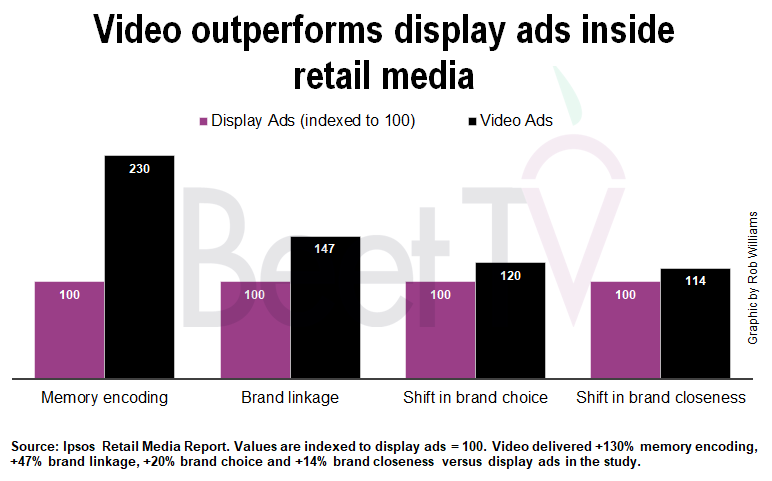
With millions of shoppers generating signals through stores, ecommerce and mobile apps, Walmart can identify everything from routine grocery trips to consumers researching a new television or mattress.
“We have over 150 million customers walking through our stores… every single week,” Wein said. “The buying behavior and the shopping behavior of those consumers is as powerful as you could possibly imagine” for predicting what customers may do next.
For marketers, that’s a refreshing alternative to trying to infer purchase intent from someone who accidentally clicked on an article about patio umbrellas three months ago.
Backyard marketing without the logo wallpaper
Wein also highlighted Walmart Connect’s “Backyard Escapes” campaign with VIZIO, which tried to avoid the classic marketing formula of attaching logos to content and calling it integration.
Instead, Walmart transformed four backyards in four markets with help from influencers and television personality Tan France, turning the seasonal campaign into an entertainment program that aired on VIZIO’s platform.
“We said, ‘How do we bring what we do in our stores to life to literally every customer imaginable?'” Wein said.
Rather than simply placing sponsor logos everywhere, brands became part of the makeover experience itself.
The approach appeared to resonate. Wein said roughly 2.7 million to 2.9 million viewers watched the program.
“People talk about integrated marketing programs,” he said. “This brought it to life in a way that nobody else could possibly do… except for somebody like Walmart and VIZIO.”
In advertising, that’s practically revolutionary. Nobody had to pretend a lawn chair “created authentic engagement” simply because its logo appeared in the corner of the screen.
Grocery today, mattress tomorrow
Wein said Walmart’s purchase signals aren’t limited to groceries or seasonal merchandise.
“It’s pretty extensive,” he said, noting that the same data can help marketers understand impulse purchases as well as products that consumers may research for months before buying.
“Those signals are valuable, whether it’s an impulse buy or something that you’re thinking about buying six months from now,” Wein said. “Our signals are extremely valuable.”
That broad view gives advertisers insight across both fast-moving consumer goods and higher consideration purchases, making retail media useful well beyond packaged goods brands.
CTV gets a shopping upgrade
As retail media expands into connected television, Wein believes Walmart’s ownership of VIZIO gives advertisers something traditional television has struggled to match: purchase-backed audience targeting at scale.
He said VIZIO, combined with Walmart’s Onn television brand that runs VIZIO’s operating system, is expected to reach roughly 25% to 30% of U.S. households by the end of the year.
That combination lets advertisers reduce wasted impressions by showing ads only to households that are actually likely to buy.
“It’s just bringing the magic of digital to life… in the CTV environment that’s never been done before,” Wein said.
For advertisers, the message was straightforward. Streaming television is becoming less about broadcasting to everyone and more about finding the households already halfway to the checkout lane. The shopping cart, it turns out, has become one of media’s most persuasive storytellers.
You’re watching Beet.TV coverage from Cannes Lion 2026. For more videos from this series, please visit this page.



CANNES, France – Retail media loves to brag about signals, identity and deterministic data. Brett Wein, vice president and head of food at Walmart Connect, has a simpler pitch: if someone buys groceries every week and starts lingering around mattress listings, that probably tells you something.
Speaking with Beet.TV contributor David Kaplan at the Cannes Lions International Festival of Creativity, Wein argued that Walmart Connect’s greatest advantage isn’t another advertising buzzword. It’s the fact that more than 150 million shoppers interact with Walmart’s stores, website and app every week, creating a mountain of purchase data that advertisers would happily trade their favorite attribution deck to access.
Shopping carts don’t lie
Wein said purchase behavior remains one of the strongest signals marketers can use, especially as older targeting methods continue to lose ground.
“Purchase-based signals are really, really powerful” compared with legacy approaches, he said, adding that deterministic data is “probably kind of like the fundamental value that we bring.”
With millions of shoppers generating signals through stores, ecommerce and mobile apps, Walmart can identify everything from routine grocery trips to consumers researching a new television or mattress.
“We have over 150 million customers walking through our stores… every single week,” Wein said. “The buying behavior and the shopping behavior of those consumers is as powerful as you could possibly imagine” for predicting what customers may do next.
For marketers, that’s a refreshing alternative to trying to infer purchase intent from someone who accidentally clicked on an article about patio umbrellas three months ago.
Backyard marketing without the logo wallpaper
Wein also highlighted Walmart Connect’s “Backyard Escapes” campaign with VIZIO, which tried to avoid the classic marketing formula of attaching logos to content and calling it integration.
Instead, Walmart transformed four backyards in four markets with help from influencers and television personality Tan France, turning the seasonal campaign into an entertainment program that aired on VIZIO’s platform.
“We said, ‘How do we bring what we do in our stores to life to literally every customer imaginable?'” Wein said.
Rather than simply placing sponsor logos everywhere, brands became part of the makeover experience itself.
The approach appeared to resonate. Wein said roughly 2.7 million to 2.9 million viewers watched the program.
“People talk about integrated marketing programs,” he said. “This brought it to life in a way that nobody else could possibly do… except for somebody like Walmart and VIZIO.”
In advertising, that’s practically revolutionary. Nobody had to pretend a lawn chair “created authentic engagement” simply because its logo appeared in the corner of the screen.
Grocery today, mattress tomorrow
Wein said Walmart’s purchase signals aren’t limited to groceries or seasonal merchandise.
“It’s pretty extensive,” he said, noting that the same data can help marketers understand impulse purchases as well as products that consumers may research for months before buying.
“Those signals are valuable, whether it’s an impulse buy or something that you’re thinking about buying six months from now,” Wein said. “Our signals are extremely valuable.”
That broad view gives advertisers insight across both fast-moving consumer goods and higher consideration purchases, making retail media useful well beyond packaged goods brands.
CTV gets a shopping upgrade
As retail media expands into connected television, Wein believes Walmart’s ownership of VIZIO gives advertisers something traditional television has struggled to match: purchase-backed audience targeting at scale.
He said VIZIO, combined with Walmart’s Onn television brand that runs VIZIO’s operating system, is expected to reach roughly 25% to 30% of U.S. households by the end of the year.
That combination lets advertisers reduce wasted impressions by showing ads only to households that are actually likely to buy.
“It’s just bringing the magic of digital to life… in the CTV environment that’s never been done before,” Wein said.
For advertisers, the message was straightforward. Streaming television is becoming less about broadcasting to everyone and more about finding the households already halfway to the checkout lane. The shopping cart, it turns out, has become one of media’s most persuasive storytellers.
You’re watching Beet.TV coverage from Cannes Lion 2026. For more videos from this series, please visit this page.

Topics Videos