


Streaming Ad Market Matures as Programmatic, AI, Contextual Targeting Accelerate: FreeWheel’s Kathy Argyriou
The U.S. streaming advertising market reached a turning point in 2025 as a surge of ad-supported inventory reshaped pricing, buying strategies and definitions of premium television, says Kathy Argyriou, head of publisher sales at FreeWheel, a unit of Comcast.
Speaking with Beet.TV contributor David Kaplan, Argyriou said the rollout of ad-supported tiers from major streaming platforms drove a sharp increase in supply, putting pressure on pricing while pushing the industry to better segment what qualifies as premium inventory.
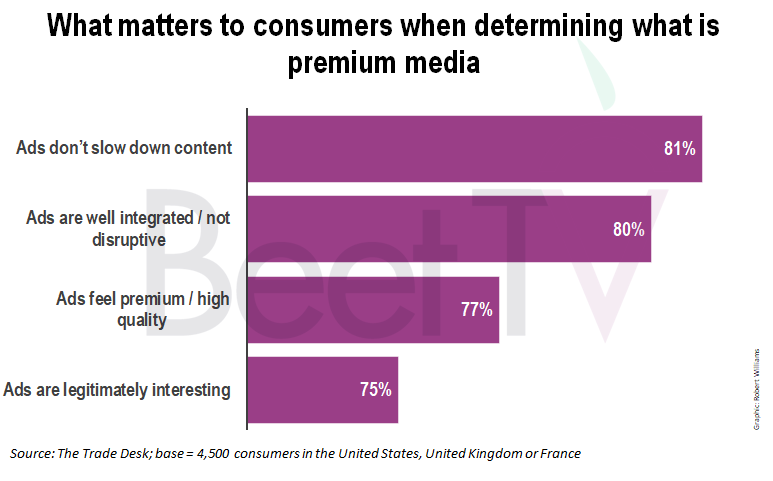
“For me, 2025 was a year where streaming TV started maturing,” Argyriou said, pointing to new ad inventory from services such as Netflix, Disney and Amazon. That influx, she said, “ended up putting a lot of pricing pressure and that then also led to a lot of innovation in how we are segmenting premium, what is truly premium streaming inventory.”
Room for growth in 2026
Looking ahead to 2026, Argyriou said programmatic advertising still has significant room to grow, even after years of expansion. She noted that programmatic transactions account for only about 30% of total advertising spend, a figure she described as surprisingly low given the scale of automation across digital media.
Live events are expected to play a key role in accelerating that shift. Argyriou cited major upcoming broadcasts,including the Winter Olympics, the Super Bowl and the FIFA World Cup, as catalysts for making more premium television inventory available through programmatic pipes, opening what she called “more untapped opportunity on the horizon.”
AI changes advertising workflows
Artificial intelligence is also becoming embedded across television advertising workflows, Argyriou said, from creative diversification to shoppable ad formats. As those tools mature, she expects television to move beyond pure brand awareness toward measurable performance outcomes, linking viewing behavior more directly to consumer actions.
Another major change is the resurgence of contextual targeting, which Argyriou said is regaining relevance as streaming expands addressability. Brands that once focused heavily on identity-based and behavioral targeting are increasingly interested in aligning ads with content, tone and emotion.
“With this influx of all this content and inventory that is available through streaming… we are seeing contextual make a comeback, rightfully so,” she said, adding that contextually relevant placements can drive stronger recall and engagement.
FreeWheel has leaned into that trend by building demand packages anchored in contextual metadata and signals from publisher partners, Argyriou said. The company also works with partners including Curve, Proximic and Wurl to enrich contextual intelligence across the ecosystem.
Positive results for marketers
Early results are encouraging. Argyriou said clients conducting brand-lift and recall studies have reported increases of 30% to 40% when ads align with the content and emotional tone of what viewers are watching.
Contextual intelligence is also becoming a more sophisticated brand-safety tool, she added, allowing advertisers to move beyond blunt category exclusions toward scene-level understanding of content. AI-driven analysis can help brands avoid mismatches between ads and emotionally sensitive moments, while improving relevance when tone and messaging align.
“At the end of the day, not every impression is created equal,” Argyriou said, arguing that emotional context can dramatically influence how an ad is perceived. As AI-powered tools continue to evolve, she said, advertisers will gain more precision in balancing relevance, performance and brand safety in the connected TV era.
FreeWheel Seeks to ‘Simplify’ Streaming Ad Buys: Kathy Argyriou
You’re watching Performance Marketing in Streaming TV: The Strategies & Innovations Driving Outcomes, a Beet.TV Leadership Series, presented by Wurl. For more videos from this series, please visit this page.

The U.S. streaming advertising market reached a turning point in 2025 as a surge of ad-supported inventory reshaped pricing, buying strategies and definitions of premium television, says Kathy Argyriou, head of publisher sales at FreeWheel, a unit of Comcast.
Speaking with Beet.TV contributor David Kaplan, Argyriou said the rollout of ad-supported tiers from major streaming platforms drove a sharp increase in supply, putting pressure on pricing while pushing the industry to better segment what qualifies as premium inventory.
“For me, 2025 was a year where streaming TV started maturing,” Argyriou said, pointing to new ad inventory from services such as Netflix, Disney and Amazon. That influx, she said, “ended up putting a lot of pricing pressure and that then also led to a lot of innovation in how we are segmenting premium, what is truly premium streaming inventory.”
Room for growth in 2026
Looking ahead to 2026, Argyriou said programmatic advertising still has significant room to grow, even after years of expansion. She noted that programmatic transactions account for only about 30% of total advertising spend, a figure she described as surprisingly low given the scale of automation across digital media.
Live events are expected to play a key role in accelerating that shift. Argyriou cited major upcoming broadcasts,including the Winter Olympics, the Super Bowl and the FIFA World Cup, as catalysts for making more premium television inventory available through programmatic pipes, opening what she called “more untapped opportunity on the horizon.”
AI changes advertising workflows
Artificial intelligence is also becoming embedded across television advertising workflows, Argyriou said, from creative diversification to shoppable ad formats. As those tools mature, she expects television to move beyond pure brand awareness toward measurable performance outcomes, linking viewing behavior more directly to consumer actions.
Another major change is the resurgence of contextual targeting, which Argyriou said is regaining relevance as streaming expands addressability. Brands that once focused heavily on identity-based and behavioral targeting are increasingly interested in aligning ads with content, tone and emotion.
“With this influx of all this content and inventory that is available through streaming… we are seeing contextual make a comeback, rightfully so,” she said, adding that contextually relevant placements can drive stronger recall and engagement.
FreeWheel has leaned into that trend by building demand packages anchored in contextual metadata and signals from publisher partners, Argyriou said. The company also works with partners including Curve, Proximic and Wurl to enrich contextual intelligence across the ecosystem.
Positive results for marketers
Early results are encouraging. Argyriou said clients conducting brand-lift and recall studies have reported increases of 30% to 40% when ads align with the content and emotional tone of what viewers are watching.
Contextual intelligence is also becoming a more sophisticated brand-safety tool, she added, allowing advertisers to move beyond blunt category exclusions toward scene-level understanding of content. AI-driven analysis can help brands avoid mismatches between ads and emotionally sensitive moments, while improving relevance when tone and messaging align.
“At the end of the day, not every impression is created equal,” Argyriou said, arguing that emotional context can dramatically influence how an ad is perceived. As AI-powered tools continue to evolve, she said, advertisers will gain more precision in balancing relevance, performance and brand safety in the connected TV era.
FreeWheel Seeks to ‘Simplify’ Streaming Ad Buys: Kathy Argyriou
You’re watching Performance Marketing in Streaming TV: The Strategies & Innovations Driving Outcomes, a Beet.TV Leadership Series, presented by Wurl. For more videos from this series, please visit this page.