


Creative Quality, Data Collaboration and AI Agents Will Define Publishers’ Next Phase: Adobe’s Sam Garfield
RANCHO PALOS VERDES, CALIF. – Adobe’s Sam Garfield, Head of Digital Strategy – CMT, Data and AI Platforms, believes that the advertising industry’s long-standing fixation on targeting over creative is beginning to break. That means publishers can unlock meaningful new revenue streams if they modernize how they produce, measure and share data around creativity.
Speaking with Beet.TV contributor David Kaplan at the Beet Retreat LA, Garfield, who leads digital strategy for CMT, data and AI platforms at Adobe, said new analytical tools are finally making creative effectiveness measurable at scale. That shift, he said, could reshape how publishers work with both major brands and smaller advertisers.
Creative still drives conversions, but has been hard to measure
Garfield pointed to a meta-analysis Adobe conducted with consulting firm Madison & Wall examining creative impact on conversions. The findings: creative quality influences outcomes by roughly 40% to 60%, yet the industry largely optimized for targeting because it was easier to quantify.
“Last-click measurement became the center of gravity,” he said, noting that entire categories of companies prospered by focusing on easily trackable signals while ignoring the harder-to-measure role of creative.
Adobe’s “Creative Analytics” tool, he added, is designed to isolate which creative elements move the needle, a shift he sees as essential for correcting years of imbalanced attribution.
Generative AI could bring more small advertisers into premium media
As publishers increasingly look to generative AI to court small and mid-sized advertisers, Garfield said the opportunity is real, but only if the tooling improves.
He identified two requirements:
- High-quality creative: GenAI lowers production barriers, but advertisers still need strong assets to be effective.
- Simplified workflows: Publishers must offer intuitive, self-serve tools that allow inexperienced advertisers to build and place ads seamlessly.
“That’s what walled gardens have done so well,” Garfield said. If publishers replicate that ease of use, he believes they can widen their advertiser base without merely shifting budget from existing commitments.
Data collaboration is becoming more feasible…and more urgent
Publishers have historically guarded first-party data fiercely, but Garfield said attitudes are shifting thanks to privacy-enhancing technologies that allow for secure, non-granular data exchange.
Adobe’s data collaboration application, he said, functions as a “one-click” environment where publishers and brands can see audience overlaps and activate campaigns without exposing sensitive information.
He added that publishers also need to embrace more transparent measurement, particularly the use of advertisers’ first-party conversion data, an area where Adobe sees strong adoption through Adobe Analytics.
AI agents will automate tasks, helping publishers regain visibility in LLM search
As agentic AI systems mature, Garfield said Adobe views AI as an assistant rather than a replacement for human creativity and strategy.
Examples already in play include:
- Audience agents that pull and build segments automatically
- Analytics agents that answer performance questions without manual reporting
- LLM Optimizer, which restructures publisher content so large language models can better ingest and surface it in results
This last piece, Garfield noted, is increasingly important as consumers turn to ChatGPT or Perplexity to find what to watch or where to subscribe, often bypassing publisher sites entirely.
Biggest remaining obstacle: Fragmented publisher data
Garfield said there remains a structural challenge: even major media companies often have siloed data across streaming services, studios, theatrical releases and e-commerce units.
By contrast, walled gardens operate with unified data systems, enabling cohesive targeting, measurement and workflow automation.
Publishers need the same “single source of truth,” he said.
Adobe’s customer data platform (CDP) is being used by several media groups to unify those datasets, though the process takes time. Once complete, Garfield said, it can level the playing field and unlock new value.
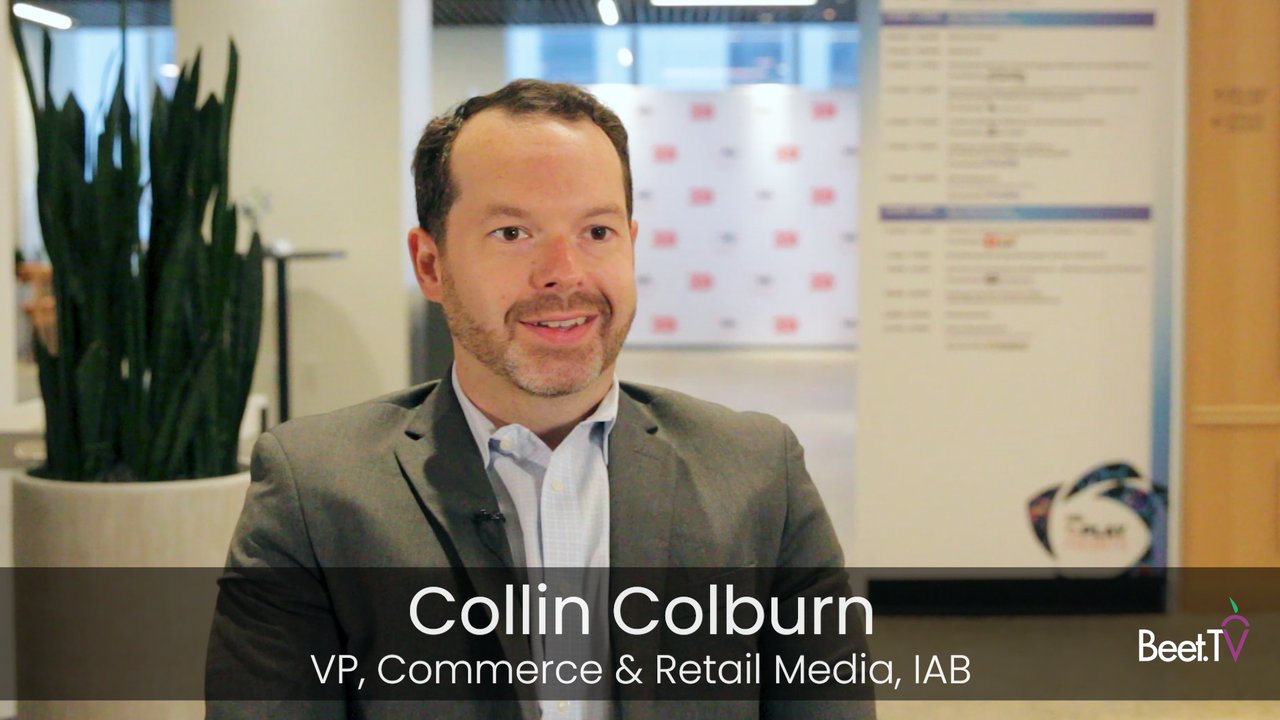




RANCHO PALOS VERDES, CALIF. – Adobe’s Sam Garfield, Head of Digital Strategy – CMT, Data and AI Platforms, believes that the advertising industry’s long-standing fixation on targeting over creative is beginning to break. That means publishers can unlock meaningful new revenue streams if they modernize how they produce, measure and share data around creativity.
Speaking with Beet.TV contributor David Kaplan at the Beet Retreat LA, Garfield, who leads digital strategy for CMT, data and AI platforms at Adobe, said new analytical tools are finally making creative effectiveness measurable at scale. That shift, he said, could reshape how publishers work with both major brands and smaller advertisers.
Creative still drives conversions, but has been hard to measure
Garfield pointed to a meta-analysis Adobe conducted with consulting firm Madison & Wall examining creative impact on conversions. The findings: creative quality influences outcomes by roughly 40% to 60%, yet the industry largely optimized for targeting because it was easier to quantify.
“Last-click measurement became the center of gravity,” he said, noting that entire categories of companies prospered by focusing on easily trackable signals while ignoring the harder-to-measure role of creative.
Adobe’s “Creative Analytics” tool, he added, is designed to isolate which creative elements move the needle, a shift he sees as essential for correcting years of imbalanced attribution.
Generative AI could bring more small advertisers into premium media
As publishers increasingly look to generative AI to court small and mid-sized advertisers, Garfield said the opportunity is real, but only if the tooling improves.
He identified two requirements:
- High-quality creative: GenAI lowers production barriers, but advertisers still need strong assets to be effective.
- Simplified workflows: Publishers must offer intuitive, self-serve tools that allow inexperienced advertisers to build and place ads seamlessly.
“That’s what walled gardens have done so well,” Garfield said. If publishers replicate that ease of use, he believes they can widen their advertiser base without merely shifting budget from existing commitments.
Data collaboration is becoming more feasible…and more urgent
Publishers have historically guarded first-party data fiercely, but Garfield said attitudes are shifting thanks to privacy-enhancing technologies that allow for secure, non-granular data exchange.
Adobe’s data collaboration application, he said, functions as a “one-click” environment where publishers and brands can see audience overlaps and activate campaigns without exposing sensitive information.
He added that publishers also need to embrace more transparent measurement, particularly the use of advertisers’ first-party conversion data, an area where Adobe sees strong adoption through Adobe Analytics.
AI agents will automate tasks, helping publishers regain visibility in LLM search
As agentic AI systems mature, Garfield said Adobe views AI as an assistant rather than a replacement for human creativity and strategy.
Examples already in play include:
- Audience agents that pull and build segments automatically
- Analytics agents that answer performance questions without manual reporting
- LLM Optimizer, which restructures publisher content so large language models can better ingest and surface it in results
This last piece, Garfield noted, is increasingly important as consumers turn to ChatGPT or Perplexity to find what to watch or where to subscribe, often bypassing publisher sites entirely.
Biggest remaining obstacle: Fragmented publisher data
Garfield said there remains a structural challenge: even major media companies often have siloed data across streaming services, studios, theatrical releases and e-commerce units.
By contrast, walled gardens operate with unified data systems, enabling cohesive targeting, measurement and workflow automation.
Publishers need the same “single source of truth,” he said.
Adobe’s customer data platform (CDP) is being used by several media groups to unify those datasets, though the process takes time. Once complete, Garfield said, it can level the playing field and unlock new value.