


Commerce Media Wants the Whole Purchase Funnel: Pacvue’s Michael Foulkes
NEW YORK – Commerce media is no longer content to sit quietly beside sponsored search listings and wait for last-click credit. The category is expanding fast, grabbing budget, attention and probably several internal org charts.
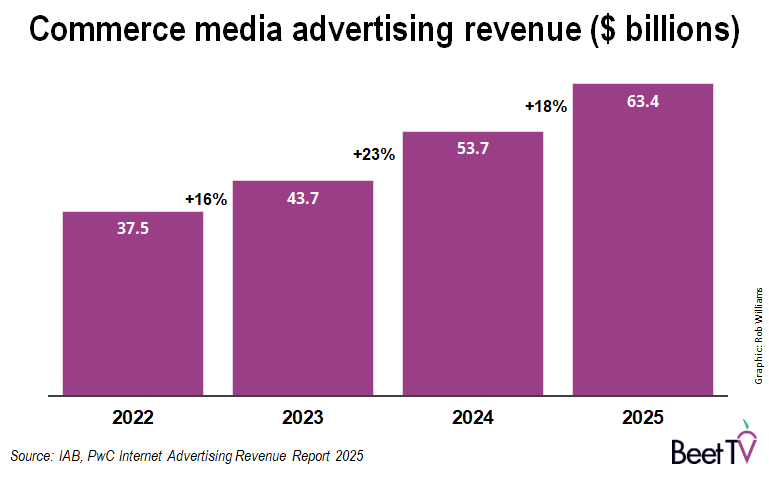
U.S. commerce media advertising grew 18% to $64.3 billion in 2025, according to IAB data, outpacing the 13.9% gain for the broader internet advertising marketplace. That is an impressive number and also a polite warning to anyone still calling this a niche tactic.
At the IAB Connected Commerce Summit, Michael Foulkes, head of customer success, retail media, at Pacvue, told Beet.TV editorial director Lisa Granatstein that the next phase of shopper media is all about convergence. Lisa, to her credit, asked the questions many marketers ask privately between coffee refills and budget meetings.
Social and commerce are now roommates
Foulkes said the old model treated social media as brand advertising while retail media handled conversion. That tidy separation is fading quickly.
“The next phase of shopper media that we’re seeing is that there’s a real convergence of social and commerce,” he said.
Platforms such as TikTok now compress discovery, consideration and purchase into one experience.
“It’s happening in one place, and that funnel is getting smaller,” Foulkes said.
In short, the consumer journey has been downsized for efficiency reasons.
Creator content now has to pay rent
Influencer marketing once enjoyed a comfortable life as an awareness play full of vibes, reach and suspicious engagement spikes. Foulkes said that era is ending.
“They’re thinking about creators with the exact same set of KPIs,” he said, noting advertisers now expect creator campaigns to hit return on ad spend goals much like traditional retail media buys.
He added that brands are increasingly shifting toward micro and midsized creators because marketers can optimize across multiple partners to reach more specific goals. Translation: fewer celebrity invoices, more spreadsheets.
Sponsored ads are no longer the hero of every story
Foulkes said better measurement tools and clean room technology are helping brands understand how upper-funnel media contributes to actual sales.
“In the past, we used to see sponsored ads as the hero,” he said.
Now marketers can better map the path to purchase and identify “true incrementality in these channels,” giving them more confidence to invest higher up the funnel. A moving moment for anyone who has spent years begging finance teams to believe branding matters.
AI helps you shop and helps Pacvue optimize
Artificial intelligence, naturally, entered the conversation because no conference panel can legally avoid it.
Foulkes said AI is already influencing product discovery as consumers ask tools for recommendations before buying.
“I just purchased the product the other day after consulting what’s the best product for me within this category, like on ChatGPT,” he said.
He also pointed to optimization, saying Pacvue is investing in tools that help improve retail media performance using machine learning models powered by AI. Even the ad bids now have career ambitions.
His advice: break silos before they breed
Asked how brands should scale commerce media, Foulkes urged closer coordination between brand media teams and retail media teams.
“Making sure that everybody’s working and marching to the beat of the same drum,” he said.
He also said brands should scrutinize their tech stacks and ensure measurement systems are strong enough to justify bigger upper-funnel investments.
That may be the least glamorous advice at any summit, but it is usually the most expensive to ignore.
You’re watching coverage from IAB Connected Commerce Summit 2026. For more videos from this series, please visit this page.
NEW YORK – Commerce media is no longer content to sit quietly beside sponsored search listings and wait for last-click credit. The category is expanding fast, grabbing budget, attention and probably several internal org charts.
U.S. commerce media advertising grew 18% to $64.3 billion in 2025, according to IAB data, outpacing the 13.9% gain for the broader internet advertising marketplace. That is an impressive number and also a polite warning to anyone still calling this a niche tactic.
At the IAB Connected Commerce Summit, Michael Foulkes, head of customer success, retail media, at Pacvue, told Beet.TV editorial director Lisa Granatstein that the next phase of shopper media is all about convergence. Lisa, to her credit, asked the questions many marketers ask privately between coffee refills and budget meetings.
Social and commerce are now roommates
Foulkes said the old model treated social media as brand advertising while retail media handled conversion. That tidy separation is fading quickly.
“The next phase of shopper media that we’re seeing is that there’s a real convergence of social and commerce,” he said.
Platforms such as TikTok now compress discovery, consideration and purchase into one experience.
“It’s happening in one place, and that funnel is getting smaller,” Foulkes said.
In short, the consumer journey has been downsized for efficiency reasons.
Creator content now has to pay rent
Influencer marketing once enjoyed a comfortable life as an awareness play full of vibes, reach and suspicious engagement spikes. Foulkes said that era is ending.
“They’re thinking about creators with the exact same set of KPIs,” he said, noting advertisers now expect creator campaigns to hit return on ad spend goals much like traditional retail media buys.
He added that brands are increasingly shifting toward micro and midsized creators because marketers can optimize across multiple partners to reach more specific goals. Translation: fewer celebrity invoices, more spreadsheets.
Sponsored ads are no longer the hero of every story
Foulkes said better measurement tools and clean room technology are helping brands understand how upper-funnel media contributes to actual sales.
“In the past, we used to see sponsored ads as the hero,” he said.
Now marketers can better map the path to purchase and identify “true incrementality in these channels,” giving them more confidence to invest higher up the funnel. A moving moment for anyone who has spent years begging finance teams to believe branding matters.
AI helps you shop and helps Pacvue optimize
Artificial intelligence, naturally, entered the conversation because no conference panel can legally avoid it.
Foulkes said AI is already influencing product discovery as consumers ask tools for recommendations before buying.
“I just purchased the product the other day after consulting what’s the best product for me within this category, like on ChatGPT,” he said.
He also pointed to optimization, saying Pacvue is investing in tools that help improve retail media performance using machine learning models powered by AI. Even the ad bids now have career ambitions.
His advice: break silos before they breed
Asked how brands should scale commerce media, Foulkes urged closer coordination between brand media teams and retail media teams.
“Making sure that everybody’s working and marching to the beat of the same drum,” he said.
He also said brands should scrutinize their tech stacks and ensure measurement systems are strong enough to justify bigger upper-funnel investments.
That may be the least glamorous advice at any summit, but it is usually the most expensive to ignore.
You’re watching coverage from IAB Connected Commerce Summit 2026. For more videos from this series, please visit this page.

Series Videos