


Evan Hovorka Pitches Albertsons as Retail Media Powerhouse
MIAMI BEACH, FL – Retail media was once the cute little side project of digital advertising, quietly selling sponsored cereal placements and hoping nobody asked too many questions about attribution. Now it has become one of the industry’s loudest growth engines.
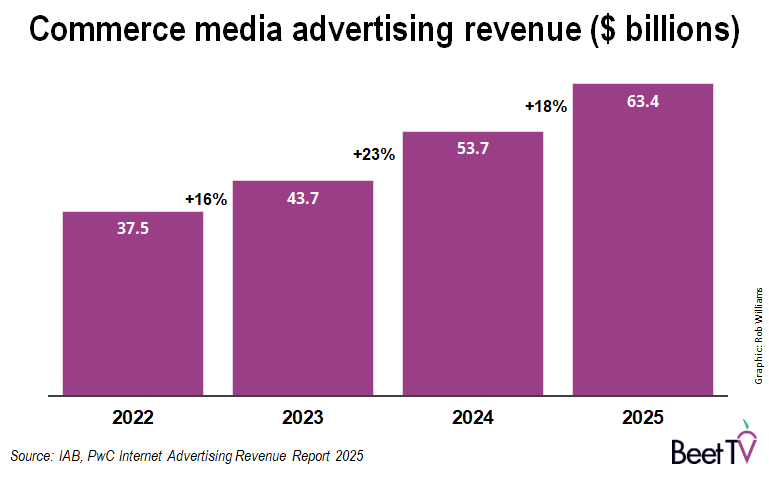
U.S. commerce media advertising rose 18% to $64.3 billion in 2025, according to IAB data, outpacing the 13.9% growth rate for the broader internet advertising market. In other words, retail media is no longer sitting at the kids’ table. It is now pricing the menu.
At the Possible conference in Miami Beach, Evan Hovorka, vice president of product and innovation at Albertsons Media Collective, laid out how the grocery giant’s media arm plans to capture more of that momentum by pushing its shopper data into the places marketers already spend money.
Albertsons enters the YouTube era
Hovorka said Albertsons had just launched a new capability that brings its audience data to YouTube and Google’s DV360 platform, debuting the offering with Keurig Dr Pepper.
“So Monday was an exciting announcement,” Hovorka said to Beet.TV contributor David Kaplan. “We, for the first time, brought the Albertsons audience to a very popular streaming video platform, YouTube.”
The idea is simple enough to make ad tech veterans suspicious. Brands and agencies can buy media through familiar platforms while using Albertsons’ first-party shopper data to target known audiences.
“It allows them to basically buy on known high fidelity first party audiences,” Hovorka said, adding that agencies can execute campaigns directly “with the intelligence of first party retail media data.”
Go where the fish are
Asked why YouTube matters, Hovorka offered a line that should probably be embroidered on a pillow in every revenue department.
“When you’re monetizing assets in any industry, you need to go where the fish are.”
He noted YouTube’s massive consumer reach makes it an obvious venue for audience monetization. If consumers are there, marketers are there. If marketers are there, someone will eventually create three dashboards and a measurement framework.
Managed service is nice, but self-serve pays faster
Retail media networks often began as managed-service businesses, where brands hand over budgets and hope the reporting arrives before the quarter ends. Hovorka said the next phase requires more flexibility.
“Putting self-serve into the popular platforms where people are buying media today is a great way to do that,” he said.
He said the model keeps Albertsons data secure while putting tools directly into the hands of media practitioners already working inside those systems. Translation: fewer extra steps, fewer frantic onboarding calls and fewer people pretending they love another standalone portal.
Grocery’s secret weapon: people keep eating
Hovorka also argued grocery retailers bring a unique edge to commerce media because consumers shop frequently and tie many purchases to loyalty programs.
“Our shoppers are in our stores two plus times a week,” he said.
That repeat behavior gives Albertsons a steady stream of signals. Because many transactions connect to loyalty IDs across stores and digital channels, Hovorka said the company has “the highest fidelity ID graph in the game.”
He added, “We only use deterministic data,” a phrase guaranteed to make probabilistic targeting nervous.
The next step: close the loop, then keep closing it
Looking ahead, Hovorka said Albertsons wants to extend beyond audiences into measurement, item feeds, pricing, promotions and dynamic content.
“We start to completely close the loop on what that brand may want to do with their agency dollars,” he said.
That is the promise now driving commerce media’s rapid ascent: not just ads near transactions, but ads tied to outcomes. Also charts. Many, many charts.
You’re watching Beet.TV coverage of POSSIBLE 2026. For more videos from this series, please visit this page.


MIAMI BEACH, FL – Retail media was once the cute little side project of digital advertising, quietly selling sponsored cereal placements and hoping nobody asked too many questions about attribution. Now it has become one of the industry’s loudest growth engines.
U.S. commerce media advertising rose 18% to $64.3 billion in 2025, according to IAB data, outpacing the 13.9% growth rate for the broader internet advertising market. In other words, retail media is no longer sitting at the kids’ table. It is now pricing the menu.
At the Possible conference in Miami Beach, Evan Hovorka, vice president of product and innovation at Albertsons Media Collective, laid out how the grocery giant’s media arm plans to capture more of that momentum by pushing its shopper data into the places marketers already spend money.
Albertsons enters the YouTube era
Hovorka said Albertsons had just launched a new capability that brings its audience data to YouTube and Google’s DV360 platform, debuting the offering with Keurig Dr Pepper.
“So Monday was an exciting announcement,” Hovorka said to Beet.TV contributor David Kaplan. “We, for the first time, brought the Albertsons audience to a very popular streaming video platform, YouTube.”
The idea is simple enough to make ad tech veterans suspicious. Brands and agencies can buy media through familiar platforms while using Albertsons’ first-party shopper data to target known audiences.
“It allows them to basically buy on known high fidelity first party audiences,” Hovorka said, adding that agencies can execute campaigns directly “with the intelligence of first party retail media data.”
Go where the fish are
Asked why YouTube matters, Hovorka offered a line that should probably be embroidered on a pillow in every revenue department.
“When you’re monetizing assets in any industry, you need to go where the fish are.”
He noted YouTube’s massive consumer reach makes it an obvious venue for audience monetization. If consumers are there, marketers are there. If marketers are there, someone will eventually create three dashboards and a measurement framework.
Managed service is nice, but self-serve pays faster
Retail media networks often began as managed-service businesses, where brands hand over budgets and hope the reporting arrives before the quarter ends. Hovorka said the next phase requires more flexibility.
“Putting self-serve into the popular platforms where people are buying media today is a great way to do that,” he said.
He said the model keeps Albertsons data secure while putting tools directly into the hands of media practitioners already working inside those systems. Translation: fewer extra steps, fewer frantic onboarding calls and fewer people pretending they love another standalone portal.
Grocery’s secret weapon: people keep eating
Hovorka also argued grocery retailers bring a unique edge to commerce media because consumers shop frequently and tie many purchases to loyalty programs.
“Our shoppers are in our stores two plus times a week,” he said.
That repeat behavior gives Albertsons a steady stream of signals. Because many transactions connect to loyalty IDs across stores and digital channels, Hovorka said the company has “the highest fidelity ID graph in the game.”
He added, “We only use deterministic data,” a phrase guaranteed to make probabilistic targeting nervous.
The next step: close the loop, then keep closing it
Looking ahead, Hovorka said Albertsons wants to extend beyond audiences into measurement, item feeds, pricing, promotions and dynamic content.
“We start to completely close the loop on what that brand may want to do with their agency dollars,” he said.
That is the promise now driving commerce media’s rapid ascent: not just ads near transactions, but ads tied to outcomes. Also charts. Many, many charts.
You’re watching Beet.TV coverage of POSSIBLE 2026. For more videos from this series, please visit this page.